Updated: August 27, 2026
Perovskite solar panels are making a significant breakthrough in the energy sector, and China, as a leading solar power producer, is actively positioning itself at the forefront of this technology. These panels, with their high efficiency and low cost, promise to revolutionize the approach to alternative energy, providing more accessible and effective solutions for electricity generation.
By transitioning to perovskite technologies, China not only strengthens its position in the global market but also takes a step toward a sustainable future. Sustainable and eco-friendly energy sources are becoming increasingly important in the face of global challenges, and perovskite solar panels could hold the key to addressing these issues. In this article, we will explore how these innovative technologies are changing the energy landscape in China and what they may offer in the future.
Introduction to Perovskite Solar Panels
Perovskite solar panels represent a new frontier in solar energy, utilizing the unique properties of perovskite minerals. These materials are known for their ability to effectively absorb solar radiation and convert it into electrical energy. The primary advantage of perovskite lies in its high photoconductivity and relative ease of production, making it a promising candidate to replace traditional silicon solar panels.
A comparison between perovskite panels and silicon ones shows that while the latter has a long history of use and has proven itself in the market, it is limited in terms of efficiency and cost. While silicon panels achieve maximum efficiencies of around 22-23%, perovskite panels are already demonstrating efficiencies of 25% and above. Furthermore, the production of perovskite panels requires less energy and materials, significantly reducing their cost and making them more accessible for mass production.
The advantages of perovskite technologies in energy are evident. Firstly, their high efficiency in converting solar energy into electricity allows for a reduction in the area required for solar power plants. Secondly, the flexibility in integrating perovskite panels into various structures and surfaces opens new horizons for utilizing solar energy in urban and rural settings. Thirdly, as technologies evolve and the stability of perovskite materials improves, they can become competitive and even more preferable compared to traditional solutions.
Thus, perovskite solar panels could become a key element in the transition to sustainable energy sources, contributing to a reduction in carbon footprint and ensuring energy independence. Given the growing demand for renewable energy sources, such technologies open up new opportunities for China and the world in the energy sector.
Testing the Solar Power Plant in China
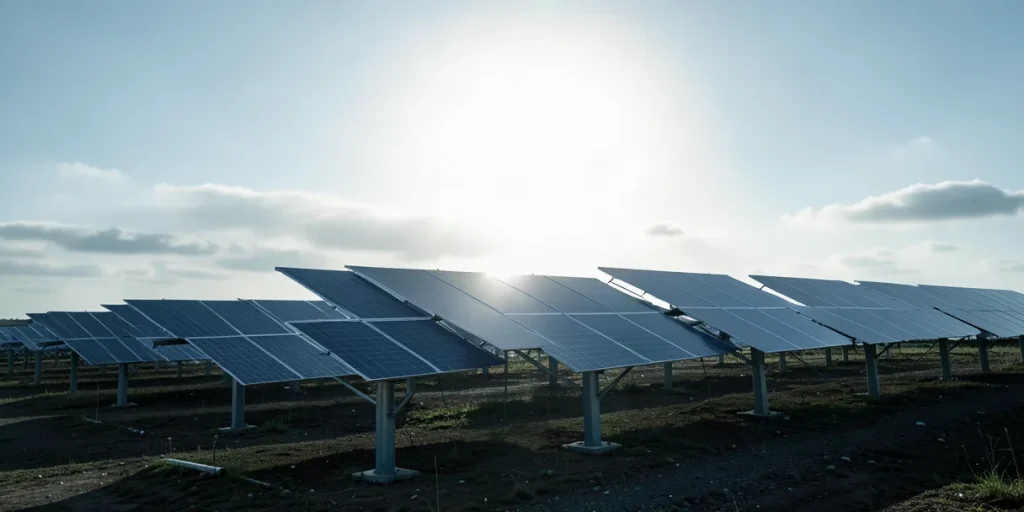
Successful tests of a solar power plant using innovative perovskite solar panels have been completed in China. These panels demonstrated outstanding results, significantly surpassing traditional silicon counterparts. During testing, conducted in accordance with international standards IEC 61215, the perovskite modules exhibited higher efficiency and substantially reduced production costs, marking an important step toward their widespread adoption in the industry.
The test results confirmed that perovskite panels can achieve efficiency levels of up to 25%, which is significantly higher than that of most modern silicon solutions. While silicon panels typically have efficiencies in the range of 15-20%, perovskite technologies open new horizons for solar energy. Moreover, the production costs for creating perovskite panels proved to be significantly lower, making them more attractive for commercial use.
The testing also included comparisons with previous models of solar power plants, including those using silicon panels. The results showed that perovskite systems not only exceed in efficiency but also have greater potential for scalability and cost reduction in production. This means that widespread adoption of perovskite solar panels can be expected in the coming years, potentially leading to significant changes in the renewable energy market.
Thus, the successful testing of the solar power plant based on perovskite panels in China not only confirms their technological viability but also opens new opportunities for sustainable development in the energy sector, both domestically and globally. This breakthrough in solar energy technology could serve as a foundation for future innovations and more efficient utilization of solar energy on a global scale.
Technological Advances in Solar Energy
Perovskite solar panels represent a significant step forward in solar energy, particularly in China, where they were first tested in a fully functional solar power plant. These panels, based on the perovskite structure, showcase a range of innovations that make them more competitive compared to traditional silicon solar cells.
One of the main achievements in the production of perovskite panels is the use of new technologies that help reduce production costs. This not only increases the availability of solar energy but also makes it more attractive for mass use. As a result, the cost of perovskite panels is significantly lower, opening new horizons for solar energy development both in China and beyond.
Moreover, significant attention is being given to improving the durability and stability of perovskite panels. Research has shown that modern processing methods and protective coatings can enhance their lifespan, which is critically important for commercial applications. Perovskite panels tested according to international standards have demonstrated their ability to maintain efficiency even under adverse operating conditions.
New methods are also actively being developed to increase the efficiency coefficient (EC) of perovskite panels. Scientific research is focused on creating multilayer structures that can capture more solar energy and convert it into electricity. For instance, the combination of perovskite elements with traditional silicon could increase the overall efficiency to 30% or higher. This not only enhances the competitiveness of perovskite technologies but also makes them more attractive for large energy projects.
Thus, perovskite solar panels open a new era in energy, offering high efficiency, cost-effectiveness, and durability, making them one of the most promising directions in the field of renewable energy sources.
Economic Aspects of Implementing Perovskite Technologies
The implementation of perovskite technologies in solar panel production opens new horizons for the economic accessibility and dissemination of solar energy. One of the key aspects is the significant reduction in production costs for perovskite panels compared to traditional silicon ones. This is achieved through the use of simpler and cheaper materials, as well as more efficient production methods. As a result, the cost of perovskite panels becomes more competitive, which in turn lowers the final price for consumers.
The financial accessibility of solar energy for households and businesses is becoming a reality due to such innovations. The decrease in prices for perovskite panels contributes to their growing popularity, leading to broader adoption of solar energy. Consumers, having the option to install more affordable solar panels, can significantly reduce their electricity expenses while also benefiting from tax incentives and subsidies offered by governments in various countries.
The potential for growth in the solar energy market worldwide associated with perovskite technologies also appears quite promising. With the increasing efficiency of these panels reaching 25% and their capacity for mass production, demand for solar energy is expected to rise. This will not only drive the development of new production facilities but also create jobs in this rapidly evolving sector. Furthermore, the implementation of perovskite technologies could help reduce dependence on fossil energy sources, which is crucial for sustainable development and combating climate change.
Thus, the economic aspects of implementing perovskite technologies in solar energy are promising and could become the foundation for shaping a new, more sustainable energy system both in China and worldwide.
Environmental Benefits of Perovskite Panels
Perovskite solar panels represent a significant achievement in clean energy, offering not only high efficiency but also environmental benefits that can change the approach to energy production and consumption. One of the most tangible advantages is the reduction of the carbon footprint in the production of these panels. Perovskite technology allows for a substantial decrease in the amount of energy required for their production compared to traditional silicon panels. This is because the manufacturing process of perovskite solar elements is less resource-intensive and requires fewer raw materials. As a result, the use of perovskite panels can significantly reduce greenhouse gas emissions at the production stage.
The opportunities for sustainable development and ecology presented by perovskite panels are also noteworthy. They can be produced from accessible and inexpensive components, making them more available to a broader range of consumers and promoting the transition to renewable energy in various regions, including remote and developing countries. This means that a greater number of people will have access to clean energy, which in turn will contribute to improving quality of life and reducing dependence on fossil fuels.
The potential applications of perovskite extend beyond solar panels. Research shows that this material could be used in other fields, such as electronics and photonics. For example, perovskite materials can be used in the production of efficient LEDs and lasers, which have a wide range of applications — from household lighting to complex optical systems. Thus, perovskite opens new horizons for innovation, promoting the sustainable development of technologies and ecological safety.
Overall, perovskite solar panels represent an important step towards a more sustainable and environmentally friendly energy system, making them a key element in the fight against climate change and the pursuit of a healthier planet.
The Future of Solar Energy with Perovskite Panels
Perovskite solar panels represent a breakthrough in solar energy, and their future promises to be bright. Predictions for the deployment of this technology in the coming years indicate significant growth in the use of perovskite panels, especially in China, where successful tests of solar power plants based on these innovative modules have already been conducted. It is expected that by 2030, the share of perovskite panels in the total volume of solar energy could reach 20%, due to their high efficiency and lower production costs compared to traditional silicon panels.
The significance of perovskite solar panels for the energy transition cannot be overstated. They not only contribute to reducing carbon emissions but also make solar energy more accessible. This is especially relevant for countries with high levels of solar radiation, where perovskite technologies can be utilized to create effective and affordable solutions in renewable energy. The implementation of such panels could play a key role in achieving global climate goals and transitioning to sustainable energy sources.
Potential partnerships and investments in the research and development of perovskite solar panels could also significantly accelerate their adoption. Chinese companies are already actively pursuing this area, entering agreements with research institutions and universities for joint developments. This collaboration could lead to the creation of new technologies and the enhancement of existing solutions, which in turn would boost the competitiveness of the Chinese solar sector on the international stage. Attracting investments in this field will contribute not only to technological development but also to job creation, which is an important aspect for the country’s economy.
Thus, the future of solar energy with perovskite panels looks promising. Innovations in this field could change not only the solar energy market but also the entire approach to sustainable development on a global scale.
Global Experience: How Other Countries Utilize Perovskite Technologies
Perovskite solar panels are becoming an important element of global efforts to transition to cleaner and more efficient energy. Countries around the world are actively researching and implementing these technologies, demonstrating significant successes compared to traditional silicon panels. For example, in Japan and Germany, large-scale research is being conducted aimed at improving the durability and stability of perovskite elements. Japanese researchers, focusing on the application of perovskite in combination with silicon, have achieved overall efficiencies of up to 30%, opening new horizons for solar energy.
Successful projects implemented in various countries show that perovskite panels can be not only efficient but also economically viable. In Switzerland, for example, several solar power plants have been successfully launched, where perovskite panels are used in combination with innovative energy storage methods. Such projects not only increase productivity but also reduce electricity costs. In Australia, there is also a growing interest in perovskite technologies, where mobile solar installations based on perovskite materials have been developed, which can be easily transported and set up in remote areas.
International experience shows that cooperation between academic institutions, government agencies, and the private sector is a key success factor in this area. The lessons learned from these projects can be very valuable for countries looking to develop their own solar technologies. It is important to consider the following aspects:
- Investment in research and development to improve the quality and efficiency of panels.
- Creating a favorable regulatory environment to support the adoption of new technologies.
- Encouraging international cooperation and knowledge exchange in the field of perovskite solutions.
- Training specialists and creating programs for skills enhancement in solar energy.
Thus, the experience of other countries in utilizing perovskite technologies can serve as a valuable guide for China and other nations striving to implement innovations in renewable energy.
Conclusion: A New Perspective on Solar Energy
Perovskite solar panels represent an important step forward in solar energy, especially in the context of their successful application in China. The testing of a solar power plant using these panels demonstrated their significantly higher efficiency compared to traditional silicon modules. This indicates that perovskite technologies can not only become competitive but can also significantly change the landscape of solar energy. The reduction in production costs coupled with increased efficiency opens new horizons for the mass utilization of solar energy.
It is important to note that successful testing of perovskite panels is just the beginning. For these technologies to become standard in the energy sector, continued research and development are necessary. Investment in scientific research, improving technologies, and optimizing production processes can provide additional advantages and accelerate the adoption of perovskite solutions in the market. There is also a need for work on the standardization and certification of new panels to ensure their safety and reliability.
The prospects for utilizing perovskite solar panels are quite promising. They could play a key role in the transition to a more sustainable energy system and help combat climate change. For future generations, this means not only access to clean energy but also the creation of new jobs in high-tech fields. Thus, the development of perovskite energy could serve as a foundation for creating a greener, more sustainable, and technologically advanced society.
In conclusion, perovskite solar panels open a new era in energy that can change the approach to using renewable energy sources and make them more accessible to broad segments of the population. This direction requires our attention and support to maximize its potential.
