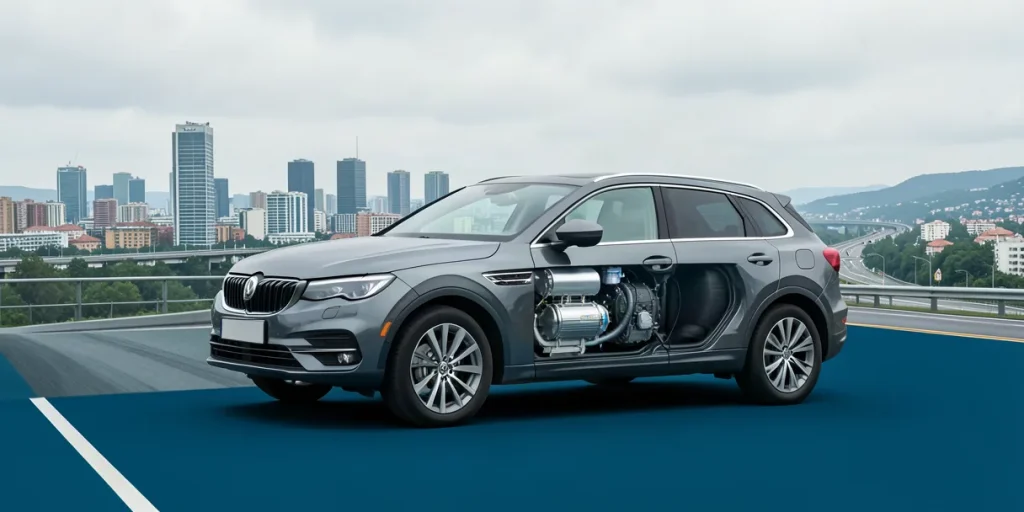
Hybrid cars today hold a special place in the market thanks to their combination of an internal combustion engine and an electric motor. The main question is: how effective is using a hybrid in the city and on the highway considering different types of transmissions? To answer right away: hybrids offer significant advantages in urban driving thanks to reduced fuel consumption and emissions, but on the highway, efficiency depends on the transmission type and model. This article takes a detailed look at the types of hybrid transmissions, their pros and cons, and compares specific models and specifications.
Types of Hybrid Transmissions and Their Features
There are three main types of hybrid transmissions: parallel, series, and combined (parallel-series). Each has a unique operating principle and application area.
Parallel Hybrids
In parallel hybrids, the internal combustion engine (ICE) and the electric motor can work simultaneously or independently, providing flexible power management. An example is the 2026 Toyota Camry Hybrid. These vehicles are well suited for mixed and highway driving since the electric motor supplements the ICE, reducing fuel consumption by an average of 20-30%.
Series Hybrids
In series hybrids, the electric motor always drives the wheels, while the ICE works solely to recharge the battery. An example is the 2026 Chevrolet Volt. They are efficient in the city, with a limited electric-only range (often up to 60 km), but on the highway, fuel consumption may increase due to the ICE running constantly.
Combined Hybrids
Combined hybrids merge the advantages of the first two, automatically switching between modes. The 2026 Toyota RAV4 Hybrid is an example of such a car. They are versatile, offering up to 40% fuel savings in the city and stable performance on the highway.
| Transmission Type | City Efficiency | Highway Efficiency | Electric Motor Range (km) | Average Price, ₽ |
|---|---|---|---|---|
| Parallel | Medium (20-30% savings) | High | up to 40 | 2,000,000–3,000,000 |
| Series | High (up to 40% savings) | Low | up to 60 | 1,800,000–2,500,000 |
| Combined | Very high (up to 40% savings) | Medium | up to 50 | 2,200,000–3,200,000 |
- 40% maximum city fuel savings with combined hybrids
- 60 km average electric-only range for series hybrids
- up to 3.2 million ₽ price of top hybrid models
Advantages of Hybrids in Urban Conditions
City driving with frequent stops and low speeds is optimal for hybrid systems. The electric motor significantly reduces fuel consumption and emissions by operating at low speeds and recovering energy during braking.
Fuel Savings and Emission Reduction
Hybrids typically consume 25-40% less gasoline in the city compared to comparable ICE vehicles. For example, the 2026 Toyota Prius claims a fuel consumption of about 3.9 l/100 km in urban cycle. This reduces CO2 emissions by approximately 30-35%, meeting current Euro-6 environmental standards.
Ease of Use
The additional electric motor makes starting and driving in traffic jams easier, reducing noise and vibrations. Hybrid batteries are designed to last 8-10 years, with manufacturers often offering warranties of 8 years or 160,000 km.
- Toyota Prius – consumption 3.9 l/100 km, price from 2.1 million ₽
- Honda Insight – consumption 4.1 l/100 km, price from 1.9 million ₽
- Kia Niro Hybrid – consumption 4.3 l/100 km, price from 2.0 million ₽
Operating Features of Hybrids on the Highway
On the highway, hybrid efficiency depends on speed and transmission type. Fuel consumption often matches that of conventional cars, especially at high speeds.
Loss of Electric Motor Advantages
At steady speeds above 90-100 km/h, the electric motor is used less frequently, and the ICE bears the main load. This reduces fuel savings to 10-15% or less. Combined hybrids adapt better by automatically switching modes.
Comfort and Performance
Hybrid models such as the Toyota RAV4 Hybrid offer acceleration times up to 8 seconds to 100 km/h, comparable to gasoline rivals. However, hybrids weigh 100-150 kg more due to batteries, affecting handling and fuel consumption.
| Model | Transmission Type | Highway Consumption (l/100 km) | Weight, kg | Price, ₽ |
|---|---|---|---|---|
| Toyota RAV4 Hybrid | Combined | 6.1 | 1650 | 2,900,000 |
| Honda CR-V Hybrid | Parallel | 6.5 | 1620 | 2,800,000 |
| Hyundai Tucson Hybrid | Combined | 6.4 | 1680 | 2,850,000 |
| Volkswagen Tiguan (gasoline) | Conventional | 7.8 | 1550 | 2,600,000 |
Cost and Maintenance of Hybrid Cars
The main downside of hybrids is their high price and complex technical maintenance. Prices in 2026 range from 1.8 million ₽ (budget options) to 3.2 million ₽ (top trims).
Purchase Price and Depreciation
Hybrids cost about 15-25% more than gasoline cars due to the electric motor and batteries. Depreciation is slower – the average ownership period is about 7 years, thanks to lower fuel expenses.
Maintenance and Repairs
Hybrid systems require specialized servicing, including battery and electronics checks. Repairs can be 20-30% more expensive due to parts costs and a shortage of qualified technicians.
- Battery warranty – typically 8 years or 160,000 km
- Average maintenance cost – 10-15% higher than gasoline cars
- Average mileage before battery replacement – around 150,000 km
Environmental Aspects and Legislation
Hybrids help reduce pollutant emissions, which is crucial for megacities with high air pollution levels.
Compliance with Standards
In 2026, hybrids comply with Euro-6d and higher environmental standards, reducing NOx and CO2 emissions. Russia has a preferential tax program for hybrids, with transport taxes reduced by 30-50% in some regions.
Environmental Impact
CO2 emission reductions for hybrids compared to gasoline cars reach 25-35%, positively affecting urban air quality and lowering the carbon footprint.
Frequently Asked Questions
Which type of hybrid is better for the city?
Can you drive a hybrid solely on electricity?
How much more expensive is hybrid maintenance?
Which hybrid models are popular in 2026?
Key Takeaways
- Hybrids significantly save fuel in the city—up to 40% compared to gasoline cars.
- Highway advantages depend on transmission type—parallel and combined hybrids are more efficient.
- Hybrid prices are 15-25% higher, with maintenance requiring specialized care.
- Environmental benefits of hybrids are confirmed by Euro-6 standards and preferential tax programs in Russia.
In conclusion, hybrid cars remain a sensible choice for those who mostly drive in the city and are willing to pay a bit more for fuel savings and environmental safety. For long highway trips, attention should be given to transmission type and specific model to balance economy and comfort. The 2026 market offers a wide range of hybrids with different specializations, making it possible to choose a car that fits individual needs and operating conditions.