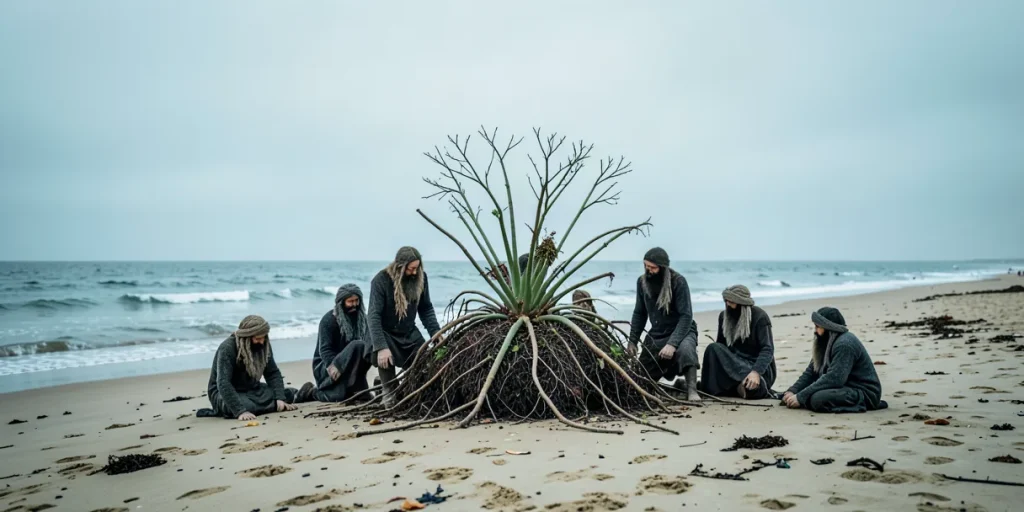
Recent studies have unveiled an astonishing connection between hermit crabs and parasitic plants. These marine creatures, typically associated with seeking shelter in empty shells, have proven to be not only survivors in their environment but also unexpected dispersers of seeds from a unique plant. This discovery sheds new light on ecosystem interactions and highlights the importance of every element in nature.
Researchers found that as hermit crabs move along the seabed, they carry seeds of the parasitic plant, facilitating its spread. This phenomenon not only changes the perception of these crabs’ role in the ecosystem but also raises questions about the impact on marine flora and fauna. How exactly does this interaction occur, and what consequences might it have for marine ecosystems? Let’s delve into this fascinating process.
Introduction to the Issue
Hermit crabs inhabiting coastal ecosystems play a vital role in maintaining biodiversity and the functioning of marine and terrestrial ecosystems. These crustaceans find shelter in empty shells, which protects them from predators and adverse environmental conditions. They actively participate in the decomposition of organic matter by consuming remnants of vegetation and marine organisms. Through their activities, hermit crabs contribute to soil aeration and improvement of its structure, which positively affects other organisms living in that environment.
However, alongside their positive impact on the ecosystem, hermit crabs have also become important dispersers of the seeds of the parasitic plant B. fungosa. This plant, with its unique adaptations, relies on hermit crabs for its reproduction, raising questions about species interactions and their effects on the ecosystem as a whole. In their daily activities, hermit crabs transport B. fungosa seeds across their territory, aiding in its spread. Thus, hermit crabs act as unintentional dispersers, and this interaction opens new horizons for studying ecosystem connections.
Nevertheless, the issue of parasitic plants like B. fungosa spreading raises concerns among scientists and ecologists. Parasitism can lead to significant changes in ecosystem structure, affecting the abundance and diversity of other species. As the number of parasitic plants increases, local flora and fauna may suffer, which in turn negatively impacts the integrity of the ecosystem. This underscores the need for further research aimed at understanding the mechanisms of interaction between hermit crabs and parasitic plants, as well as developing management strategies for these interactions to maintain balance in nature.
Research on the Role of Hermit Crabs
The investigation of the role of the hermit crab Coenobita brevimanus in the spread of seeds of the parasitic plant B. fungosa represents an interesting direction in ecology, emphasizing the interconnections between different species in nature. These hermit crabs, dwelling along coastlines and in humid ecosystems, play an essential role in ecosystems where they not only function in decomposing organic remains but also actively participate in seed dispersal.
To study this unique role of hermit crabs, various research methods were employed, including field observations and laboratory experiments. In the field, scientists tracked the movements of Coenobita brevimanus and recorded how often and under what conditions they interacted with B. fungosa seeds. Laboratory experiments involved analyzing crab behavior in controlled conditions, where researchers could accurately measure the number of seeds that the crabs transported in their shells. The data collected from these studies provided a clear understanding of the mechanisms of seed dispersal and their link to crab behavior.
The results of the study showed that hermit crabs Coenobita brevimanus are unintentional dispersers of B. fungosa seeds. These crustaceans collect seeds while moving through their habitat and transport them over considerable distances. When the crabs leave their shelters or change shells, the seeds are released and can germinate in new locations, facilitating the spread of the parasitic plant. This interaction between crabs and plants emphasizes the importance of ecological connections and interdependence between species, demonstrating how one species can unwittingly contribute to the survival and spread of another.
Thus, the study of the role of Coenobita brevimanus in the ecosystem opens new horizons for understanding the complex relationships between animals and plants, as well as the importance of preserving biodiversity to maintain ecosystem resilience.
Ecological Significance of Seed Dispersal
The ecological significance of seed dispersal of the parasitic plant B. fungosa, facilitated by land hermit crabs Coenobita brevimanus, has a significant impact on the biodiversity of the ecosystem in which these organisms reside. The active participation of hermit crabs in the seed dispersal process contributes to an increase in the population of this parasitic plant, which in turn can affect the structure and dynamics of local plant communities. Biodiversity plays a key role in maintaining ecosystem resilience, and any change in the population of certain species can lead to cascading effects on other inhabitants of that environment.
Parasitic plants like B. fungosa occupy a unique niche in food chains. They obtain nutrients from hosts, which can lead to changes in the internal dynamics of the ecosystem. Parasitic plants can influence the health and survival of their hosts, potentially reducing the numbers of other species that depend on these hosts, as well as altering the availability of resources such as light and water. This interaction highlights the importance of understanding the role of parasitic plants in ecosystems, as they can be both pests and important elements of ecosystem balance.
The potential consequences for other species should also not be underestimated. The dispersal of B. fungosa seeds can lead to changes in the composition of vegetation in the habitats of hermit crabs. This may impact other animals that rely on certain plant species for food and shelter. For example, loss of habitat or changes in vegetation structure may threaten some species, while others may adapt or even benefit from the new conditions. This complex interaction demonstrates how crucial it is to consider all aspects of an ecosystem when studying the roles of various organisms, including unexpected seed dispersers like hermit crabs.
Competition with Native Plants
Parasitic plants like B. fungosa are becoming increasingly prevalent due to their unusual ways of interacting with local flora. These plants rely on other organisms for their reproduction and spread, making their activity an important part of the ecosystem. In particular, land hermit crabs like Coenobita brevimanus play a key role in this process by serving as unintentional seed dispersers. As hermit crabs move through their territory, they carry seeds of the parasitic plant, thereby facilitating its spread and establishment in new locations.
However, such symbiosis can pose a potential threat to local ecosystems. Parasitic plants may displace native species, leading to changes in biodiversity and disrupting ecosystem balances. In cases where parasitic plants begin to dominate, they can create conditions where local floras are at a disadvantage, unable to compete for resources like light and nutrients.
Examples from other regions show that such situations have already occurred. In ecosystems where parasitic plants actively spread, there are documented cases of declining populations of local species. This can lead to a decrease in overall biodiversity and negative consequences for animals that depend on these plants for survival. It is important to study such interactions to understand how to control the spread of parasitic species and protect local ecosystems.
Adaptation of Hermit Crabs
The adaptation of hermit crabs to the role of seed dispersers for the parasitic plant B. fungosa represents an interesting example of symbiotic relationships in nature. Crustaceans such as Coenobita brevimanus have begun to act as seed dispersers, made possible by changes in their behavior and diet. They unwittingly contribute to the plant’s reproduction by carrying its seeds on their shells and in their burrows.
Changes in the behavior of hermit crabs are associated with their new dietary habits. Previously, they primarily fed on plant debris and organic materials, but with the arrival of the parasitic plant, their diet has become more diverse. Hermit crabs have begun actively seeking B. fungosa seeds, facilitating their spread in the environment. As a result of this interaction, they not only secure an additional food source but also contribute to the life cycle of the parasite, creating mutually beneficial conditions for both species.
The impact of such adaptation on the survival and reproduction of hermit crabs is significant. Improved access to nutrients may lead to increased reproductive success. Additionally, seed dispersal helps colonize new areas, potentially leading to population increases of both hermit crabs and B. fungosa. However, this dependence on the parasitic plant may also pose a risk: if environmental conditions change or B. fungosa populations decline, hermit crabs may face food shortages, negatively affecting their survival.
Thus, the adaptation of hermit crabs to the role of seed dispersers demonstrates the complex ecological connections and interdependencies that exist in nature. These changes highlight the importance of studying the interactions of different species and their influence on ecosystems as a whole.
Future Research and Ecosystem Conservation
The need for further research on the seed dispersal of the parasitic plant B. fungosa facilitated by hermit crabs is becoming increasingly urgent. These crustaceans not only serve as important seed dispersers but also play a significant role in the ecosystems they inhabit. In-depth research will provide a better understanding of the mechanisms of interaction between hermit crabs and the plant, as well as how these interactions affect other components of the ecosystem. Furthermore, studying the various environmental conditions in which these processes occur may help identify factors that promote or hinder seed dispersal.
Conservation recommendations for the ecosystem inhabited by hermit crabs should become an integral part of biodiversity preservation strategies. Measures must be taken to protect the natural habitats of these crabs and their food resources. One key aspect of conservation is monitoring habitat pollution, which can negatively impact hermit crab populations and subsequently the seed dispersal process. Attention should also be given to the need for creating protected natural areas where observations of hermit crab behavior and their interactions with parasitic plants can take place.
Prospects for studying other potential seed dispersers also represent an intriguing direction for future research. There may be other organisms in ecosystems that, like hermit crabs, contribute to the dispersal of seeds of various plants. Investigating these interactions could lead to the discovery of new connections in ecosystems and expand our knowledge of the role of different species in the process of plant dispersal. It is important to consider how various factors, such as climate change and anthropogenic impacts, may influence these processes and what measures can be taken to minimize their effects.
Thus, further research into the ecology of hermit crabs and their role in seed dispersal is essential for ensuring the resilience of ecosystems and preserving biodiversity.
Conclusion
The research findings regarding the role of hermit crabs in the dispersal of seeds of the parasitic plant B. fungosa underscore the importance of interconnections in ecosystems. These small organisms, acting as unintentional dispersers, significantly influence ecosystem processes and biodiversity. Their behavior not only supports the life cycle of the parasite but also affects the structure and dynamics of the communities in which they reside. This discovery illustrates how complex and interconnected ecosystems are, where even the most inconspicuous organisms can play a key role.
Understanding such relationships is critical for nature conservation and ecosystem health. By studying interactions between different species, scientists can better assess the implications of environmental changes caused by human activity or natural factors. This knowledge can assist in developing more effective environmental conservation strategies and managing natural resources, which is especially relevant in the context of global climate change.
Moreover, studies like this highlight the importance of small organisms that often go unnoticed in the public consciousness. Every species, regardless of its size, plays a unique role in maintaining balance in nature. The call to pay attention to such organisms is becoming increasingly relevant, as they may be key to the survival of other species and entire ecosystems.
In conclusion, the significance of hermit crabs as seed dispersers emphasizes the need for careful consideration of every element of the biosphere. We must recognize that nature conservation is not only about caring for large and prominent species but also for those that seem to play a minor role. Knowledge of such interactions will help us better understand and preserve our planet for future generations.
Frequently Asked Questions
What is B. fungosa?
Why are hermit crabs important for the ecosystem?
What impact do parasitic plants have on the ecosystem?
What other organisms can be seed dispersers?
Key Takeaways
- Hermit crabs play an unexpected role in ecosystems.
- The spread of parasitic plant seeds can have profound consequences.
- The need for further study of nature’s interconnections.
Sources
nplus1.ru, prospect.com.ru, ng89.ru, dokumen.pub, xn--80aahjj6daf3i.xn--p1ai
