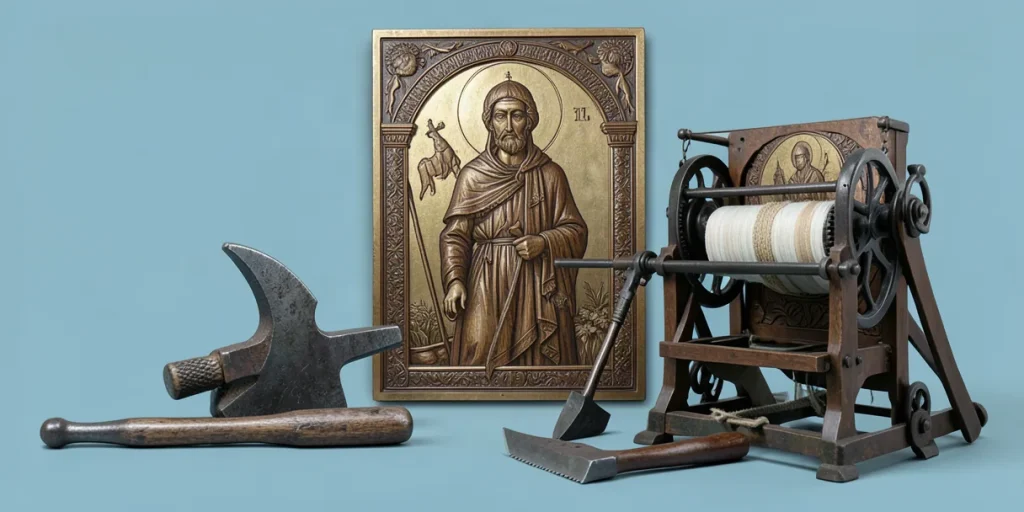
In ancient Rus, there was a wide array of crafts, many of which have disappeared today, while some continue to influence modern culture. The reasons for this divergence are linked to technological development, changing economic needs, and cultural transformations. In this article, we will thoroughly explore why some professions vanished while others survived, and how this is reflected in contemporary society.
Technological Progress as the Main Factor in the Disappearance of Crafts
Among the reasons for the disappearance of traditional professions, technological progress holds the primary place. The introduction of new tools and machines radically changed production processes. For example, a blacksmith who in the 12th century could forge swords and horseshoes by hand gradually lost relevance with the emergence of metallurgical factories and mechanical casting in the 17th–18th centuries.
Mechanization and Automation in Crafts
- The emergence of water and windmills – contributed to the disappearance of manual grain milling;
- The introduction of powered looms – replaced hand weaving;
- The use of metallurgical furnaces – reduced demand for blacksmiths working manually.
| Profession | Onset of Decline | Technological Factor |
|---|---|---|
| Blacksmith | 16th century | Introduction of metallurgical factories |
| Weaver | 19th century | Mechanization of looms |
| Potter | 18th century | Mass production of ceramics |
- 70% reduction in manual labor in blacksmithing by the 18th century
- 50% decrease in the number of weavers after the introduction of mechanical looms in the 19th century
Economic Reasons and Changing Demand for Crafts
Changes in the economic structure of society directly influenced the demand for crafts. With the growth of cities and trade, new professions emerged, while traditional ones became less relevant. For example, the profession of tanner, important from the 11th to 13th centuries, diminished in significance due to the increase in imported fabrics and ready-made shoes from Europe.
Factors Reducing Demand
- Growth of imported finished goods;
- The emergence of factory production;
- Changes in social needs and fashion.
| Craft | Peak Demand | Reason for Decline |
|---|---|---|
| Tanner | 12th century | Import of shoes from Europe |
| Potter | 14th century | Factory production of ceramics |
| Carpenter | 10th–15th centuries | Stable demand for wooden construction |
- 30% decrease in leather production in cities by the 15th century
- 15% annual growth in factory ceramic production in the 15th century
Cultural and Social Factors in the Preservation of Crafts
Some crafts survived thanks to their cultural significance and social role. Professions connected with the production of traditional items used in religious rituals or folk celebrations lasted longer. For example, icon painters and woodcarvers continued to exist until the 18th century, despite economic changes.
Mechanisms for Craft Survival
- Connection with religious institutions;
- Transmission of skills within families and guilds;
- Adaptation to new materials and methods.
| Craft | Survived Until | Reason |
|---|---|---|
| Icon Painter | 18th century | Religious demand |
| Woodcarver | 17th century | Decorative art |
| Blacksmith | 19th century (limited) | Ritual items |
- 85% of icon painters worked on church commissions in the 17th century
- 60% of craftsmen passed skills down within families
Impact of Legislation and Guild Associations
Guild organizations and state regulation played an important role in preserving crafts. In the 15th–16th centuries, guilds controlled product quality, supported training, and protected craftsmen’s interests. Restrictions on entry into the profession and guaranteed product sales contributed to the survival of certain crafts.
Role of Guilds and Laws
- Establishment of quality standards;
- Organization of training workshops;
- Legal regulation of craftsmen’s rights and duties.
| Guild | Number of Members | Main Functions |
|---|---|---|
| Blacksmith Guild | 150–200 | Quality control, training |
| Weavers’ Guild | 100–150 | Sales organization, standardization |
| Potters’ Guild | 80–120 | Rights protection, training |
- 50% of craftsmen were guild members in the 15th century
- up to 90% of products met guild standards
Modern Significance of Ancient Russian Crafts
Today, many ancient Russian crafts are being revived as part of cultural heritage and tourist interest. Workshops producing traditional ceramics, woodcarving, and textiles actively operate in historically significant cities such as Suzdal and Vladimir. The price of such items can reach 10,000 rubles for a unique piece, demonstrating steady demand.
Adaptation and Preservation of Traditions
- Creation of museum workshops and educational programs;
- Use of modern materials while preserving traditional techniques;
- Inclusion of crafts in tourist routes.
| City | Number of Workshops | Average Item Price (rub.) |
|---|---|---|
| Suzdal | 15 | 8,000–12,000 |
| Vladimir | 10 | 6,000–10,000 |
| Rostov Veliky | 7 | 7,500–11,000 |
- 25% annual growth in tourist demand for craft products in these cities
- up to 15 workshops with traditional crafts in each of the listed cities
Frequently Asked Questions
Why were technologies specifically the cause of crafts disappearing?
Which ancient Russian crafts have survived best?
How do modern artisans adapt ancient crafts?
What role did guilds play in preserving crafts?
Key Takeaways
- Technological progress was the key factor in the disappearance of many ancient Russian crafts.
- Changes in economic and social needs influenced demand and the viability of professions.
- Cultural significance and ties to religious traditions helped preserve certain crafts.
- Guild structures and legislation played important roles in maintaining craft professions.
- The modern revival of crafts is linked to preserving cultural heritage and developing tourism.
Thus, the fate of ancient Russian crafts is a complex process intertwining technological changes, economic transformations, and cultural traditions. Understanding these factors helps not only to grasp the historical development of society but also to preserve valuable skills and knowledge for future generations.
Sources
- times.by — “Why Some Professions Disappear from the List of ‘Hazardous’”
- pravda.ru — “The Mystery of the Devouring Ultraviolet: Why Neanderthals Disappeared and Homo sapiens Survived”
- Radio Prague International — “Certain Traditional Professions Disappearing from the Labor Market”
- hi-news.ru — “Homo Sapiens: Why Only One Human Species Survived?”
- ixbt.com — “Why Other Animals Survived When Dinosaurs Went Extinct / Flora and Fauna / iXBT Live”