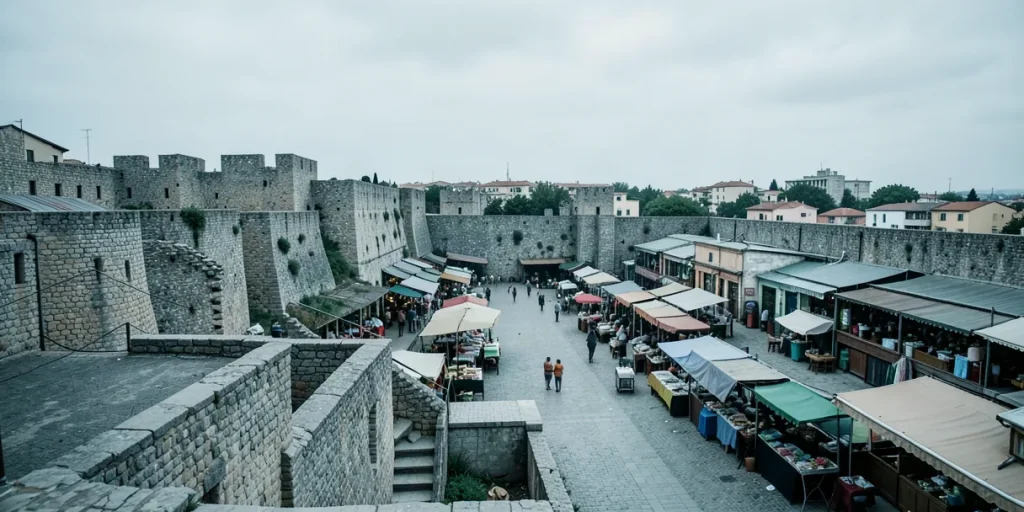
The emergence and development of the first cities on the territory of Russia mark a pivotal stage in the history of the region’s societal and cultural formation. These early settlements were not merely places of residence but became centers of trade, crafts, and political life, laying the groundwork for future state-building. Understanding the processes that led to the appearance of the first cities offers deeper insight into the unique historical path of Russia and its peoples.
The first cities mainly arose during the early Middle Ages, when active exchange of goods and ideas began among various ethnic groups inhabiting the vast territories of Eastern Europe. Their growth was driven by favorable geographic locations, the presence of natural resources, and increased social and economic interactions. Studying these factors helps trace how small settlements evolved into major centers that played a significant role in the country’s later history.
| Object | Founding/Appearance Date | Main Function | Significant Fact |
|---|---|---|---|
| Novgorod | 9th century (around 859 AD) | Trade and craft center | More than 20 craft guilds by the 11th century |
| Kiev | 9th century (first mentioned in 882 AD) | Political and religious center | Baptism of Rus in 988 AD |
| Belgorod Defensive Line | 17th century (Belgorod founded in 1596) | Defensive line | Length about 800 km |
- 859 AD First mention of Novgorod in the chronicles
- 882 AD First mention of Kiev as a state center
- about 800 km Length of the Belgorod Defensive Line
- more than 20 Number of craft guilds in Novgorod by the 11th century
When and Where Did the First Cities Appear on the Territory of Modern Russia?
The first cities on the territory of modern Russia appeared in the 9th–10th centuries, among which Novgorod and Kiev are considered the most significant. Novgorod is first mentioned in the chronicles in 859 AD and became an important trade and craft center along the route «from the Varangians to the Greeks.» Kiev, first mentioned in 882 AD, later became the capital of the Old Rus’ state, uniting vast territories and serving as a political center. These cities developed thanks to their advantageous geographic locations at the crossroads of trade routes and their active craft production, which fostered population growth and social structure development. For example, by the 11th century, Novgorod had specialized craft guilds, and its defensive structures covered several hectares.
Criteria for the Emergence of the First Cities
- Founding dates: Novgorod — 859 AD, Kiev — 882 AD;
- Role in trade: located on key routes connecting Northern Europe and Byzantium;
- Socio-political significance: Kiev as the center of unification of East Slavic tribes;
- Territorial size: city fortifications covered from 10 to 15 hectares;
- Development of crafts: presence of guilds and workshops specializing in metalworking and textiles.
What Historical Factors Contributed to the Emergence of the First Cities?
The main historical factors that contributed to the emergence of the first cities on Russian territory were the development of trade, growth in craft production, and political centralization. The trade route «from the Varangians to the Greeks,» which was already active in the 9th century, ensured a steady influx of goods and wealth, stimulating economic growth and the formation of large trade centers. For instance, by the 11th century, Novgorod had more than 20 craft guilds specializing in the production of metal goods and textiles, indicating a high level of economic activity and specialization. Such a degree of craft production required centralization and protection, which in turn led to the establishment of city fortifications and administrative structures.
Political Centralization and Urban Organization
Political centralization around the princes played a key role in the formation of the first cities. The strengthening of princely power in the 10th–11th centuries led to the creation of fortified urban centers such as Kiev and Novgorod, where wooden and stone fortresses were constructed to withstand sieges. In Novgorod, for example, administrative power was concentrated in the veche (assembly) and the prince’s retinue, ensuring economic management and city defense. By the 11th century, the centralization of power was accompanied by the introduction of taxation and military organization systems, laying the foundation for the further development of cities as political and economic hubs.
How Did the First Cities Influence the Culture and Society of Ancient Rus?
The first cities on the territory of Ancient Rus had a profound impact on the development of culture and social structure. Novgorod, which became a center for chronicle writing and Orthodox enlightenment from the 11th century, played a crucial role in forming the written tradition and spreading Christian morality. In the 11th century, the first Christian schools were established in Novgorod, educating about 200 students, which promoted literacy among clergy and nobility. This process strengthened cultural unity and laid the foundations of the society’s spiritual life.
The Influence of the Baptism of Kiev and Urban Communities
In Kiev, the Baptism of Rus in 988 marked a turning point in the development of architecture and art. In the following decades, stone churches were built in the capital, such as the Saint Sophia Cathedral with its frescoes and mosaics, significantly transforming the city’s appearance and the culture of its inhabitants. At the same time, urban communities and posads (merchant quarters) were formed, where craftsmen and traders lived. The posads in Novgorod and Kiev numbered from 500 to 1500 people, forming the basis for a social structure divided into merchants, craftsmen, and administrators. These communities ensured economic stability and promoted trade development along the route «from the Varangians to the Greeks.»
- Novgorod school in the 11th century — about 200 students
- Baptism of Rus in Kiev — 988 AD
- Saint Sophia Cathedral in Kiev — 12th century, stone architecture
- Posads — from 500 to 1500 residents, craftsmen and traders
What Contribution Did the Belgorod Defensive Line Make to City Development in the 17th Century?
The Belgorod Defensive Line in the 17th century made a significant contribution to the development of cities on Russia’s southern borders, serving as the basis for the creation of fortresses and settlements that provided protection against nomadic raids and stimulated the region’s economic strengthening. The length of the defensive line exceeded 800 kilometers, allowing not only control over the territory but also conditions for population migration from central areas. The city of Belgorod, founded in 1596, became a key military and administrative center, combining defense and economic organization functions. Thanks to the defensive line, new cities gained the opportunity to develop as trade and craft centers, which contributed to market saturation with goods and increased tax revenues to the treasury.
Economic and Demographic Impact
The defensive line stimulated active resettlement of peasants and craftsmen, promoting population growth in border areas throughout the 17th century. As a result, the region saw the creation not only of military fortresses but also of agricultural settlements where grain was grown, livestock raised, and crafts produced. An important factor was the establishment of legal and administrative structures that ensured order and encouraged trade development. According to historians’ estimates, some cities founded along the defensive line had populations exceeding several thousand people, and tax revenues from grain and fur trade increased by 15–20% compared to earlier periods.
What Challenges and Limitations Did the First Cities Face in Their Development?
Internal and External Challenges
The first cities on Russian territory faced serious limitations in transport technologies, which hindered the development of trade connections, especially in winter. For example, in the 9th–10th centuries, the main transport means were river routes and primitive road paths that became nearly impassable in winter due to ice and snow; this reduced trade volumes by 30–50% in cold months. Limited cargo transportation capacities forced cities like Novgorod and Kiev to focus on local production and crafts, slowing economic growth and market expansion.
In addition, constant nomadic raids required significant resources for defense and fortifications. From the 11th to the 17th centuries, building defensive structures such as city walls and towers consumed up to 40% of city budgets. For example, the construction of the Belgorod Defensive Line in the 17th century was a response to these threats but demanded the mobilization of thousands of people and substantial material costs. Moreover, legal and administrative conflicts arose within cities between princely and church authorities, manifested in the creation of juridical districts — autonomous city parts not subject to the magistrate. This complicated city governance and sometimes led to lengthy legal disputes and delays in resolving important issues.
- Winter reduction of trade transportation by 30–50%
- Up to 40% of city budgets spent on defensive structures
- Juridical districts — autonomous city parts not subordinate to the magistrate
- Belgorod Defensive Line — large-scale 17th-century fortification
Frequently Asked Questions
Why is Novgorod considered one of the first cities of Russia?
What is the significance of Kievan Rus for urban development?
What is the Belgorod Defensive Line and how did it affect cities?
What crafts were developed in the first cities?
Key Takeaways
- Novgorod and Kiev are the key first cities of Rus in the 9th–10th centuries
- Trade along the route from the Varangians to the Greeks shaped the cities’ economies
- The Baptism of Rus in 988 influenced cultural development
- The 17th-century Belgorod Defensive Line fortified southern cities
- Cities faced challenges of transportation, defense, and governance
Sources
- pptcloud.ru — «Presentation on the Topic ‘Emergence of the First Cities and Principalities. Princes’ Policy’ for 6th Grade History»
- profil.adu.by — «[PDF] § 27. Development of Cities, Crafts, and Trade on the Territory»
- infourok.ru — «The Great Migration of Peoples on the Territory of Modern Russia. The Rus State»
- cyberleninka.ru — «Emergence and Construction of the Belgorod Defensive Line – a Scientific Article on History and Archaeology»
- legalbet.by — «History of Football: Emergence and Development»