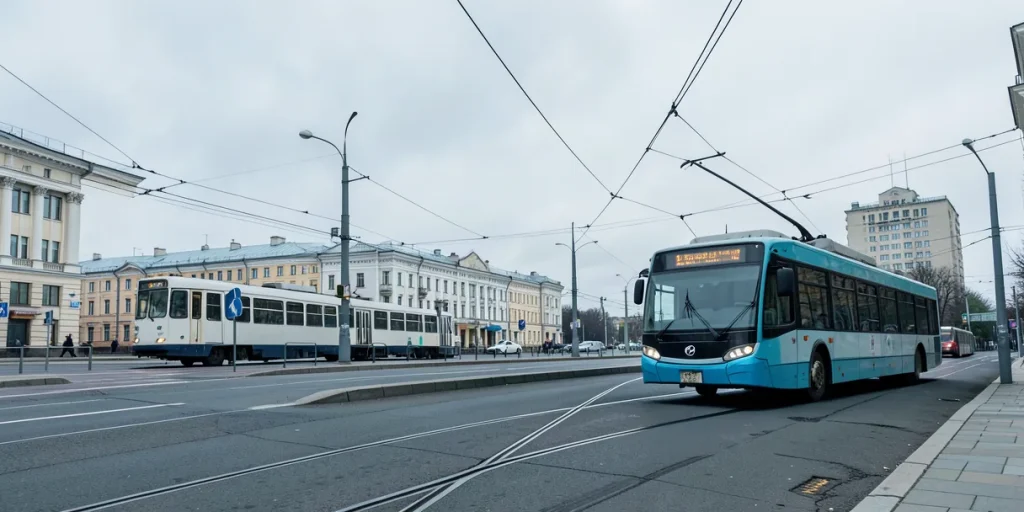
The history of public transport development in major Russian cities reflects the evolution of technologies and changing socio-economic needs of the population, starting from horse-drawn carriages and 19th-century trams to today’s modern metro systems, electric buses, and smart transport networks. This process involved numerous stages of modernization and restructuring, shaping the face of urban mobility as we know it.
Public transport has always been a vital part of city life, providing accessibility to various districts and supporting the growth of urban infrastructure. In large Russian cities such as Moscow, Saint Petersburg, Novosibirsk, and Yekaterinburg, transport systems have not only adapted to population growth and territorial expansion but have also introduced innovative solutions reflecting technological progress and urban trends. Understanding the history of public transport development helps to assess current challenges and future prospects for its improvement.
In this article, we will examine the key stages of public transport formation and transformation in Russia’s biggest metropolises, highlight the features of each period, and analyze how technical innovations and urban planning have contributed to creating convenient and efficient transport systems. This will illustrate how transport became an integral part of urban culture and economy.
| City | Metro length (km) | Metro fare (₽) | Types of eco-friendly transport |
|---|---|---|---|
| Moscow | 450 | 65 | KAMAZ-6282 electric buses |
| Saint Petersburg | 130 | 60 | Trolleybuses with autonomous mode |
| Novosibirsk | 17.5 | 55 | Volvo 7900 Electric Hybrid buses |
- 450 km total length of Moscow metro lines in 2026
- 65 ₽ metro fare in Moscow in 2026
- 2.8 billion passengers annual ridership of Moscow metro
- 3 billion ₽ cost to build 1 km of metro tunnel in Moscow
How Has Public Transport Developed in Moscow from the 19th Century to Today?
Historical Stages
Public transport in Moscow began to develop actively with the opening of the first city tram line in 1898, extending 7.5 km, marking an important milestone in improving residents’ mobility. In 1935, the Moscow Metro was launched — the first in the USSR and one of the world’s largest. By 2026, the metro network consists of 16 lines with a total length exceeding 450 km, significantly increasing capacity and travel speed across the city.
Modern Innovations
In recent years, Moscow has introduced eco-friendly transport technologies; for example, since 2018, KAMAZ-6282 electric buses have been operating in the capital, making up about 15% of the entire bus fleet by 2026. The metro fare in 2026 is 65 rubles per ride, reflecting rising maintenance costs and technology upgrades. This supports high quality and safety of transport services while keeping them affordable for a broad segment of the population.
- First tram line — 7.5 km (1898)
- Metro length — over 450 km across 16 lines (2026)
- KAMAZ-6282 electric buses make up about 15% of bus fleet (2026)
- Metro fare — 65 rubles per ride (2026)
What Are the Characteristics of Public Transport Development in Saint Petersburg?
History of Trams and Metro
Public transport in Saint Petersburg is marked by a long history of tram and metro system development with continuous expansion and modernization. The first Petersburg tram was launched in 1907, with a route about 5 km long, becoming an important step in urban mobility. The metro opened in 1955 with its initial line stretching 7.8 km, and by 2026 the network includes 5 lines totaling 130 km, greatly enhancing the city’s transport accessibility.
Energy Saving and Fares
Since 2020, Saint Petersburg has actively introduced trolleybuses with autonomous mode, which save up to 20% of electricity by reducing time spent connected to overhead wires. This innovation supports environmentally friendly and efficient transport. Fare prices remain affordable: in 2026, a metro ticket costs 60 rubles, and a daily bus pass is 50 rubles, aligning with the city’s economic realities and encouraging passenger growth.
- First tram route — about 5 km (1907)
- First metro line — 7.8 km (1955)
- Total metro length — 130 km (2026)
- Electricity savings by autonomous-mode trolleybuses — up to 20% (since 2020)
- Metro fare — 60 rubles (2026)
- Daily bus ticket price — 50 rubles (2026)
When and How Did the First Transport Innovations Appear in Novosibirsk?
The first transport innovations in Novosibirsk appeared in 1937 with the opening of the first tram line, 6.2 kilometers long, marking the beginning of urban public transport development. A significant milestone followed in 1986 with the introduction of the Novosibirsk Metro, initially one line stretching 12.7 km, which expanded to two lines totaling 17.5 km by 2026.
Tram and Metro
Novosibirsk’s tram network began operation in 1937 with a 6.2 km route, greatly improving accessibility to the city center. The 1986 opening of the first metro line, 12.7 km long, was a technological breakthrough, offering fast and comfortable rides. By 2026, the metro expanded to two lines totaling 17.5 km, substantially increasing capacity and integration with other transport modes.
Environmental Innovations
Since 2022, Novosibirsk has used Volvo 7900 Electric Hybrid buses, reducing CO2 emissions by approximately 30%, an important step in the city’s ecological development of public transport. The average fare in 2026 is 55 rubles, notably lower than in Moscow and Saint Petersburg, making transport more accessible to residents.
- First tram line: 6.2 km, 1937
- First metro line: 12.7 km, 1986
- Current metro length: 17.5 km, 2 lines by 2026
- Volvo 7900 Electric Hybrid buses reducing CO2 emissions by 30%, since 2022
- Average fare: 55 rubles in 2026
How Has Public Transport Development Affected the Urban Pace of Life?
The development of public transport has significantly accelerated the urban rhythm, cutting travel times by 25–40% in major Russian cities thanks to metro implementation and modernization of boarding systems. This has increased residents’ mobility and boosted passenger flow, as seen in Moscow metro’s ridership growing from 2.4 to 2.8 billion passengers per year between 2015 and 2025.
Impact on Time and Comfort
The Moscow metro, launched in the 20th century and continuously expanded, has been a key factor in reducing travel time. Modern stations and trains save passengers significant hours daily. In Saint Petersburg, the introduction of unified transport cards has sped up boarding by 15%, reducing delays and enhancing travel comfort. These changes contribute to more efficient use of residents’ time and foster a dynamic urban pace.
Environmental Effect
The growing number of electric and hybrid buses in Russian megacities helps reduce air pollution in central districts. These eco-friendly transport modes cut harmful emissions, improving urban environmental quality and supporting residents’ health. Adopting such technologies is an important element of sustainable city development.
- Travel time reduced by 25–40% thanks to metro;
- Moscow metro ridership grew to 2.8 billion passengers annually by 2025;
- Boarding speed increased by 15% in Saint Petersburg with unified cards;
- Greater use of electric and hybrid buses reduces pollution.
What Challenges and Limitations Have Arisen in Developing Public Transport in Russia’s Major Cities?
Financial Barriers
The high cost of constructing and modernizing public transport infrastructure in Russia’s major cities is a primary limitation. For example, building one kilometer of Moscow metro tunnel can exceed 3 billion rubles in some cases, significantly slowing network expansion. Similarly, transitioning to eco-friendly buses like the KAMAZ-6282 model requires investments amounting to tens of billions of rubles for fleet renewal and charging infrastructure creation.
Funding such projects often involves long payback periods and the need to attract both public and private resources, restricting the rapid implementation of large-scale upgrade and expansion programs.
Integration and Renewal
Coordination difficulties between different transport modes cause passenger inconvenience and reduce system efficiency. In Moscow and Saint Petersburg, scheduling and fare alignment issues between metro, trams, and buses lead to delays and overcrowding. In some areas, such as downtown Yekaterinburg, tram capacity is limited and frequency does not exceed 8 trips per hour, creating bottlenecks on routes.
- Tram frequency limited to 8 trips per hour in some areas.
- Cost of building 1 km of Moscow metro tunnel exceeds 3 billion rubles.
- Investments for updating KAMAZ-6282 buses reach tens of billions of rubles.
Updating transport and implementing new technologies require a comprehensive integration approach, which remains one of the key challenges in public transport development.
Frequently Asked Questions
When was the first metro in Russia opened?
What is the most common type of public transport in Russian megacities?
Why has the number of electric buses increased in Russian cities in recent years?
How have public transport fares in Moscow changed in recent years?
Key Takeaways
- The first city tram in Russia appeared in Moscow in 1898.
- Moscow metro is the largest in Russia with 16 lines and 450 km of track.
- The introduction of electric and hybrid buses reduces pollution and improves energy efficiency.
- Fare prices range from 55 to 65 rubles in Russia’s largest cities.
- Transport development has significantly cut travel times and improved urban mobility.