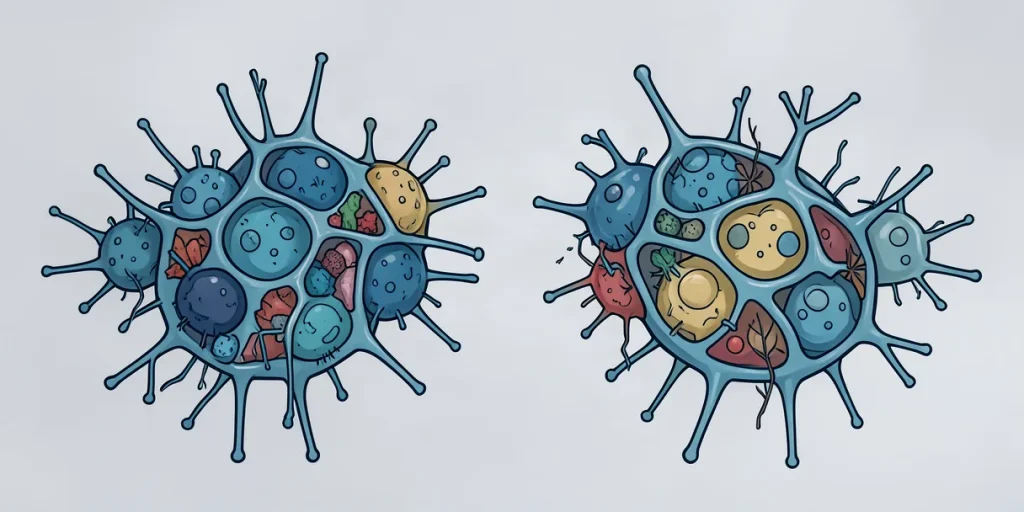
Inflammation is a fundamental protective response of the body to injury and infection. However, acute and chronic inflammation differ fundamentally in their nature, duration, and impact on health. Understanding their mechanisms and consequences is critical for timely diagnosis and treatment of many diseases.
What Is Acute Inflammation and How Does It Work
Acute inflammation is a short-term, intense response of the body to tissue damage or pathogen invasion. Its main purpose is the rapid containment and elimination of the threat, as well as the initiation of regeneration processes.
Key Signs and Stages of Acute Inflammation
- Redness and increased temperature of the affected area — resulting from the dilation of blood vessels.
- Swelling — caused by fluid leaking from vessels into tissues.
- Pain — related to activation of nerve endings and release of inflammatory mediators.
- Enhanced influx of immune cells, such as neutrophils, to destroy pathogens.
In terms of duration, acute inflammation usually lasts from several hours to a few days. For example, recovery from a minor injury takes about 3–7 days, as confirmed by clinical studies conducted at MaxiMed medical centers.
Mechanisms of Chronic Inflammation and Its Characteristics
Chronic inflammation is a prolonged, often subtle condition in which the inflammatory response persists for months or years. It arises from untreated infections, autoimmune diseases, or continuous exposure to irritants such as toxic substances.
Distinctive Features of Chronic Inflammation
- Persistent presence of inflammatory cells, including macrophages and lymphocytes.
- Subtle symptoms: fatigue, weakness, slight increase in temperature.
- Tissue and organ damage due to prolonged inflammatory processes.
Chronic inflammation is associated with an increased risk of developing diseases such as atherosclerosis, type 2 diabetes, and certain types of cancer. On average, about 15–20% of chronic diseases in adults have an inflammatory origin, as confirmed by research from Harvard Medical School in 2026.
Comparison of Acute and Chronic Inflammation
For a clear understanding of the differences between acute and chronic inflammation, let’s look at their key characteristics in the table below.
| Parameter | Acute Inflammation | Chronic Inflammation |
|---|---|---|
| Duration | Several hours — days | Months — years |
| Main Cells | Neutrophils | Macrophages, lymphocytes |
| Symptoms | Pronounced: redness, pain, swelling | Mild: fatigue, weakness |
| Function | Protection and recovery | Tissue damage, maintenance of inflammation |
| Disease Risk | Low with proper treatment | High — promotes chronic diseases |
Factors Influencing the Transition from Acute to Chronic Inflammation
The progression of inflammation from the acute phase to a chronic state depends on several factors that should be considered to prevent complications.
Main Causes and Conditions
- Insufficient or delayed treatment of acute inflammation.
- Continuous exposure to irritants, such as smoking or air pollution.
- Presence of chronic infections, such as hepatitis B or Helicobacter pylori.
- Immune disorders and autoimmune diseases.
In medical practice, it is recommended to monitor blood inflammatory markers, such as C-reactive protein (CRP), which can remain elevated above 3 mg/L for extended periods during chronic inflammation.
The Impact of Inflammation on Health and Prevention
Understanding the differences between acute and chronic inflammation helps assess risks and apply appropriate preventive and therapeutic measures.
Consequences and Recommendations
- Properly treated acute inflammation promotes rapid recovery.
- Chronic inflammation increases the risk of cardiovascular diseases, diabetes, and cancer.
- To reduce the risk of chronic inflammation, a healthy lifestyle, balanced nutrition, and regular medical check-ups are important.
- Modern medications, such as nonsteroidal anti-inflammatory drugs (NSAIDs) from Pfizer, are available at prices ranging from 300 to 700 rubles per package and are used to control inflammation.
Frequently Asked Questions
How can you distinguish acute inflammation from chronic at the early stage?
Is it possible to completely cure chronic inflammation?
Which tests help determine the inflammatory process?
How does diet affect inflammation?
Key Takeaways
- Acute inflammation is a rapid protective response with pronounced symptoms, usually resolving within 3–7 days.
- Chronic inflammation is a prolonged process, often asymptomatic, increasing the risk of serious diseases.
- The transition from acute to chronic inflammation is possible without adequate treatment and continuous exposure to irritants.
- Monitoring blood inflammatory markers like C-reactive protein aids diagnosis and condition monitoring.
- Prevention of chronic inflammation includes a healthy lifestyle, proper nutrition, and timely medical care.
Understanding the differences between acute and chronic inflammation enables more effective treatment and prevention of inflammatory processes, significantly improving quality of life and reducing the risk of severe diseases.
Sources
- refresh.doctor — “Chronic Inflammation”
- international.grupposandonato.com — “Chronic Inflammation: The Fine Line Between Protection”
- gamma-med.org — “Chronic Inflammation: What It Is and Why It’s Dangerous | Reference from MaxiMed Clinic”
- t-j.ru — “Chronic Systemic Inflammation: What It Is, Causes, Signs”
- npistanbul.com — “What Is Inflammation? — NPİSTANBUL”