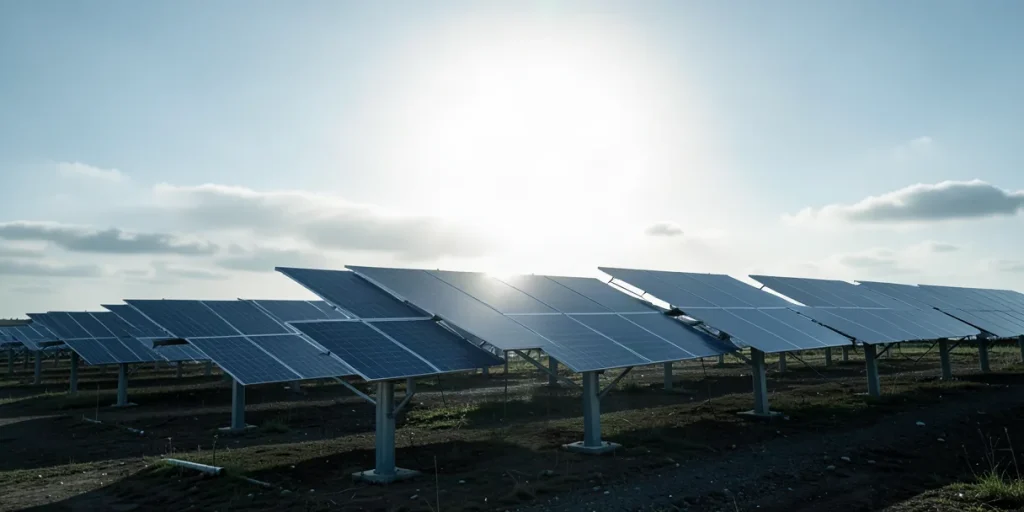
Perovskite solar panels are emerging as a major breakthrough in energy, and China, a leading solar energy producer, is actively positioning itself at the forefront of this technology. With their high efficiency and low cost, these panels promise to revolutionize the approach to alternative energy by offering more affordable and effective solutions for generating electricity.
By shifting to perovskite technology, China is not only strengthening its position in the global market but also taking a step toward a sustainable future. Sustainable, clean energy sources are becoming increasingly important amid global challenges, and perovskite solar panels could be key to solving these problems. This article looks at how these innovative technologies are changing China’s energy landscape and what they could offer in the future.
Introduction to Perovskite Solar Panels
Perovskite solar panels represent a new chapter in solar energy, harnessing the unique properties of perovskite minerals. These materials are known for their ability to absorb sunlight efficiently and convert it into electrical energy. Perovskite’s main advantage is its high photosensitivity and relative ease of production, making it a promising candidate to replace traditional silicon solar panels.
A comparison of perovskite and silicon panels shows that the latter have a long track record and are well established in the market, but are limited in terms of efficiency and cost. While silicon panels reach a maximum efficiency of around 22-23%, perovskite panels are already demonstrating figures of 25% and above. In addition, producing perovskite panels requires less energy and fewer materials, significantly reducing their cost and making them more accessible for mass production.
The advantages of perovskite technology in energy are clear. First, its high efficiency in converting solar energy into electricity reduces the area needed to install solar power plants. Second, the ability to integrate perovskite panels flexibly into various structures and surfaces opens up new possibilities for using solar energy in urban and rural settings. Third, as the technology advances and perovskite materials become more stable, they could become competitive with—and even preferable to—traditional solutions.
Perovskite solar panels could therefore become a key element in the transition to sustainable energy sources, helping reduce carbon footprints and ensure energy independence. As demand for renewable energy grows, these technologies offer new opportunities for China and the world in the energy sector.
Testing a Solar Power Plant in China
Successful trials have been completed in China at a solar power plant using innovative perovskite solar panels. The panels delivered outstanding results, substantially outperforming traditional silicon equivalents. During testing conducted in accordance with the international IEC 61215 standards, perovskite modules demonstrated higher efficiency and significantly lower production costs—a major step toward their widespread adoption in industry.
The test results confirmed that perovskite panels can achieve efficiency levels of up to 25%, far higher than those of most modern silicon solutions. While silicon panels typically have an efficiency of 15-20%, perovskite technology opens up new possibilities for solar energy. In addition, the cost of producing perovskite panels proved to be significantly lower, making them more attractive for commercial use.
The testing also included a comparison with earlier solar power plant models, including those using silicon panels. The results showed that perovskite systems not only outperform them in efficiency but also have greater potential for scaling up and reducing production costs. This means perovskite solar panels could become widespread in the coming years, potentially bringing significant changes to the renewable energy market.
The successful trials of the perovskite-based solar power plant in China therefore confirm not only the technology’s viability but also open up new opportunities for the sustainable development of the country’s energy sector and the world as a whole. This breakthrough in solar technology could lay the foundation for future innovations and more efficient use of solar energy on a global scale.
Technological Advances in Solar Energy
Perovskite solar panels mark a significant step forward in solar energy, especially in China, where they were first tested as part of a full-scale solar power plant. Based on a perovskite structure, these panels incorporate a number of innovations that make them more competitive than traditional silicon solar cells.
One of the main advances in perovskite panel production is the use of new technologies that help lower manufacturing costs. This not only makes solar energy more accessible but also more appealing for widespread use. As a result, perovskite panels cost significantly less, opening up new possibilities for the development of solar energy both in China and beyond.
Considerable attention is also being paid to improving the durability and stability of perovskite panels. Research has shown that modern processing methods and protective coatings can extend their service life, a critical factor for commercial use. Perovskite panels tested to international standards have demonstrated their ability to maintain efficiency even under unfavorable operating conditions.
New methods are also being actively developed to increase the efficiency of perovskite panels. Research is focused on creating multilayer structures capable of capturing more solar energy and converting it into electricity. For example, combining perovskite cells with traditional silicon ones could raise overall efficiency to 30% or more. This not only strengthens the competitiveness of perovskite technology but also makes it more attractive for large-scale energy projects.
Perovskite solar panels are thus ushering in a new era in energy, offering high efficiency, affordability, and durability and making them one of the most promising areas of renewable energy.
The Economics of Adopting Perovskite Technology
The adoption of perovskite technology in solar panel manufacturing opens up new possibilities for making solar energy more affordable and widely available. One key factor is the significant reduction in production costs compared with traditional silicon panels. This is achieved through the use of simpler, cheaper materials and more efficient manufacturing methods. As a result, perovskite panels are becoming more cost-competitive, which in turn lowers the price for consumers.
Affordable solar energy for households and businesses is becoming a reality thanks to such innovations. Lower prices for perovskite panels are helping drive their popularity and the wider adoption of solar energy. By installing more affordable panels, consumers can substantially reduce their electricity bills and may also benefit from tax breaks and subsidies offered by governments in various countries.
The potential for growth in the global solar energy market associated with perovskite technology also looks very promising. As these panels become more efficient, reaching 25%, and can be mass-produced, demand for solar energy is expected to grow. This will lead not only to the development of new production capacity but also to job creation in this rapidly growing industry. In addition, adopting perovskite technology could help reduce dependence on fossil fuels, which is important for sustainable development and combating climate change.
The economic prospects for adopting perovskite technology in solar energy are therefore promising and could provide the foundation for a new, more sustainable energy system in China and around the world.
Environmental Benefits of Perovskite Panels
Perovskite solar panels are a significant advance in clean energy, offering not only high efficiency but also environmental benefits that could change how energy is produced and used. One of the most tangible advantages is a lower carbon footprint during panel production. Perovskite technology can significantly reduce the amount of energy needed to manufacture the panels compared with traditional silicon ones. This is because making perovskite solar cells is less resource-intensive and requires fewer raw materials. As a result, using perovskite panels can significantly reduce greenhouse gas emissions during production.
The opportunities perovskite panels offer for sustainable development and environmental protection also deserve attention. They can be made from readily available, inexpensive components, making them more accessible to a wide range of consumers and supporting the shift to renewable energy in different regions, including remote and developing countries. This means more people will be able to access clean energy, which in turn will help improve quality of life and reduce dependence on fossil fuels.
The potential uses of perovskite are not limited to solar panels. Research suggests that this material could be used in other industries, such as electronics and photonics. For example, perovskite materials could be used to produce efficient LEDs and lasers, with applications ranging from household lighting to complex optical systems. Perovskite thus opens up new horizons for innovation, supporting sustainable technological development and environmental safety.
Overall, perovskite solar panels are an important step toward more sustainable, cleaner energy, making them a key element in the fight against climate change and the pursuit of a healthier planet.
The Future of Solar Energy with Perovskite Panels
Perovskite solar panels represent a breakthrough in solar energy, and their future looks bright. Forecasts for adoption in the coming years point to significant growth in the use of perovskite panels, especially in China, where a solar power plant using these innovative modules has already been successfully tested. By 2030, perovskite panels are expected to account for 20% of total solar energy capacity, thanks to their high efficiency and lower production costs compared with traditional silicon panels.
The importance of perovskite solar panels to the energy transition can hardly be overstated. They not only help reduce carbon emissions but also make solar energy more accessible. This is especially relevant for countries with high levels of solar radiation, where perovskite technology can be used to create efficient, low-cost renewable energy solutions. Adopting these panels could play a key role in achieving global climate goals and switching to sustainable energy sources.
Potential partnerships and investment in the research and development of perovskite solar panels could also significantly accelerate their adoption. Chinese companies are already active in this field, signing agreements with research institutes and universities to develop the technology jointly. This collaboration could lead to new technologies and improvements to existing solutions, which would in turn strengthen the competitiveness of China’s solar sector internationally. Investment in this area will support not only technological development but also job creation, an important aspect of the country’s economy.
The future of solar energy with perovskite panels therefore looks promising. Innovations in this field could change not only the solar energy market but also the entire approach to sustainable development on a global scale.
Global Experience: How Other Countries Use Perovskite Technology
Perovskite solar panels are becoming an important part of global efforts to move toward cleaner, more efficient energy. Countries around the world are actively researching and adopting these technologies, with significant progress compared with traditional silicon panels. For example, large-scale research in Japan and Germany is focused on improving the durability and stability of perovskite cells.
Successful projects in different countries show that perovskite panels can be both efficient and cost-effective. In Switzerland, for example, several solar power plants have been successfully launched using perovskite panels alongside innovative energy storage methods. These projects not only increase output but also reduce electricity costs. Australia has also seen growing interest in perovskite technology, with mobile solar installations based on perovskite materials developed for easy transport and setup in remote areas.
International experience shows that cooperation between academic institutions, government agencies, and the private sector is a key factor for success in this field. Lessons from these projects could be valuable for countries seeking to develop their own solar technologies. The following aspects are important to consider:
- Investing in research and development to improve panel quality and efficiency.
- Creating a favorable regulatory environment to support the adoption of new technologies.
- Encouraging international cooperation and knowledge-sharing on perovskite solutions.
- Training specialists and establishing programs to improve skills in solar energy.
Experience from other countries using perovskite technology can therefore serve as a valuable guide for China and other nations seeking to introduce innovation in renewable energy.
Conclusion: A New Perspective on Solar Energy
Perovskite solar panels represent an important step forward in solar energy, particularly in light of their successful application in China. Testing at a solar power plant using these panels showed that they are significantly more efficient than traditional silicon modules. This suggests that perovskite technology can not only become competitive but also substantially transform the solar energy landscape. Lower production costs combined with higher efficiency open up new possibilities for the widespread use of solar energy.
It is important to note that the successful trials of perovskite panels are only the beginning. For this technology to become standard in the energy sector, research and development must continue. Investment in research, technological improvements, and optimized manufacturing processes could bring further benefits and speed up the market adoption of perovskite solutions. Work is also needed to standardize and certify the new panels to ensure their safety and reliability.
The prospects for using perovskite solar panels are very promising. They could play a key role in the transition to a more sustainable energy system and help combat climate change. For future generations, this means not only access to clean energy but also the creation of new jobs in high technology. The development of perovskite energy could thus provide the foundation for a greener, more sustainable, and more technologically advanced society.
In conclusion, perovskite solar panels are opening a new era in energy, one that could change how renewable energy sources are used and make them more accessible to a broad cross-section of the population. This field deserves our attention and support so that its potential can be harnessed to the fullest.
Frequently Asked Questions
What are perovskite solar panels?
What are the advantages of perovskite panels over silicon panels?
Where were the perovskite panels tested?
What are the prospects for using perovskite solar panels?
How do perovskite panels affect the environment?
Key Takeaways
- Perovskite panels offer high efficiency and low costs.
- Trials in China open up new possibilities for solar energy.
- The environmental benefits make perovskite technology attractive.
- Perovskite could transform the global solar energy market.
- The future of solar energy depends on innovation and sustainable development.
Sources
oil.rftoday.ru, 3dnews.ru, Solar Silicon Technologies, cawater-info.net, The Right Solution