By the end of 2026, the effects of El Niño could affect more than 347 million children in nearly 100 countries around the world. UNICEF forecasts that unusually dry or, conversely, wet weather is likely in these regions from October to December. The organization warns that the climate phenomenon could intensify existing risks for children.
Forecast covers nearly 100 countries
UNICEF’s key estimate is that more than 347 million children could be in El Niño’s area of influence by the end of 2026. The forecast covers nearly 100 countries where unusual weather conditions are expected from October to December.
The estimate indicates the potential scale of the threat, not the number of children already affected by specific disasters. The forecast identifies two contrasting scenarios—drought and excessively wet weather. Both could have devastating consequences for the areas affected.
Climate threats have already affected children
UNICEF materials say that 1.1 billion children have been exposed to drought, extreme heat or flooding. This is a separate estimate of the impact of environmental threats already occurring, whereas 347 million is the projected number of children in El Niño’s area of influence.
The distinction matters: these figures do not describe the same group or the same period. UNICEF expects El Niño to worsen conditions against a backdrop of existing climate risks. The forecast therefore concerns not only the weather at the end of 2026, but also the additional pressure it could place on children.
Possible consequences are linked to weather extremes
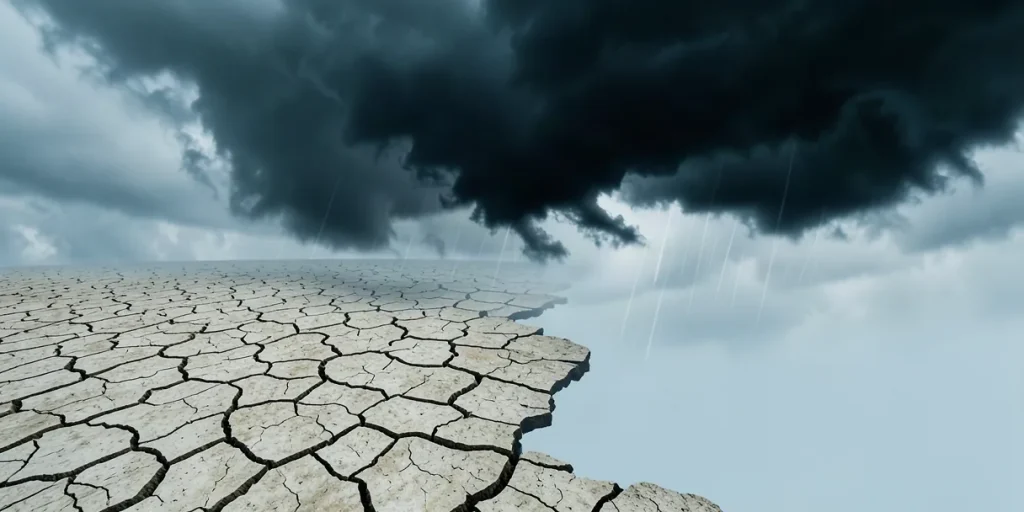
The forecast links El Niño to deviations from usual conditions: some areas may face a lack of rainfall, while others may experience excessively wet weather. UNICEF’s estimate for the October-to-December period covers both of these scenarios.
The material does not specify which countries will fall into each group, nor does it provide a breakdown by region or age. It also does not identify specific consequences for each area. The organization describes the potential scale as significant and warns of the risk of devastating impacts.
Separate estimates do not replace UNICEF’s forecast
The materials provided cite a Climate Impact Lab forecast of 451 thousand deaths linked to El Niño. This is an estimate of mortality, not of the number of children who may be affected by the phenomenon; it cannot be directly compared with UNICEF’s forecast of 347 million children.
The materials also include a statement by climate scientist Andrey Kiselev, who estimates that the harmful effects of the phenomenon will not reach Russia for now. His comment concerns the possible impact on Russia and does not change UNICEF’s global forecast for nearly 100 countries. The materials provided give no details about the methodology behind these estimates.
What remains unknown
UNICEF gives the number of children potentially affected, the geographic scope and the period of heightened risk: more than 347 million, nearly 100 countries and October–December 2026. However, the information provided does not include a list of countries, regional estimates or a description of how the effects of drought and excessive rainfall may differ.
The forecast should be read as a warning about the potential scale of the impact, not as a claim that every child included in the estimate will necessarily be affected. The organization’s main conclusion is that El Niño could intensify climate threats that are already affecting children in countries around the world.
Key takeaway: UNICEF forecasts that by the end of 2026, El Niño could put more than 347 million children in nearly 100 countries at risk.
Sources
- rbc.ru — “Around 50 Million People Could Face Hunger Because of El Niño”
- armenpress.am — “UNICEF: El Niño Will Leave 11 Million Children in Africa Without Food — ARMENPRESS Armenian News Agency”
- sigmaearth.com — “Indonesia’s Tropical Glaciers to Disappear by 2026 Because of El Niño”
- agroexpert.press — “Scientists Expect El Niño to Return — Agroexpert”
- vesti.ru — “UNICEF: 1.6 Million Children in the Caribbean Could Be Affected by Hurricane ‘Melissa’ — Vesti.ru News”
