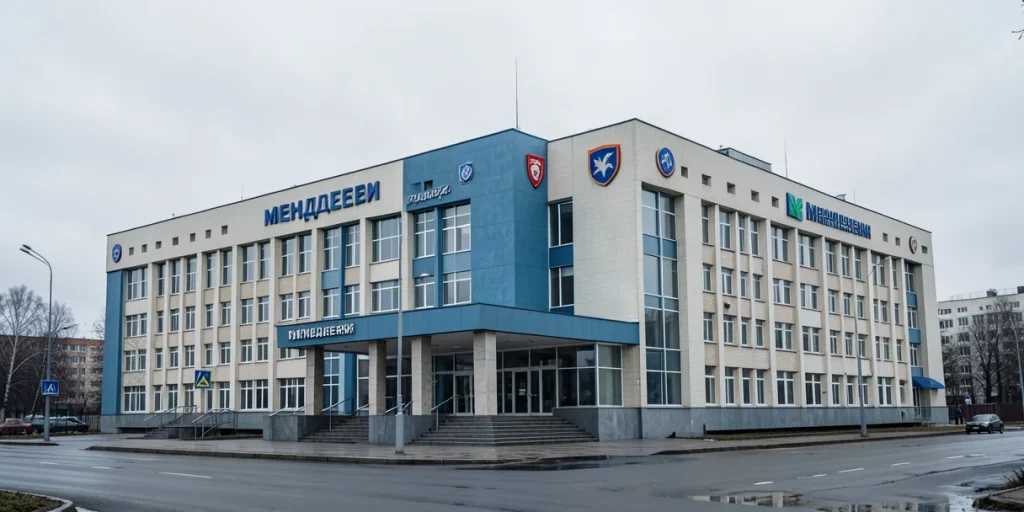
The D. I. Mendeleev University of Chemical Technology of Russia resumed academic activities on September 25 after a temporary evacuation of students and staff. The evacuation was carried out around 11:00 Moscow time following a bomb threat at the building; however, no danger was confirmed, and classes were canceled for only one day.
Circumstances of the Evacuation
According to Msk1.ru, the bomb threat was reported to the university on the morning of September 25, prompting an urgent evacuation. Police officers and emergency rescue teams arrived at the scene and conducted a thorough inspection of all university premises. The university’s press office did not officially comment on the reasons for the evacuation, limiting their statement to announcing the resumption of operations.
The evacuation began around 11:00 Moscow time, and all students and faculty were escorted outside. Classes were canceled on September 24, with academic activities resuming normally on the 25th. The cancellation affected several hundred individuals studying and working at one of Moscow’s largest technical universities.
Scale of Evacuations at Moscow Universities
In addition to Mendeleev University, evacuations took place on the same day at least nine other higher education institutions in Moscow. These included GITIS, Sechenov University, the college of the Plekhanov Russian University of Economics in Khamovniki, and the Moscow State University of Psychology and Education (MGPPU). All received similar bomb threat messages, indicating a widespread wave of false alarms.
Evacuations at such major institutions in the capital impact thousands of students and faculty, creating significant logistical and organizational challenges. At some universities, classes were canceled for an entire day, necessitating rapid adjustments to academic schedules and curricula.
Response and Security Measures at Universities
In response to the bomb threats, security measures at universities were heightened. At Mendeleev University, police and emergency service personnel conducted a full inspection of the premises to rule out the presence of explosive devices or other hazards. These inspections take several hours and require coordination among various agencies.
The leadership of the university and other affected institutions committed to keeping students and staff informed about the progress of the inspections and security measures. Additional protocols for cooperation with emergency services have been introduced at major Moscow universities, enhancing the protection of all participants in the educational process.
Impact on Academic Process and Student Plans
The cancellation of classes at Mendeleev University and other institutions on September 24 affected semester schedules and deadlines for course projects. Students were given opportunities to make up missed classes through extra lectures and remote sessions. The university employs modern distance learning platforms to minimize disruption caused by forced breaks.
Resuming academic activities on September 25 helped avoid serious interruptions in the academic calendar. Nevertheless, such incidents underscore the importance of flexible educational programs and preparedness for emergencies in a densely populated metropolis with numerous educational institutions.
Importance of Rapid Recovery
The swift resumption of operations at Mendeleev University just one day after evacuation demonstrates effective cooperation between the university and emergency services, as well as the ability to quickly adapt to unforeseen situations. The university is one of Russia’s leading technical institutions with a student and research staff numbering in the thousands.
Timely return to normal operations allowed for continuity in education and research activities, which is critical for universities with intensive schedules and large-scale research projects. This case can serve as a model for other educational institutions in ensuring safety and operational resilience.
Conclusion: Mendeleev University successfully restored its academic process the day after evacuation due to a bomb threat, ensuring safety and minimizing disruptions for students and faculty.