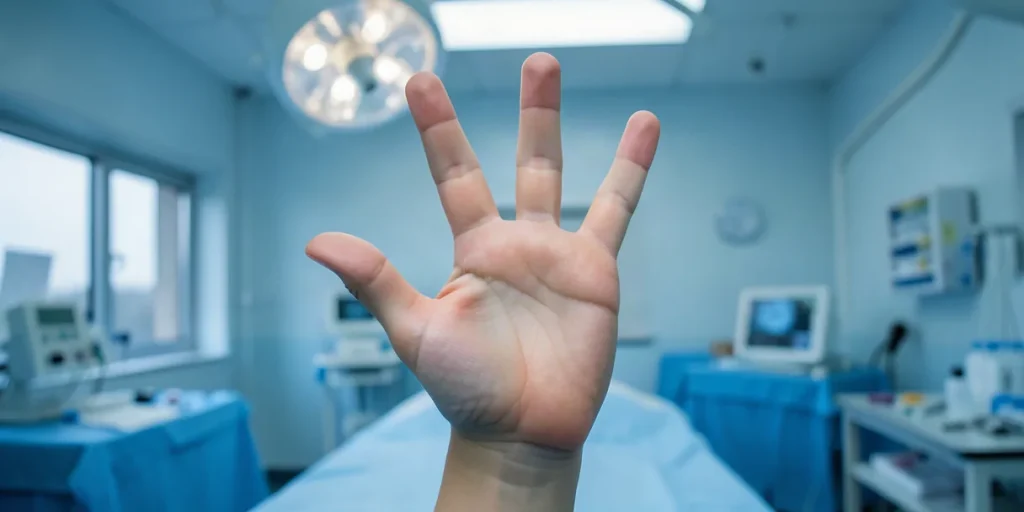
Rare Surgery in the Moscow Region
In August 2026, specialists at the regional children’s clinical hospital in the Moscow Region performed a unique surgery to restore the hand of an 8-year-old child born with syndactyly. The surgical procedure lasted about five hours and was completed without complications. The restoration of hand motor functions was successful, which is crucial for the child’s full development.
The operation was one of the few in the region carried out using microsurgical techniques, which allowed preservation of blood supply and sensitivity of the fingers. The surgery was led by Sergey Ivanov, head of the pediatric orthopedics department and a physician of the highest category. The results of the intervention were recognized as a significant step forward in treating rare congenital hand anomalies.
Pathology Features and Treatment Challenges
Congenital syndactyly occurs in 1 in 2000 newborns and is characterized by improper formation of the tissues between fingers. In the case of the 8-year-old patient, two middle fingers of the right hand were fused, limiting his ability to grasp objects and write.
The complexity of the surgery lay not only in separating the tissues but also in restoring the skin coverage and ensuring normal blood circulation. Skin flaps from the forearm were used to cover the defect, which helped avoid tension and accelerated healing. Rehabilitation after surgery will take about 3 months, including physiotherapy and exercises to develop fine motor skills.
Surgical Technologies and Methods
The procedure was performed using microscopic techniques, providing high precision in separating blood vessels and nerve endings. Microsurgical autotransplantation of tissues, employed in this case, allows not only separation of the fingers but also preservation of their functionality.
Biodegradable pins were used to fix the bones, reducing the risk of complications and the need for repeat surgeries. The cost of the operation, including materials and rehabilitation, is estimated between 350,000 and 400,000 rubles, which corresponds to the level of high-tech care available in the region.
Rehabilitation and Prognosis
Following the successful surgery, the child has already begun a course of restorative therapy at one of the rehabilitation centers in the Moscow Region. The program includes sessions with an occupational therapist and massage, aimed at improving fine motor skills and strengthening hand muscles.
According to doctors’ forecasts, within six months the child will be able to perform daily activities without restrictions, including writing and playing musical instruments. Follow-up examinations will be conducted every three months during the first year after surgery to monitor recovery progress.
Significance for the Medical Community
The success of this surgery in the Moscow Region highlights the advancement of pediatric orthopedics and microsurgery in the area, opening new opportunities for treating complex congenital anomalies. The experience gained will be used as educational material and as a basis for refining surgical techniques.
The Ministry of Health of the Moscow Region plans to expand funding for such surgeries within the framework of a program supporting children with rare diseases. This will enhance access to high-tech medical care for families facing similar diagnoses.
Summary: Moscow Region doctors successfully performed a rare surgery, fully restoring hand function in a child born with fused fingers.
Sources
- gazeta.ru — «In Ufa, surgeons operated on an infant with a sixth finger on»
- mz.mosreg.ru — «Sergiev Posad doctors saved a girl’s hand after injury»
- mo-24.ru — «Orthopedists corrected a rare congenital hand anomaly in a 12-year-old»
- podmoskovye.bezformata.com — «Moscow Region doctors successfully removed a sixth toe on»
- cyberleninka.ru — «One-stage restoration of 4 fingers in children using the method»