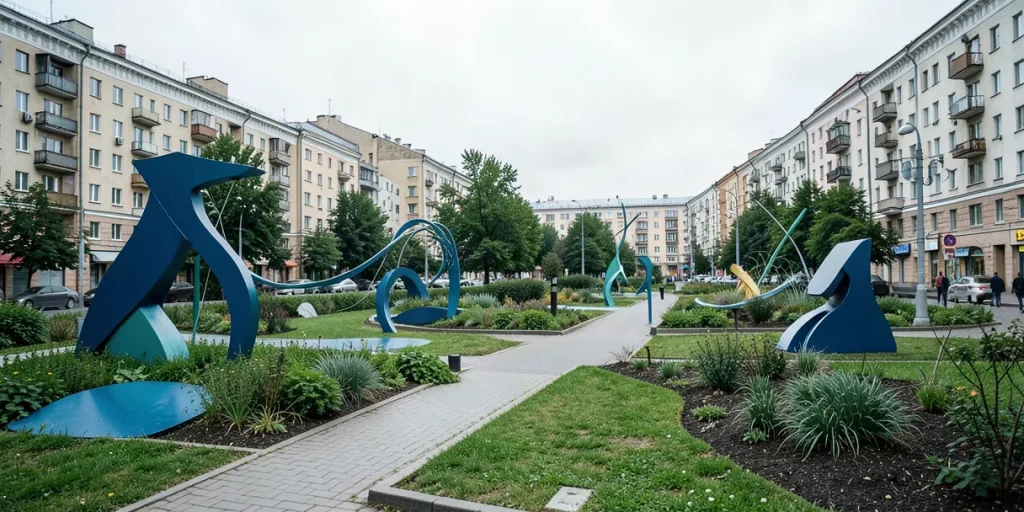
Urban cultural spaces significantly enhance residents’ quality of life by promoting social activity, creative potential, and improving psychological well-being. They become hubs where people find inspiration, connection, and new opportunities for self-realization.
In a contemporary metropolis filled with dynamics and stresses, cultural spaces act as unique oases where one can not only relax but also broaden horizons, explore art and traditions. Such places unite different generations and social groups, strengthening the sense of community and belonging to the city.
Studying the impact of urban cultural spaces on quality of life helps to understand how a comfortable and harmonious environment for residents is formed. This article examines key aspects of this influence, as well as examples of successful projects transforming urban landscapes and people’s attitudes toward their surroundings.
| Name | City | Area (ha) | Main Effect |
|---|---|---|---|
| Zaryadye | Moscow | 13 | Social integration, 4 million visitors annually |
| Winzavod | Moscow | at least 2 | Art studios, 40+ galleries, creative interaction |
| New Holland | Saint Petersburg | 5 | Investments of 2.5 billion ₽, creation of 300 jobs |
| Muzeon | Moscow | 6.5 | Physical activity, stress reduction |
- 13 hectares is the size of Moscow’s Zaryadye Park
- 4 million annual visitors to Zaryadye Park
- 15-20% growth in small business revenues near cultural spaces
- 2.5 billion rubles invested in the New Holland cultural cluster
- 20% reduction in depression rates linked to attending cultural events according to WHO
How Do Modern Cultural Spaces Improve the Social Environment in Cities?
Examples of Successful Projects
Modern cultural spaces greatly enhance the social environment in cities by creating conditions for active communication, creativity, and shared leisure. A striking example is Moscow’s Zaryadye Park, opened in 2017 on 13 hectares, attracting about 4 million visitors annually. The park offers not only green zones but also concert venues, educational programs, and exhibitions that foster residents’ social engagement. Another example is the Winzavod cultural center, established in 2007, where more than 40 art studios and galleries unite artists and visitors, stimulating creative interaction and idea exchange.
Social Integration through Culture
Cultural spaces promote social integration by bringing together different age and social groups through a variety of events and projects. They create opportunities for dialogue and mutual understanding, which is especially vital in large megacities. Such spaces host exhibitions, workshops, film screenings, and festivals that attract a broad audience and strengthen the sense of community. In Moscow, for instance, Zaryadye Park offers free educational programs and concerts accessible to all population groups, reducing social tension and fostering inclusion.
- Zaryadye Park: 13 hectares, 4 million visitors per year
- Winzavod Cultural Center: more than 40 art studios and galleries
- Free educational programs and cultural events for all ages
- Regular festivals and exhibitions aimed at engaging a wide audience
What Specific Economic Effects Do Urban Cultural Spaces Bring to Residents?
Growth of Small Business
Urban cultural spaces contribute to a 15–20% increase in small business revenues within a one-kilometer radius. This growth stimulates the development of cafes, souvenir shops, and service companies, improving the economic stability of neighborhoods and raising residents’ quality of life.
The rise in small business income is linked to the influx of visitors and tourists interested in cultural events and exhibitions. Activity in these areas creates favorable conditions for new enterprises, reducing unemployment and expanding the range of services for locals.
Investment and Employment
Cultural clusters like New Holland in Saint Petersburg attract significant investments—around 2.5 billion rubles from 2010 to 2025. These funds have helped create over 300 jobs, directly impacting economic stability and increasing employment levels in the region.
Investments in cultural spaces serve several functions simultaneously:
- Developing infrastructure and improving the environment;
- Creating jobs in service, art, and education sectors;
- Attracting additional financial resources for local businesses.
How Do Cultural Spaces Affect the Mental and Physical Health of City Residents?
Spaces for Physical Activity
Muzeon Park in Moscow, covering 6.5 hectares, demonstrates how cultural spaces directly contribute to improving residents’ physical health by offering equipped areas for walking and sports. Regular visits to such parks are linked to stress reduction and increased physical activity, which are important for preventing cardiovascular diseases and obesity. It is recommended to maintain at least 150 minutes of moderate exercise weekly to achieve significant health benefits.
- Area of Muzeon Park: 6.5 hectares
- Recommended physical activity: minimum 150 minutes per week
- Investment in sports infrastructure: from 500 thousand rubles for exercise equipment
Psychological Benefits of Culture
Attending cultural events reduces the risk of depression, helping to improve the mental health of city residents. According to a World Health Organization study, participation in cultural activities lowers depression levels by about 20%. Cultural spaces such as exhibition halls and theaters provide opportunities for social integration and emotional relief, which is especially important in urban environments.
- Reduction in depression from cultural event attendance: about 20%
- Average ticket price for cultural events in Moscow: 500–1500 rubles
- Frequency of attendance needed for noticeable effect: at least once a month
What Limitations and Challenges Exist in Developing Urban Cultural Spaces?
The development of urban cultural spaces is constrained by high rental costs in central areas and bureaucratic obstacles that limit small initiatives and slow project implementation.
Financial Barriers
High rental prices in city centers remain the main limitation for creating cultural venues. For example, rent in Moscow ranges from 15,000 to 35,000 rubles per square meter per month, which is unaffordable for most young cultural initiatives. Additionally, limited funding from municipalities and private investors does not cover expenses for repairs and technical equipment. This issue is especially acute in Russian regions where cultural budgets are often below the national average.
Administrative Difficulties
Bureaucratic procedures, including lengthy project approvals and permits, significantly slow the development of cultural spaces. Multi-stage coordination with municipal services can take from several months up to a year, discouraging initiators. Moreover, the lack of clear regulations supporting cultural initiatives complicates interactions with government bodies.
- Central city rent cost: 15,000–35,000 rubles per square meter per month;
- Permit processing times: 3 to 12 months;
- Lower funding levels for regional cultural projects compared to federal programs.
How Can the Effectiveness of Cultural Spaces Be Increased to Improve Quality of Life?
Improving the effectiveness of urban cultural spaces to enhance quality of life is possible through integration with transportation systems and active involvement of local residents in cultural projects. Convenient access and a rich event program stimulate attendance and strengthen social ties, ultimately raising comfort and satisfaction among city dwellers.
Accessibility and Transport
A successful example of integrating cultural space with transport is Zaryadye Park, located near the Kitay-gorod metro station. This close proximity to the subway provides convenient and fast access for over 70,000 visitors weekly, reducing travel time and transport costs. The creation of pedestrian zones and bike paths around cultural sites also boosts attendance and decreases air pollution.
Community Orientation
A crucial factor in increasing the effectiveness of cultural spaces is involving local communities, as practiced at Winzavod, which hosts over 100 events annually. Organizing workshops, exhibitions, and festivals helps build an active community, enhancing social cohesion and fostering residents’ creative potential. Investments in such projects range from 15 to 30 million rubles per year, ensuring sustainable funding and program quality.
- Proximity to Kitay-gorod metro station—key convenience factor for Zaryadye
- Over 100 events annually at Winzavod to engage residents
- Cultural project investments—from 15 million rubles annually for sustainable development
- Support for pedestrian and bicycle routes to improve eco-friendly access
Frequently Asked Questions
What are urban cultural spaces?
How do cultural spaces affect the city’s economy?
What problems are most common in creating such spaces?
Key Takeaways
- Cultural spaces improve social integration, as demonstrated by Zaryadye Park
- The economic impact includes a 15-20% rise in small business revenues near cultural sites
- Mental health of city residents improves thanks to access to cultural events and recreational zones
- High rents and bureaucracy are major constraints on the development of such spaces
- Enhancing accessibility and local community engagement increases the effectiveness of cultural initiatives