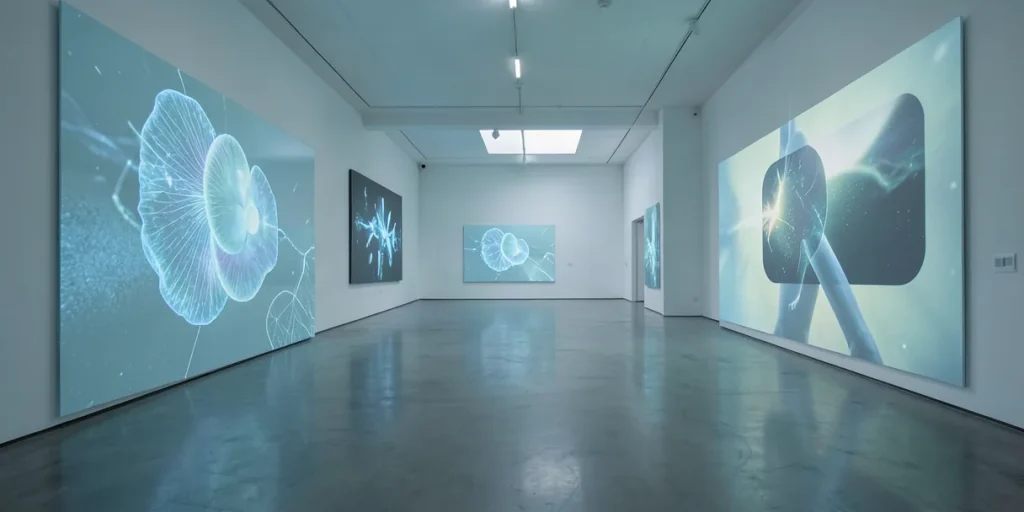
The perception of contemporary art in the digital age is characterized by changes in how audiences interact with artworks, expanded accessibility, and the transformation of the artistic context itself under the influence of digital technologies and new forms of communication.
In today’s world, digital technologies not only alter the ways art is created but also affect how viewers perceive and interpret artworks. Virtual exhibitions, interactive installations, and digital platforms enable a new kind of engagement experience that differs from traditional approaches to art appreciation. This creates unique conditions for rethinking artistic values and forms.
Understanding the features of perceiving contemporary art in the digital age is essential to appreciating how technology influences culture and society at large. By analyzing these processes, we can better grasp how the role of art in human life is evolving and what new functions it begins to fulfill within the framework of digital reality.
| Criterion | Traditional Art | Digital Art |
|---|---|---|
| Accessibility | Average ticket ~1000 ₽ | VR exhibition ticket <500 ₽ |
| Interaction time | 10-12 minutes average museum visit | 15 minutes average online exhibition time |
| Interactivity | Limited by physical space | Use of AR, VR, programmable art |
| Emotional perception | Higher due to real presence | Lower; 45% note loss of depth |
| Technical requirements | Minimum — visiting the location | Requires powerful PC or VR headset |
- 5000 virtual exhibitions number of exhibitions on the Artsteps platform in 2026
- 62% share of Russians who visited online exhibitions (Levada-Center, 2025)
- 20 billion $ volume of the NFT art market in 2025
- 1500 $ price of Meta Quest Pro VR headset
- 45% percentage of users noting loss of emotional depth in digital art
How Are Digital Technologies Changing the Presentation of Contemporary Art?
Virtual Exhibitions
Digital technologies are transforming the presentation of contemporary art by making access global and interactive. In 2026, the Artsteps platform registered over 5000 virtual exhibitions that visitors can explore from anywhere in the world. The use of Meta Quest Pro VR headsets, priced around 1500 dollars, allows viewers to «walk» through these virtual museums, immersing themselves in three-dimensional spaces and interacting with exhibits.
The Russian Contemporary Art Foundation launched an online gallery in 2024 featuring more than 200 digital installations, thereby expanding the possibilities for perceiving and presenting art over the internet. This opens new forms of communication where the viewer becomes an active participant rather than just an observer.
NFT and Digital Collections
The NFT art market reached about 20 billion dollars in 2025, reflecting massive growth in interest towards digital assets in art. NFTs enable artists to create unique digital objects with verified authenticity and limited editions, transforming traditional ideas about collecting and ownership of artworks.
- Artsteps platform — over 5000 virtual exhibitions in 2026
- Meta Quest Pro VR headset — approximately 1500 dollars for virtual museum immersion
- Russian Contemporary Art Foundation — online gallery with 200+ digital installations since 2024
- NFT art market volume — about 20 billion dollars in 2025
Why Does Digital Accessibility Affect Public Perception of Art?
Growth of the Online Audience
Digital accessibility directly expands the audience for contemporary art, allowing more people to engage with exhibitions regardless of geography or time. According to a Levada-Center study (2025), 62% of Russians aged 18 and older visited at least one online exhibition, indicating a widespread shift toward digital formats. Furthermore, in 2026, the number of followers of contemporary artists’ Instagram accounts grew by 40%, further increasing reach and audience engagement.
Economic Impact of Accessibility
Ticket prices for digital exhibitions are significantly lower than for traditional ones, making art more accessible to a wider audience. For example, the average price of a VR exhibition ticket often does not exceed 500 rubles, whereas tickets to offline museums cost about 1000 rubles. This reduces financial barriers and stimulates interest in art. Additionally, the average viewing time of digital exhibitions on the Google Arts & Culture platform is 15 minutes — 30% longer than visits to traditional museums, suggesting deeper audience engagement.
- 62% of Russians attend online exhibitions (Levada-Center, 2025)
- 40% growth in artists’ Instagram audiences in 2026
- Average VR ticket price — about 500 rubles
- Average viewing time of digital exhibitions — 15 minutes on Google Arts & Culture
- Average offline museum ticket price — about 1000 rubles
What New Forms of Interactivity and Participation Does the Digital Age Offer in Art?
Augmented Reality
The digital age has greatly expanded interactivity possibilities in art through augmented reality (AR) technologies, allowing viewers to interact with digital art objects in real spaces. Since 2025, Moscow’s «ARt Walk» project covers about 3 kilometers of pedestrian routes where visitors can observe and engage with virtual installations integrated into the urban landscape. This creates a new level of involvement where art extends beyond galleries and museums, becoming part of everyday experience.
AR technology has also become more accessible due to falling equipment prices. For instance, the Epson EH-TW7400 4K projector, costing around 120,000 rubles, has become popular among home enthusiasts of digital installations, enabling the creation of interactive art spaces in personal environments.
Programmable Art
The Async Art platform exemplifies programmable art, where users can alter an artwork’s appearance in real time, affecting its visual and audio elements. This technology produces dynamic works that change depending on audience actions, broadening traditional perceptions of art as a static object.
At the Ars Electronica festival in 2024, more than 70 interactive art pieces featuring motion and sound sensors were presented. These technologies allow viewers not just to observe but to actively participate in the artistic process, radically changing the format of engagement with artworks.
- «ARt Walk» — 3 km of routes with digital art objects
- Epson EH-TW7400 — 4K projector for 120,000 rubles for home installations
- Async Art — programmable art with modifiable visual content
- Ars Electronica 2024 — over 70 interactive pieces with motion and sound sensors
What Are the Limitations and Challenges of Perceiving Contemporary Art in the Digital Environment?
Perceiving contemporary art digitally is constrained by emotional shallowness, technical difficulties, and legal issues that reduce the quality and accessibility of digital exhibitions.
Emotional Limitations
Digital representations of art do not always convey the depth and richness of emotions experienced through live contact with the artwork. According to a European Cultural Center study (2025), 45% of users report a loss of emotional depth when viewing art on screens. This is due to the absence of tactile sensations and limited visual detail on standard displays, which diminishes immersion and emotional response.
Technical and Legal Challenges
Fully experiencing digital art, especially in VR exhibition format, requires modern devices with high technical specifications: at least 8 GB of RAM and a GPU supporting DirectX 12. Such demands limit content accessibility to a broad audience. In addition, network issues common in Russian regions with internet speeds below 50 Mbps degrade the quality of digital transmission and visualization.
- Minimum 8 GB RAM and GPU with DirectX 12 support for VR exhibitions.
- Internet speed above 50 Mbps for stable digital art streaming.
- Losses exceeding 5 million dollars in 2025 due to copyright lawsuits in the NFT space.
Legal aspects related to copyright in NFTs pose serious obstacles: in 2025, numerous lawsuits caused losses exceeding 5 million dollars, complicating the development and distribution of digital art.
What Digital Art Trends Should We Expect in the Coming Years?
Artificial Intelligence
The use of artificial intelligence in digital art will continue to accelerate, as evidenced by the DALL·E platform generating over 1 million images monthly in 2026. AI algorithms enable the creation of unique visual works with minimal human involvement, opening new opportunities for artists and collectors and influencing a market that grows roughly 25% annually according to the Art Basel and UBS Global Art Market Report 2026.
Metaverses and Holography
The integration of metaverses such as Decentraland and The Sandbox is becoming a key trend for hosting virtual museums and art fairs, expanding audience reach and interaction formats. Concurrently, holographic exhibition projects launched in Saint Petersburg with a budget around 10 million rubles in 2025 demonstrate significant investments in holography technology. These directions are expected to compete on criteria such as:
- Implementation cost: holographic exhibitions — about 10 million rubles;
- Audience: metaverses can reach tens of thousands of virtual visitors simultaneously;
- Technological requirements: high computational power for generating AI art and holographic images;
- Market growth: digital art expands by 25% annually, driving investment into new formats.
Frequently Asked Questions
What is NFT art and why is it important for contemporary art?
What devices are required to view VR exhibitions?
What problems arise when perceiving digital art?
How does digital art affect traditional museums?
Key Takeaways
- The Artsteps platform offers over 5000 virtual exhibitions in 2026
- 62% of Russians visited online exhibitions according to Levada-Center (2025)
- The NFT market reached 20 billion dollars in 2025
- Meta Quest Pro costs about 1500 dollars and provides VR immersion
- 45% of users report reduced emotional perception in digital format