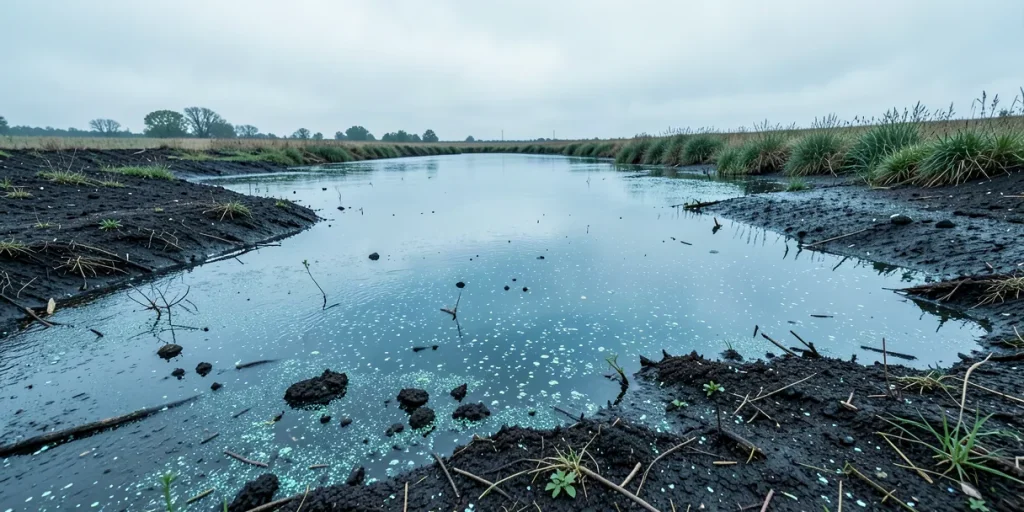
Microplastics have a complex negative impact on human health and ecosystems by disrupting biological processes and causing the accumulation of toxic substances in organisms. Their tiny particles enter food chains and can trigger inflammation, hormonal imbalances, and other pathologies.
Understanding the mechanisms of microplastic effects is key to developing strategies for environmental safety and health protection. Microplastics are tiny fragments of plastic that enter the environment as a result of the breakdown of larger waste and industrial activity. Their spread affects not only marine and freshwater ecosystems but also soil and the atmosphere, making the issue comprehensive and requiring a multifaceted analysis.
Studying the consequences of microplastics helps identify ways to minimize harm both to nature and humans. This article examines the main biological and chemical mechanisms through which microplastics affect health and ecological balance, as well as discusses prospects for reducing their negative impact.
| Method | Removal Efficiency | Cost per 1 ha/l of Water | Drawbacks |
|---|---|---|---|
| Household Filters (Brita, Aquaphor) | Removes particles >1 µm | 900–1500 ₽ per filter | Does not remove nanoparticles |
| Mechanical Soil Cleaning | Removes up to 70% of particles | about 50,000 ₽ | High cost, localized application |
| Biodegradable Plastics | Reduces plastic but micro-particles remain | from 200 ₽/kg | Decompose into microplastics, do not solve the problem |
| Ultraviolet Water Disinfection | Destroys microorganisms, not particles | from 2,500 ₽ per unit | Does not remove microplastics |
- 80% of drinking water samples in Russian cities contain microplastics
- 50–100 thousand particles average annual human microplastic consumption
- 500 thousand particles/kg microplastic content in upper soil layers in Europe
- 100 particles/l maximum allowable microplastic concentration in drinking water according to GOST R 58931-2026
How Does Microplastic Enter the Human Body and Accumulate in Tissues?
Sources of Microplastic Entry
The primary route of microplastic entry into the human body is through food and drinking water. In Russian cities, particles smaller than 5 mm have been detected in 80% of drinking water samples, confirming the widespread contamination (Rospotrebnadzor, 2025). Additionally, a person consumes between 50,000 and 100,000 microplastic particles annually, including from seafood and other food products, according to a publication in Environmental Science & Technology (2024).
Airborne inhalation is also a significant source of microplastics. Particles settle in the lungs and can provoke inflammatory processes, as confirmed by studies from the Institute of Physiology of the Russian Academy of Sciences (2023). Thus, the main pathways of entry are:
- Drinking water — microplastics in 80% of urban samples;
- Food — up to 100,000 particles per year, including seafood;
- Inhalation — accumulation in lungs and inflammatory responses.
Biological Accumulation and Influence on Tissues
Microplastics primarily accumulate in the lungs and intestines, where their particles cause local inflammatory reactions. Research from the Institute of Physiology RAS (2023) showed that tissue cells respond to microplastic presence by activating protective mechanisms, which may lead to chronic inflammation and impaired organ function.
Accumulation is related to particle size — particles smaller than 5 micrometers penetrate deeper into tissues, making elimination difficult. Over the long term, this can cause changes in immune responses and negatively affect human health, highlighting the need for further study and monitoring of microplastic levels in consumed products and water.
What Consequences Does Microplastic Have for Ecosystems and Food Chains?
Impact on Marine Fauna
Marine filter feeders, such as mollusks of the genus Mytilus, accumulate up to 15% of microplastics relative to their body mass, significantly disrupting their digestion and reducing survival rates. This microplastic buildup harms key species’ health, affecting the entire marine food chain, including predatory fish and seabirds.
Moreover, microplastics facilitate bioaccumulation of toxic substances like dioxins and polychlorinated biphenyls (PCBs). In tissues of carp family fish, concentrations of these pollutants can exceed 10 µg/kg, posing risks both to ecosystems and humans who consume such fish.
Soil and Biota Contamination
In European soils, microplastic content reaches 500,000 particles per kilogram of the upper layer, resulting in soil structure degradation and reduced viability of soil microflora. This negatively affects fertility and ecosystem resilience by hindering organic matter decomposition and nutrient uptake by plants.
Changes in soil microbiological balance reduce their ability to recover from droughts and other stresses, potentially lowering crop yields and impacting agriculture and terrestrial biodiversity over the long term.
What Proven Toxicity Mechanisms of Microplastics Affect Humans and Animals?
Microplastic toxicity for humans and animals arises from two main mechanisms: the transport of pathogenic microorganisms and chemical intoxication due to the migration of toxic additives into tissues. Both processes are confirmed by modern research, including water analyses from Lake Baikal and experimental animal models.
Transport of Bacteria and Viruses
Microplastics can serve as carriers for pathogenic bacteria and viruses, provoking immune responses in organisms. In 2024, analysis of water samples from Lake Baikal revealed pathogenic microorganisms on the surface of microplastic particles, confirming the potential for their spread through aquatic ecosystems. This factor increases the risk of infectious diseases in animals and humans exposed to contaminated water.
Chemical Intoxication
Chemical additives such as phthalates and bisphenol A present in plastics can migrate from microplastics into living tissues. A 2025 WHO report links these substances to endocrine system disruptions. Experiments on mice published in Toxicology Reports in 2026 showed that prolonged exposure to 1–10 µm particles over 90 days leads to decreased liver and kidney function, indicating systemic microplastic toxicity.
When Does the Fight Against Microplastics Prove Insufficient or Problematic?
Efforts to combat microplastics are insufficient or problematic when standard filtration and purification methods fail to remove particles smaller than 1 micrometer, and when the high cost of mechanical soil cleaning limits the broad use of such technologies in agriculture.
Limitations of Water Purification Technologies
Household filters like Brita and Aquaphor models, tested in 2025, proved ineffective at removing plastic microparticles smaller than one micrometer. This means that even after filtration, drinking water may contain dangerous microplastic particles potentially affecting human health.
Economic and Technical Barriers in Soil Cleaning
- Mechanical soil cleaning from microplastics costs about 50,000 rubles per hectare, making it economically impractical for large-scale agricultural use.
- Tests of ASTM D6400 standards (2024) showed that some biodegradable plastics decompose into micro-particles, not reducing actual contamination levels, complicating soil cleanup and pollution reduction efforts.
How Do Government Standards and International Initiatives Regulate Microplastics?
Russian Standards
Since 2026, Russia enforces GOST R 58931-2026, which sets the maximum allowable microplastic concentration in drinking water at no more than 100 particles per liter. This standard aims to ensure water safety and reduce health risks associated with long-term consumption of contaminated water.
GOST R 58931-2026 also regulates sampling and analysis methods for water to accurately detect microplastic particles, facilitating quality control and preventing norm exceedances in water supply enterprises and treatment systems.
European Directives
Since 2025, the European Union has implemented Directive 2025/720, which limits the use of single-use plastics and targets recycling at least 70% of plastic waste by 2030. This policy aims to reduce microplastic input into the environment by cutting primary plastic usage.
- Restricting single-use plastics to reduce microplastic sources.
- Recycling at least 70% of plastic waste by 2030.
Additionally, the United Nations Environment Programme promotes the Global Plastics Initiative, targeting a 30% reduction in microplastic production by 2030, underscoring the international approach to tackling plastic pollution.
Frequently Asked Questions
Is it possible to completely avoid microplastic entering the body?
How does microplastic affect children’s health?
Which foods are most prone to microplastic contamination?
Can biodegradable plastics be considered a safe alternative?
Key Takeaways
- Microplastics accumulate in the body via food and water, reaching tens of thousands of particles annually
- In ecosystems, microplastics disrupt food chains and contribute to toxicity
- Toxicity is caused by pathogen transport and chemical additives leaching from plastics
- Modern filters and biodegradable materials do not fully solve pollution issues
- Russian and international standards limit microplastic levels in drinking water and promote recycling