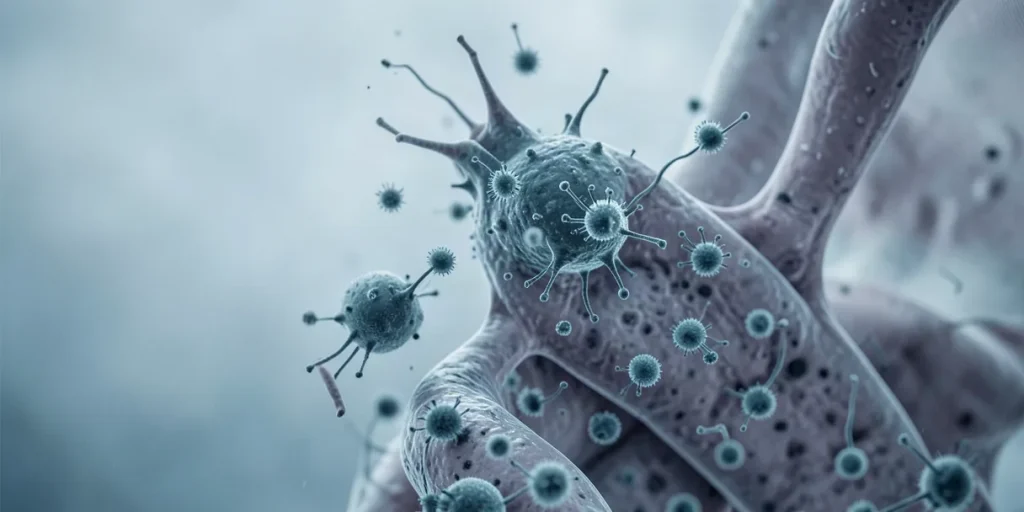
The microbiome plays a key role in maintaining human immunity and overall health by regulating immune responses, protecting against pathogens, and participating in metabolism. Its balanced composition contributes to the body’s resilience against diseases and the maintenance of internal homeostasis.
Modern research increasingly reveals how the microbiome—a community of microorganisms living on the skin, mucous membranes, and in the gut—impacts the immune system. Disruption of microbiota balance can lead to weakened immunity and the development of chronic diseases. Understanding this relationship opens new horizons in medicine and disease prevention.
This article explores in detail the mechanisms of interaction between the microbiome and the immune system, as well as the significance of microbiota for human health across various ages and physiological states. This will help better understand how to support and restore the microbiome to strengthen the body’s defenses.
| Method | Identification Accuracy | Equipment Cost (USD) | Analysis Time |
|---|---|---|---|
| 16S rRNA Sequencing | up to 99% of species | about 100,000 | from 24 hours |
| Metagenomic Sequencing | almost 100% | from 150,000 | from 48 hours |
| Culturing Method | up to 60% of species | up to 10,000 | from 3 days |
| Microscopy | low | from 5,000 | from several hours |
- 70% percentage of immune cells concentrated in the gut
- 100 trillion number of microbes in the human body
- 1.5 kg mass of the microbiome in the body
- 28% reduction in obesity risk with a diverse microbiome
- 50% reduction in microbiota diversity after antibiotic use
How Does the Microbiome Affect Human Immunity?
Distribution of Immune Cells in the Gut
Up to 70% of human immune cells are localized in the gut, making the microbiome a key regulator of the immune response. Microorganisms inhabiting the gut interact with the immune system, providing protection against pathogens and maintaining immune homeostasis. A 2025 study by the Institute of Microbiology of the Russian Academy of Sciences found that microbiota imbalance increases the risk of autoimmune diseases by 35%, underscoring the critical role of gut microbiota in immune regulation.
Impact of Specific Bacteria on Immunity
Specific bacterial species such as Lactobacillus and Bifidobacterium significantly influence human immunity. In 2026, the FDA approved the drug «Vivomix»—a probiotic with selected Lactobacillus strains—that enhances immune response and helps reduce inflammation. A 2024 clinical study by Mayo Clinic revealed that a 20% decrease in Bifidobacterium levels in the gut is associated with impaired intestinal barrier function, increasing susceptibility to infections and inflammation.
- Up to 70% of immune cells are concentrated in the gut, providing localized immunity;
- Microbiota imbalance increases autoimmune disease risk by 35% (Institute of Microbiology RAS, 2025);
- «Vivomix» containing Lactobacillus approved by FDA in 2026 to support immunity;
- 20% reduction in Bifidobacterium impairs gut barrier function (Mayo Clinic, 2024).
Why Is the Microbiome Important for Overall Health?
Mass and Number of Microbes in the Body
The human microbiome plays a crucial role in maintaining health due to the vast number and mass of microorganisms residing in the body. On average, the body contains about 100 trillion microbes, with a total mass of approximately 1.5 kg, primarily in the gut. These microorganisms actively participate in digestion, vitamin synthesis, and protection against pathogens, influencing overall health.
Connection Between the Microbiome, Metabolism, and Weight
Microbiome diversity is directly linked to metabolism and the risk of obesity. A 2023 Harvard University study showed that increased microbiota diversity reduces the likelihood of obesity by 28%. Furthermore, 2026 WHO data confirm that a proper diet rich in prebiotics can increase the number of beneficial bacteria by 40% within just 3 months, promoting improved metabolism.
- The product «Metabiotic Plus» contains a probiotic complex supporting digestion and metabolism;
- «Metabiotic Plus» costs range from 1500 to 2500 rubles;
- A 40% increase in beneficial bacteria over 3 months is possible with prebiotic intake according to WHO (2026).
How Do Modern Technologies Help Study the Microbiome?
Sequencing and Analysis Methods
Modern technologies enable detailed study of the microbiome through methods such as 16S rRNA sequencing, which identifies up to 99% of bacterial species in gut samples. A key instrument for such research is the Illumina MiSeq, which costs about 100,000 dollars. This device is widely used in both clinical and scientific laboratories, providing highly accurate and scalable assessments of microbiota composition.
Additionally, the use of artificial intelligence significantly accelerates microbiome data processing. According to a 2025 report in Nature Microbiology, AI increases analysis speed by approximately 30%, reducing research time and enabling faster scientific insights.
Investments and Innovations in the Microbiome Field
In 2024, the U.S. National Science Foundation launched a major funding program for microbiome research, allocating 25 million dollars for this purpose. This supports not only the development of analysis technologies but also advances understanding of microbiota’s role in immunity and human health.
- Illumina MiSeq: priced around 100,000 dollars, a key tool for 16S rRNA sequencing;
- Artificial Intelligence: speeds up data processing by 30% according to Nature Microbiology (2025);
- U.S. National Science Foundation (2024): 25 million dollars invested in microbiome research.
When Does Microbiome Support Not Improve Health?
Errors in Probiotic Use
Taking probiotics without considering an individual’s microbiome composition often fails to improve health, as confirmed by a 2025 University of Toronto study. This research found that standard probiotic products may not change the condition of patients with unique microbiota because they are not tailored to their specific features.
Moreover, many people choose products without consulting specialists. For example, the popular probiotic «Biolact» costs between 800 and 1200 rubles per package, but its effectiveness is limited in cases of severe microbiota disruption. Without a personalized approach, using such remedies can be ineffective and costly.
Risks and Limitations of Therapy
Uncontrolled antibiotic use reduces microbiota diversity by 50%, significantly increasing the risk of dysbiosis, notes the World Health Organization in its 2026 report. This worsens immune status and lowers the effectiveness of further microbiome support.
Clinical trials by the Institute of Immunology of the Russian Academy of Sciences (2024) have shown that some probiotic strains are ineffective for autoimmune diseases, limiting their use in such cases. When choosing therapy, it is important to consider:
- The patient’s individual microbiome composition;
- Cost of medications, e.g., «Biolact» at 800–1200 rubles;
- The risks of decreased microbiota diversity from antibiotic use;
- The specifics of the disease, especially in autoimmune conditions.
What Role Does Nutrition Play in Shaping the Microbiome?
Nutrition directly affects the composition and diversity of the microbiome, determining the balance between beneficial and conditionally pathogenic bacteria in the gut. A diet high in fiber promotes significant growth of beneficial microorganisms, while excessive sugar intake reduces the number of important species, impacting immune function and overall health.
Effects of Fiber and Sugar
A 2023 University of California study showed that a high-fiber diet increases the number of beneficial gut bacteria by about 30% within just 6 weeks. Meanwhile, the European Food Safety Authority (EFSA) in 2024 established that diets dominated by high-sugar foods reduce Lactobacillus levels by 25%. A weekly prebiotic-rich diet including vegetables, berries, and whole grains costs about 2500 rubles in Moscow.
- 30% increase in beneficial bacteria over 6 weeks with high fiber intake (University of California, 2023)
- 25% decrease in Lactobacillus with high sugar consumption (EFSA, 2024)
- Cost of a weekly prebiotic diet — approximately 2500 rubles in Moscow
The Role of Fermented Foods
Fermented foods such as kefir and kimchi help increase microbiome diversity, which is vital for immune resilience. According to Seoul University data from 2025, regular consumption over 4 weeks raises microbiota diversity by 15%. These foods supply the gut with probiotics and enzymes, supporting a healthy microbiome and reducing the risk of inflammatory processes.
- 15% increase in microbiota diversity over 4 weeks with kefir and kimchi consumption (Seoul University, 2025)
Frequently Asked Questions
What is the microbiome and where is it located in the body?
Which probiotics are effective for supporting immunity?
Can the microbiome be improved through diet?
Why don’t probiotics always help?
Key Takeaways
- Up to 70% of immune cells are localized in the gut and interact with the microbiome
- Microbiota diversity reduces obesity risk by 28%, according to Harvard data
- 16S rRNA sequencing identifies 99% of bacterial species in a sample
- Uncontrolled antibiotics reduce microbiota by 50%, causing dysbiosis
- A high-fiber diet increases beneficial bacteria by 30%