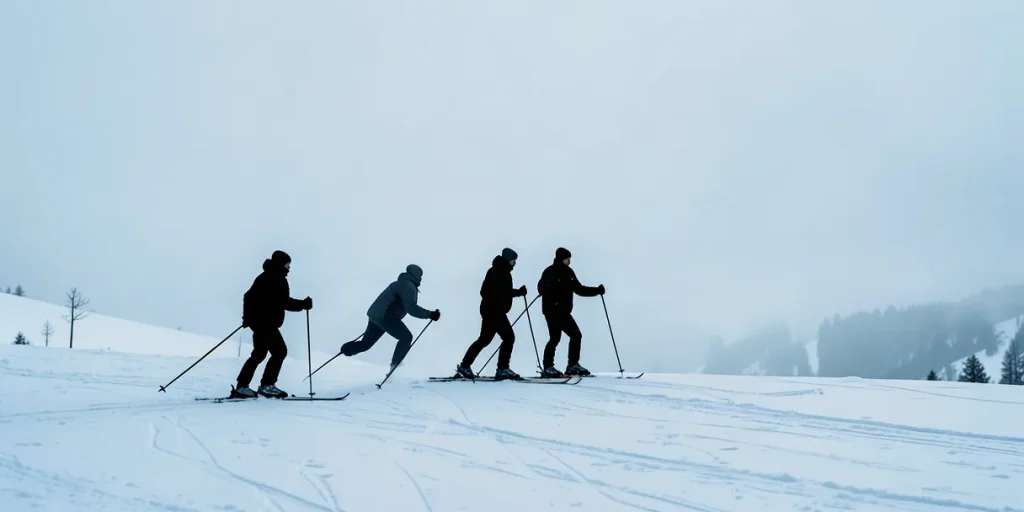
Introduction: Skiing as Part of Russian Culture and Health
Skiing in Russia has deep historical roots dating back to the Neolithic era. Today, it stands not only as a symbol of national tradition but also as a crucial factor in strengthening public health. By 2026, over 15% of schoolchildren regularly participate in skiing, contributing to reduced obesity rates and improved psycho-emotional well-being.
The Historical Roots of Skiing in Russia
Archaeological discoveries show that the first skis on the territory of modern Russia appeared around 6300 BCE in the Komi Republic region. These ancient wooden implements served as transportation for hunting and traveling through the winter taiga. In the 19th century, skiing competitions began to take an organized form, first held in Saint Petersburg in 1889.
Stages in the Formation of Skiing in Russia
- Ancient skis in the Komi Republic (circa 6300 BCE)
- First competitions in Saint Petersburg (1889)
- Establishment of the Central Ski Club in Moscow (1911)
- Popularization in the Soviet Union from the 1930s onward
| Year | Event |
|---|---|
| 6300 BCE | Appearance of the first skis in Komi |
| 1889 | First skiing competitions in Saint Petersburg |
| 1911 | Founding of the Central Ski Club in Moscow |
| 1930s | Mass development of skiing in the USSR |
Popularization of Skiing in the Soviet Union and Modern Russia
In the Soviet Union, skiing received state support within physical education programs. By the 1980s, about 40% of schoolchildren skied regularly. Today, Russia has more than 500 specialized ski bases and around 1,500 sports schools, including institutions such as the Moscow Olympic Reserve Sports School for Cross-Country Skiing.
Current Trends and Infrastructure
- Expansion of ski trails in the Moscow region and Siberia
- Introduction of new ski models and equipment, for example, the Atomic Redster S9 (priced around 35,000 ₽)
- Use of digital technologies to monitor training
| Year | Number of Ski Bases | Number of Sports Schools |
|---|---|---|
| 1980 | 120 | 600 |
| 2026 | 510 | 1500 |
The Impact of Skiing on Physical Health
Ski training promotes endurance development, strengthens the cardiovascular system, and builds muscular support. Regular practice reduces the risk of obesity and chronic diseases. According to studies, children who ski at least three times a week have VO2 max — maximum oxygen consumption — values 15% higher compared to inactive peers.
Key Physiological Effects
- Strengthening of the heart muscle and blood vessels
- Development of the respiratory system
- Weight loss and metabolism normalization
Psychological and Social Aspects of Skiing
Skiing positively affects mental health by reducing stress levels and enhancing mood. Team training fosters social skills and a sense of belonging. In 2025, the state program «Healthy School» incorporated skiing as a mandatory component of physical education in 78% of educational institutions.
Mental Health Benefits
- Reduction of depression and anxiety symptoms
- Improvement in concentration and memory
- Development of teamwork skills
Current Standards and Development Prospects
In 2026, the Russian Ministry of Sports approved updated training standards for skiers, requiring at least 120 hours of training annually for schoolchildren. Environmentally friendly manufacturing technologies for skis and equipment are also being actively implemented, reducing environmental impact. A 20% increase in the number of skiing enthusiasts is forecast by 2030.
Main Development Directions
- Improving infrastructure and trail accessibility
- Introducing digital training and analysis methods
- Enhancing eco-friendly production of sports gear
| Year | Training Hours per Year |
|---|---|
| 2010 | 80 |
| 2026 | 120 |
Frequently Asked Questions
When did the first skis appear on Russian territory?
What are the health benefits of skiing for children?
What is the average cost of a ski set in 2026?
How many hours of ski training are required for schoolchildren?
Key Takeaways
- Skiing in Russia has a history spanning thousands of years, starting from the Neolithic era.
- The Soviet Union played a crucial role in the mass popularization of skiing.
- Regular skiing strengthens both physical and mental health.
- Current standards require 120 training hours per year for schoolchildren.
- Innovative technologies and eco-friendly materials are emerging in ski equipment manufacturing.
Conclusion
Skiing in Russia is not only a rich history and cultural heritage but also an effective tool for maintaining health and personal development. Systematic infrastructure development, improved accessibility, and innovation make this sport appealing to all ages. By 2030, skiing is expected to become even more popular, contributing to the health and quality of life of millions of Russians.
Sources
- Campus — «The History of Skiing Development in Russia — History»
- Studopedia.Net — «The History of Skiing Development Abroad»
- Behemoth Neural Network — «The History of Skiing Development in Russia and Belarus»
- fb.ru — «Development of Skiing in Russia: History, Progress, Prospects»
- gpt-project.ru — «The Impact of Sports on Students and Its Importance for Health — GPT Project»