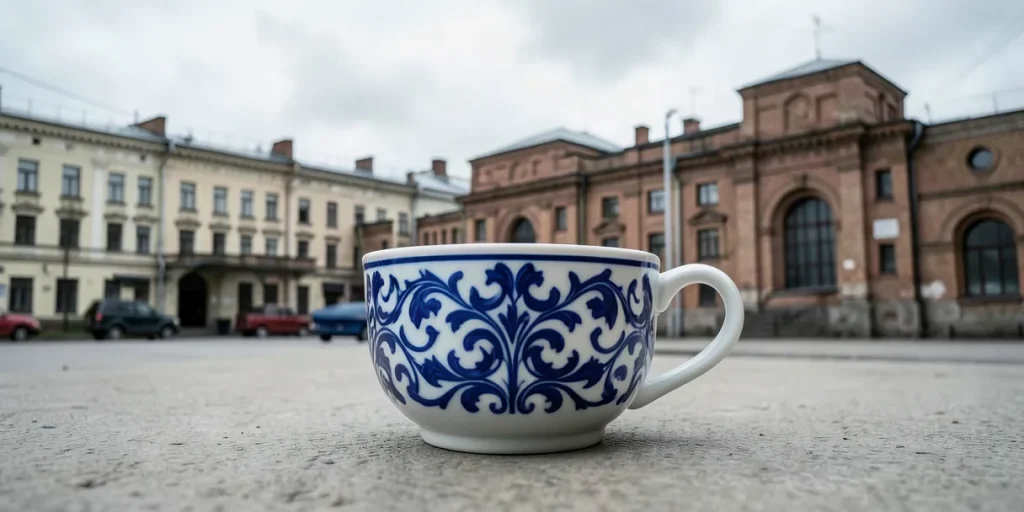
Introduction: What Russian Porcelain Is and Why It Matters
Russian porcelain is a unique blend of European porcelain-making technologies and a national artistic style that has evolved since the early 18th century. Its significance lies not only in its aesthetic value but also in its historical role within Russian culture and economy. Today, Russian factories and workshops continue these traditions, maintaining high quality while incorporating modern technologies.
Historical Stages of Russian Porcelain Development
The first porcelain manufactories in Russia appeared in 1744 by decree of Empress Elizabeth Petrovna. One of the earliest was the Imperial Porcelain Manufactory in Saint Petersburg, founded in 1744 and still operating today.
Main Periods
- 1744–1800: establishment and mastering of European porcelain technologies
- 1800–1917: flourishing of artistic porcelain, emergence of new brands such as Gzhel
- 1917–1991: Soviet era with mass production and preservation of traditions
- 1991–2026: revival and modernization focusing on design and export
During the 18th and 19th centuries, the range expanded from tableware to figurines and decorative panels. By 1900, the Imperial Manufactory produced up to 10,000 pieces annually, with exclusive sets priced at several thousand gold rubles.
Traditional Techniques and Materials
Russian porcelain is made from high-quality kaolin clay sourced from the Leningrad region and Moscow suburbs. The process includes double firing at temperatures around 1400 °C and hand painting.
Technological Process
- Preparation and purification of kaolin
- Shaping items using presses and by hand
- Initial firing (biscuit) at about 950 °C
- Glazing and applying designs
- Secondary firing up to 1400 °C for strength and shine
Painting is often done with cobalt blue paint or 22-carat gold. The average production time for a 12-piece set is about 30 days.
Contemporary Brands and Workshops
Today, several well-known Russian producers preserve traditions and incorporate innovations. The largest among them are:
- Imperial Porcelain Factory (Saint Petersburg) — the oldest factory offering a range from classic to modern tableware. Average price for a set is 15,000–25,000 ₽.
- Gzhel Porcelain Factory (Moscow Region) — specializes in traditional blue painting. Sets of cups with saucers start at 5,000 ₽.
- Porcelain of Russia Workshops — small studios with hand painting and original collections. Their pieces are prized by collectors, with figurines costing up to 50,000 ₽.
| Factory | Year Founded | Average Set Price, ₽ | Main Style | Annual Output, pieces/year |
|---|---|---|---|---|
| Imperial Factory | 1744 | 20,000 | Classic, Baroque | 150,000 |
| Gzhel | 1802 | 7,000 | Blue Painting | 85,000 |
| Porcelain of Russia | 2005 | 30,000 | Artistic, Contemporary | 5,000 |
Market and Economics of Russian Porcelain
In 2025, the Russian porcelain market size was estimated at approximately 1.2 billion ₽, with an annual growth rate of about 5%. The main sales share comes from gift and luxury tableware, as well as exports to CIS countries and Europe.
Selection Criteria and Popularity
- Quality of glaze and painting
- Historical authenticity and brand recognition
- Design and alignment with current trends
- Price and value for money
Porcelain prices range from 3,000 ₽ for a set of six cups up to 100,000 ₽ for collectible sets featuring hand painting and gilding. On average, buyers are willing to invest about 12,000 ₽ for a quality set.
- 1.2 billion ₽ Russian porcelain market volume in 2025
- 30 days average production time for a classic set
- 1400 °C temperature of porcelain’s second firing
- 150,000 pieces produced annually by the Imperial Porcelain Factory
Frequently Asked Questions
When was the first Russian porcelain factory established?
What are the distinctive features of Gzhel porcelain?
How long does it take to make one porcelain set?
What is the average price of quality Russian porcelain?
Key Takeaways
- Russian porcelain combines European technology with national design traditions dating back to the 18th century.
- The Imperial Porcelain Manufactory and Gzhel are the leading traditional producers with distinct styles and price segments.
- The modern Russian porcelain market steadily grows, focusing on gift and luxury products.
- The production process includes double firing at 1400 °C and hand painting, ensuring quality and durability.
- Prices vary widely depending on brand and complexity, from 3,000 ₽ to 100,000 ₽.
Conclusion
Russian porcelain is more than just tableware; it is a symbol of cultural heritage and craftsmanship that has endured through the centuries. Contemporary producers successfully blend tradition and innovation, keeping interest alive both domestically and internationally. In 2026, Russian porcelain remains a significant element of national culture and economy, offering consumers variety and high-quality products.
Sources
- moskomcenter.ru — “History of Russian Porcelain: Centuries-old Traditions and Achievements — Reference Information”
- addenda.hse.ru — “Chinese Porcelain: History and Production Secrets — Addenda Continuing Education Center — National Research University Higher School of Economics”
- cheesecakeschool.ru — “Chinese Porcelain: History and Art of Production”
- 1postranam.ru — “Chinese White Porcelain: Traditions and Production History”
- decolglass.ru — “The Best Porcelain in the World: How to Choose?”