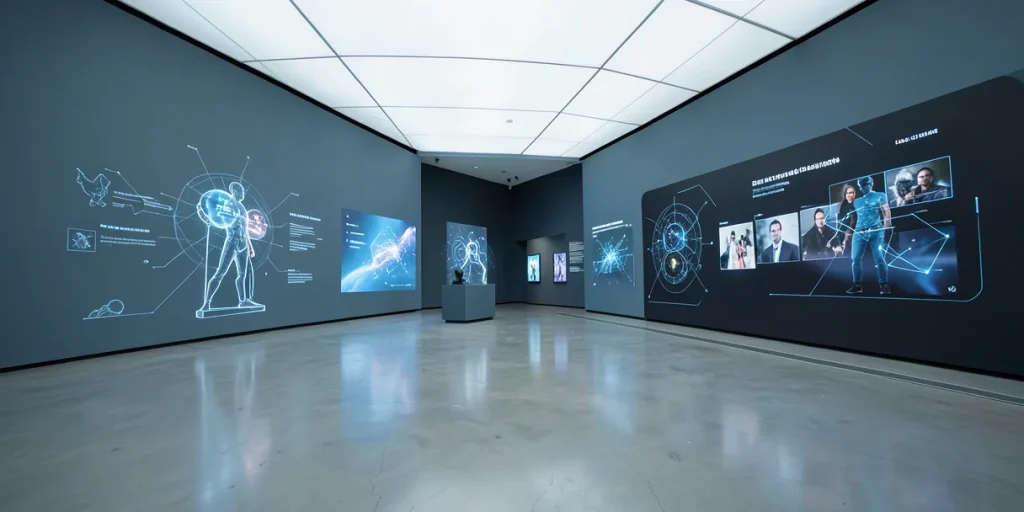
In 2026, new technologies are radically changing the perception of cultural heritage, opening up entirely new horizons. With the help of virtual and augmented reality, as well as artificial intelligence, we can not only see but also feel historical places and artifacts like never before. These innovations make cultural heritage more accessible and interactive, engaging a wide audience in the process of studying and preserving it.
Today, technology allows us to understand the context and significance of historical events more deeply, making them a part of our everyday lives. We are no longer just observers, but active participants capable of interacting with cultural heritage, creating new opportunities for education and personal development. In this context, it becomes clear that new technologies are a key factor in changing the perception of cultural heritage in the modern world.
Digitalization of Museums: New Horizons
The digitalization of museums is one of the key aspects of transforming the perception of cultural heritage in 2026. More and more museums are transitioning to fully digital exhibitions, which not only preserve unique works of art but also make them accessible to a wider audience. Digital exhibitions allow viewers to interact with artifacts anytime and from anywhere, which is especially relevant in the context of global changes and pandemics. With modern technologies such as virtual reality, users can immerse themselves in the atmosphere of museums without leaving their homes, making cultural heritage accessible to all who wish to explore it.
Augmented reality (AR) also plays an important role in changing the perception of museums. The use of AR technologies enables the creation of interactive elements that significantly enrich the visitor experience. For example, by pointing a smartphone at an exhibit, users can see it in a historical context, receive additional information about the artist or the work, as well as view animations that bring static objects to life. This interaction makes visiting museums more engaging and educational, especially for the younger audience.
An important direction of digitalization is the creation of children’s museum centers, which are actively developing within national projects such as the «Family» project. These centers aim to make cultural heritage more accessible and interesting for children, using playful and educational methodologies. In such spaces, children can not only learn about culture but also participate in workshops, interactive exhibitions, and scientific experiments, fostering their cultural identity and interest in art from an early age.
Thus, the digitalization of museums opens new horizons for the preservation and promotion of cultural heritage, making it more accessible and interactive. Technologies such as augmented reality and the establishment of new children’s centers contribute to a deeper immersion in the world of art and culture, shaping a new generation of connoisseurs and guardians of our heritage.
Artificial Intelligence in Restoration
Artificial intelligence (AI) in the restoration of works of art represents one of the most impressive aspects of applying new technologies in the field of cultural heritage. In 2026, AI is actively used to analyze the condition of objects, identify hidden damages, and develop recommendations for their restoration. Modern machine learning algorithms are capable of analyzing millions of images, allowing not only the identification of damages but also the prediction of how they may develop over time. This opens new horizons for restorers, enabling them to plan their actions more accurately and use resources effectively.
Machine learning is also actively implemented in the processes of preserving cultural values. AI helps create databases that systematize information about works of art, their history, and previous restoration efforts. This approach not only improves the quality of restoration work but also increases the accessibility of information for researchers and the wider audience. Additionally, the use of AI in restoration contributes to the creation of more accurate and precise digital copies of cultural heritage objects, which is an important step in their preservation and promotion.
New methods of creating digital copies of objects are also being widely applied. With the help of 3D scanning and modeling technologies, it becomes possible to create high-quality digital twins of works of art. These copies can be used in virtual museums and exhibitions, allowing viewers from anywhere in the world to interact with cultural values without causing physical harm to them. Thus, the digitalization of objects not only aids in their preservation but also expands opportunities for educational and cultural initiatives.
In conclusion, the combination of artificial intelligence, machine learning, and the latest technologies for creating digital copies opens new prospects for restoration and preservation of cultural heritage, making it more accessible and understandable for modern society.
The Impact of Social Media on Cultural Heritage
In 2026, the impact of social media on cultural heritage is becoming increasingly significant. Platforms such as Instagram, TikTok, and YouTube serve as powerful tools for disseminating information about cultural events, exhibitions, and historical monuments. Through short videos and photos, users can share their impressions of visiting museums and cultural events, which helps to enhance interest in cultural values and their preservation. Such formats not only attract attention to cultural events but also shape public opinion about the importance of preserving cultural heritage.
Technological advancements also open new horizons for creating virtual tours and online exhibitions. Museums and cultural institutions are beginning to implement augmented and virtual reality, allowing viewers not only to observe but also to interact with exhibits from any corner of the world. Virtual exhibitions become especially relevant in the context of global restrictions, when physical visits to museums are hindered. This not only expands the audience but also promotes democratization of access to culture, allowing everyone to become part of the cultural space.
Furthermore, interaction with the audience through user-generated content becomes an important aspect of modern perception of cultural heritage. Museums and cultural organizations actively encourage visitors to share their impressions and memories on social media. This creates a platform for exchanging opinions and allows for a deeper connection between cultural institutions and their audience. User-generated content enriches cultural discourse and helps to reveal the diversity of perceptions of cultural heritage, which, in turn, contributes to its preservation and promotion.
Education and Cultural Heritage
Modern technologies have a significant impact on the perception of cultural heritage, transforming educational programs in museums and creating new forms of interaction with art. In 2026, the integration of digital technologies into museum education becomes an integral part of the cultural landscape. Museums are actively implementing virtual lectures and seminars that allow viewers to immerse themselves in history and art without leaving their homes. This not only expands access to knowledge but also makes learning more interactive and engaging.
Additionally, the development of augmented reality (AR) and virtual reality (VR) allows for the creation of unique educational programs that make visiting museums more exciting. Visitors can not only observe exhibits but also interact with them, gaining additional information and immersing themselves in the context of works of art. These technologies contribute to a better understanding of cultural heritage and stimulate interest in art, especially among young people.
Museums are also beginning to pay special attention to the creation of children’s museum centers, where children can study cultural heritage through playful and educational programs. This direction is supported by national projects and responds to society’s demand for accessible and engaging education. As a result, children not only become acquainted with history and art but also develop critical thinking and creative abilities.
Thus, new technologies not only change the very form of presenting cultural heritage but also create new opportunities for education and interaction with art. The use of artificial intelligence for the restoration of works and the digitalization of museum collections become important tools in the preservation and promotion of cultural values, making them accessible for future generations.
Ethical Aspects of Digitalization
In the context of rapid digitalization of cultural heritage in 2026, the most important aspects are the ethics and legal norms related to copyright and the use of digital copies of works of art. The emergence of technologies such as augmented reality and artificial intelligence opens new horizons for museum work, but at the same time calls into question traditional notions of ownership rights over works. Questions about who is the legal owner of digital copies and how the interests of authors should be protected require careful analysis and the development of new approaches to copyright that take into account the specifics of the digital environment.
Preserving the authenticity of works of art in digital format also presents a complex challenge. Digitalization can assist in the preservation and restoration of cultural values, but there is a danger that virtual copies may be perceived as replacements for originals. This could lead to a decrease in cultural value and the uniqueness of original works. It is important to develop strategies that will preserve the authenticity and uniqueness of works even in digital format while ensuring access to them for a wider audience.
The need to regulate digital content in the field of art and culture is becoming increasingly relevant. With the emergence of new technologies, there is a need to create clear norms and standards that will protect both the rights of authors and the interests of users. The development of such norms may include the creation of legislative initiatives aimed at protecting intellectual property in the context of digitalization, as well as discussions of ethical issues related to access and use of cultural heritage.
Thus, the ethical aspects of digitalizing cultural heritage require a comprehensive approach that will take into account both legal and cultural aspects, ensuring harmonious coexistence of traditional and digital arts.
Cross-Cultural Projects
Cross-cultural projects are becoming an important element in the process of preserving and promoting cultural heritage in 2026. International initiatives aimed at protecting and restoring historical objects are actively developing, allowing countries to exchange experiences and technologies. Within such projects, cultural institutions work on creating a unified database that will collect information about monuments and works of art that need protection. This cooperation not only contributes to the preservation of heritage but also helps strengthen cultural ties between nations.
Comparing approaches to digitalization in different countries shows that each nation chooses its own path based on unique traditions and economic possibilities. For example, in some countries, the focus is on integrating augmented reality into museum exhibitions, allowing visitors to interact with exhibits at a new level. Other countries, on the contrary, concentrate on creating virtual museums accessible to a wider audience. This approach fosters a deeper understanding of the cultural context and makes heritage accessible to people who cannot physically visit museums.
The exchange of experiences between museums in different countries also plays a key role in the digitalization process. In 2026, many institutions are actively participating in joint projects where new technologies such as artificial intelligence for the restoration of works of art and the creation of interactive exhibitions are being implemented. These initiatives help not only in the preservation of cultural values but also in attracting new audiences, especially young people. Importantly, within such projects, not only technology is exchanged but also cultural dialogue that enriches all parties involved.
Thus, cross-cultural projects in the field of preserving cultural heritage in 2026 become an important tool for uniting the efforts of different countries in the protection and promotion of unique historical values.
The Future of Museums: Experts’ Perspective
In 2026, museums are on the brink of significant changes driven by technological development. According to experts, digitalization will become the main trend that will allow museums not only to preserve but also to promote cultural heritage. The use of augmented reality will open new horizons for interacting with exhibits. Visitors will be able to receive information about works of art in real-time and participate in interactive exhibitions, making museum visits more engaging and educational.
One of the key aspects that specialists emphasize is attracting new audiences. Museums will actively develop children’s centers, which aligns with society’s requests and is supported at the national project level. Such initiatives are aimed at fostering interest in art and culture among the younger generation. Additionally, the use of artificial intelligence for the restoration and preservation of works will allow museums to improve the quality of exhibits and make them accessible to the general public.
Adapting to changes in cultural preferences will also become an important factor. Museums will strive to take into account the interests of various population groups by offering diverse programs and events. For example, specialized exhibitions, workshops, and lectures will help attract attention not only to classical works but also to contemporary art. It is important for museums to remain relevant in a rapidly changing cultural landscape, and for this, they must be ready for experimentation and innovation.
Thus, the future of museums in 2026 promises to be promising. The implementation of new technologies and adaptation to societal needs will help museums not only preserve cultural heritage but also make it accessible to all, shaping a new generation of art connoisseurs.
International Conference on Cultural Heritage
In September 2026, St. Petersburg will host the II International Scientific and Practical Conference «Information Technologies in the Preservation and Promotion of Cultural Heritage.» This event will bring together scholars, practitioners, and experts in the field of culture to discuss the impact of new technologies on the perception of cultural heritage. The conference will focus on issues of museum digitalization, the use of augmented reality, and artificial intelligence in the restoration of works of art. Participants will be able to share successful practices of technology implementation that contribute to the preservation and promotion of cultural values.
One of the key topics of the conference will be the interaction between scholars and professionals in the cultural field. This collaboration is essential for creating effective solutions that help museums and cultural institutions adapt to modern challenges. Participants will discuss how new technologies can change the approach to exhibitions and interaction with visitors, as well as how they can improve educational programs and youth participation in cultural life.
The conference will showcase successful case studies of digitalization that have already been implemented by various institutions. For example, the use of augmented reality allows for the creation of interactive exhibitions where visitors can receive additional information about works of art in real-time. Additionally, artificial intelligence is being applied in the restoration process, allowing for the automation of part of the work and increasing the accuracy of restoring historical objects.
Thus, the conference will be an important platform for exchanging experiences and ideas that will help shape the future of cultural heritage in the era of digitalization. Participants will be able to discuss how technologies can not only preserve but also enrich the cultural experience, making it accessible to a wider audience.
Frequently Asked Questions
How are technologies changing the perception of museums?
How does AI assist in restoration?
How do social media affect cultural heritage?
What ethical questions arise with digitalization?
What is the International Conference on Cultural Heritage?
Key Takeaways
- Digitalization is changing the approach to museums and cultural heritage.
- AI is becoming an important tool in art restoration.
- Social media promotes cultural values.
- Education plays a key role in engaging youth with culture.
- Ethical aspects require attention when using new technologies.
Sources
expert opinions, cultecon.hse.ru, PRO.Культура.РФ, cdto.work, ultralytics.com
