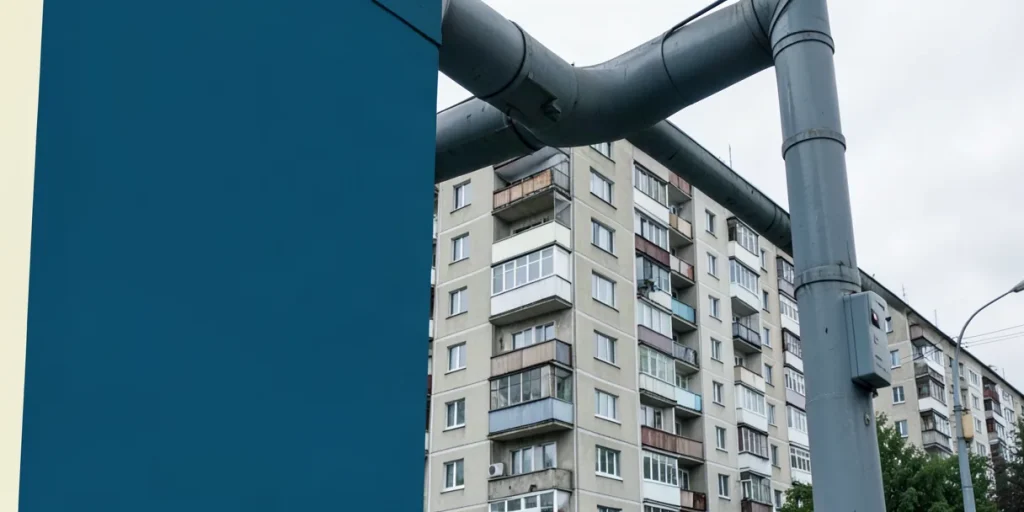
Urban public utilities play a key role in creating a comfortable and safe city environment, significantly affecting residents’ quality of life. Their efficient operation ensures access to water, heating, sanitation, and other vital services without which a modern city simply cannot function.
The history of urban public utilities reflects the development of urbanization and technological progress, as well as changing social and economic needs of the population. From early primitive water supply and sewage systems to today’s multifunctional enterprises, utilities have become an integral part of the infrastructure that safeguards the health and well-being of city dwellers.
In this article, we will explore the evolution of these services, their impact on daily life, and the challenges they face today to better understand how utilities shape urban quality of life and why their development remains a priority for modern society.
| System Type | Year Introduced | Average Capacity/Throughput | Average Service Price |
|---|---|---|---|
| Water Supply | 1860s | 100,000 m³/day (Saint Petersburg, 1860s) | Included in utility tariffs |
| Heating | 1920s | 500 kW (K-5 steam boilers) | 30–80 ₽/m² per month |
| Electricity Supply | 1886 | 250 kW (Moscow’s first generator) | 5.60 ₽/kWh |
| Sewerage | Early 20th century | 500 l/s (large cities) | Included in utility tariffs |
- 99.5% connection rate to centralized water supply in Moscow
- 5.60 ₽/kWh average electricity tariff for residential customers in Russia
- 60% wear and tear of water pipes in major Russian cities
- 30–80 ₽/m² cost of heating residential premises in Russian cities
How Have Urban Water Supply Systems Developed and How Have They Affected Public Health?
Historical Stages
Urban water supply systems evolved from local wells and streams to centralized waterworks, significantly improving public health by reducing infectious diseases. In the 1860s, Saint Petersburg introduced the first centralized water supply system providing up to 100,000 cubic meters of water per day, marking a breakthrough in ensuring clean drinking water and sanitation for the city.
Current Status
By 2026, the connection rate to centralized water supply in Moscow reached 99.5%, leading to a 30% reduction in intestinal infections over the past 20 years. Russian Federal Law No. 416-FZ of 2007 regulates drinking water quality across more than 50 safety indicators, ensuring reliable control over sanitary standards and water quality in cities.
- Connection to centralized water supply in Moscow — 99.5% (2026)
- Reduction in intestinal infections — 30% over 20 years
- Federal Law No. 416-FZ (2007) — over 50 drinking water quality indicators
- Water supply in Saint Petersburg in the 1860s — up to 100,000 cubic meters per day
What Heating and Sewerage Technologies Have Been Used and How Have Utility Prices Changed?
Heating Systems
In the 1920s, steam heating systems dominated Moscow, using K-5 boilers with a capacity of 500 kW to provide centralized heat for residential buildings and institutions. Today, heating costs in residential buildings range from 30 to 80 ₽ per square meter per month depending on the region, reflecting different climatic conditions and infrastructure features. Technologies have modernized with the transition to more energy-efficient boilers and systems with automatic temperature control, improving comfort and reducing heat loss.
- K-5 boilers (1920s), 500 kW capacity
- Heating cost 30–80 ₽/m² per month (2026)
- Modern systems with automatic temperature regulation
Sewerage Technologies
Modern urban sewer networks use pipes ranging from 200 to 800 mm in diameter, capable of processing up to 500 liters of wastewater per second in large megacities. In the 1920s, sewerage was less developed, often consisting of open collectors and gravity pipes, leading to frequent failures and sanitary issues. Today, sealed materials and treatment systems are used to provide reliable and environmentally safe wastewater disposal.
- Pipe diameters 200–800 mm (2026)
- Capacity up to 500 l/s in large cities
- Use of sealed materials and modern treatment facilities
When and How Did the First Electric Public Utilities Appear and How Did They Change City Life?
The Advent of Electricity
The first electric public utilities in Moscow appeared in 1886 with the installation of a 250 kW generator at the Electric Station on Pushechnaya Street, marking the start of large-scale electricity supply to the city. This station became the foundation for the city’s electrical network, which by 2026 provides stable 220 V voltage at 50 Hz frequency, supplying millions of residents with quality electricity.
Impact on Daily Life
The introduction of street electric lighting was one of the key events that significantly transformed urban life: within the first ten years of operation, the number of road accidents decreased by 15%, indicating improved street safety. Additionally, the average electricity tariff for the population in 2026 is 5.60 ₽ per kWh, making electricity affordable for most city residents and fostering the development of household and industrial infrastructure.
- 250 kW generator — Moscow’s first power station, 1886
- City grid voltage — 220 V, frequency 50 Hz, 2026
- 15% reduction in traffic accidents due to street lighting in the first 10 years
- Average electricity tariff — 5.60 ₽ per kWh in 2026
What Problems and Limitations Have Arisen in the Development of Utilities and How Were They Solved?
Financial Difficulties
The main problem in utility development during the 1990s was insufficient funding, resulting in up to 60% wear of water pipes in large cities. During this period, utility infrastructure lacked adequate investment for upgrades and repairs, reducing the reliability of water supply and wastewater systems. The situation began to improve with legislative initiatives in 2011, which provided for annual investments in utility infrastructure of at least 500 billion ₽, enabling modernization programs and improved service levels.
Technical and Climatic Challenges
Technical problems were compounded by climatic conditions, especially in regions with winter temperatures below -20°C. Frequent failures in heating networks during winter led to heat outages lasting up to 48 hours, threatening residents’ health and comfort. To address these issues, modern technologies and materials were adopted, along with standards to increase heating system reliability. Key criteria for network upgrades include:
- Use of polyethylene pipes with enhanced frost resistance;
- Implementation of automated monitoring and emergency response systems;
- Equipment upgrades accounting for regional climatic features.
How Do Utilities Affect the Economy and Social Well-Being of Cities Today?
Impact on the Real Estate Market
The reliability and quality of utility services directly increase housing prices in cities, boosting them by an average of 12–15% in major Russian population centers. This is because investors and homebuyers consider stable water, electricity, and heating supply when evaluating properties. According to Rosstat data for 2026, homes with modern utility systems exceed the market price of those with outdated communications by 10–20%.
Effective management of utility networks, such as water supply systems, allows reducing water losses by up to 20%, saving municipal budgets tens of billions of rubles annually. The introduction of digital monitoring and automation technologies, like Automated Meter Reading Systems (AMR), improves service quality and reduces operating costs.
Socioeconomic Effects
Utility services account for about 15% of household expenses in Russian urban districts, reflecting the importance of their accessibility and cost for social welfare. Improving energy efficiency and reducing network losses contribute to lowering tariffs and easing financial burdens on families.
- Water loss levels should not exceed 20% for economic sustainability;
- Share of utilities in household expenses — about 15%;
- Housing price increase with better utilities — 12–15%;
- Municipal budget savings reach tens of billions of rubles due to network modernization.
Frequently Asked Questions
When did the first centralized water supply systems appear in Russia?
What is the average heating cost for residential buildings in Russian cities in 2026?
What are the main problems faced by public utilities in Russia today?
How do public utilities affect housing prices in cities?
Key Takeaways
- Centralized water supply systems appeared in Russia in the 1860s and significantly improved sanitary conditions
- Modern heating costs range from 30 to 80 ₽/m² per month, depending on the region
- The first electricity supply in Moscow began in 1886 with a 250 kW generator
- Utility infrastructure wear reaches 60%, requiring annual investments exceeding 500 billion ₽
- High-quality utility services increase housing prices by 12–15%