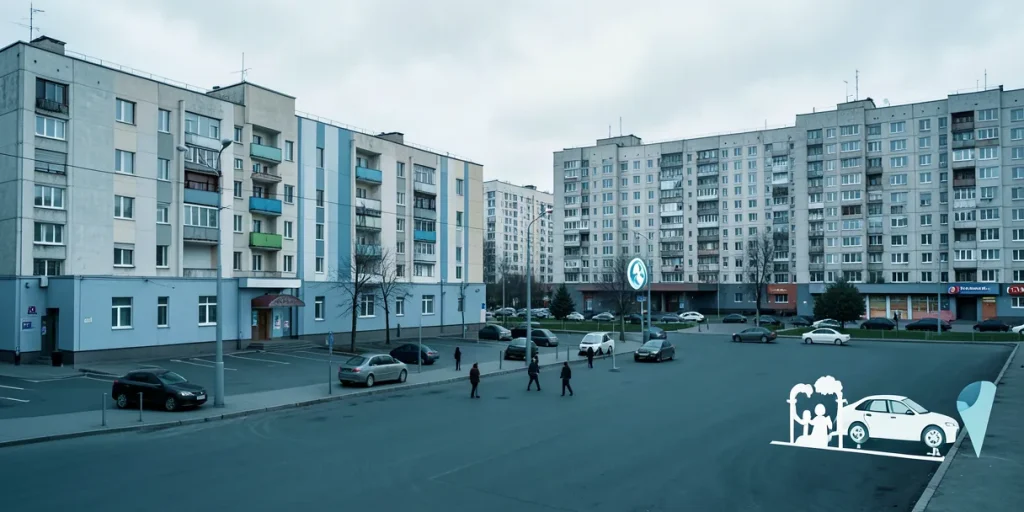
Social institutions in Russia during the 20th century underwent profound and complex changes, reflecting the country’s sweeping political, economic, and cultural transformations. From traditional family and religious structures to new forms of state governance, education, and labor relations, this era marked a time of rethinking and restructuring the foundations of society.
The history of the 20th century in Russia is a history of revolutions, industrialization, wars, and reforms that inevitably affected every aspect of social life. In the article «How Social Institutions in Russia Evolved in the 20th Century,» we examine the key stages of development and transformation of institutions that shaped the daily lives of millions and determined the country’s fate over the century.
Understanding the dynamics of social institutions during this period helps to better grasp not only historical processes but also the current state of Russian society, its values, and structure. Analyzing these changes reveals how the past laid the groundwork for today’s social norms and institutions.
| Indicator | 1913–1920s | 1980–1990s | Modern Period (2020s) |
|---|---|---|---|
| Average family size | about 5 people | about 3.3 people | about 2.5 people |
| Literacy rate | about 40% | over 99% | over 99% |
| Number of doctors per 10,000 | about 6 | about 25 | about 35 |
| Employment share in industry | about 15% | about 40% | about 30% |
| Unemployment rate | none or unrecorded | about 1% | about 4.5% |
- 5 people average family size in Russia in 1913
- 99% literacy rate in the USSR by the 1970s
- 25 doctors per 10,000 people number of doctors in the USSR by 1980
- 40% employment share in industry by 1940
- 4.5% unemployment rate in Russia in 2026
How Did the Family Structure Change in Russia During the 20th Century?
Size and Composition of the Family
Throughout the 20th century, Russia’s family structure underwent significant changes, primarily marked by a decrease in average family size and a reduction in the share of large families. In 1913, the average family consisted of about 5 people, whereas by 1989, according to the USSR census, it had dropped to around 3.3 people. At the same time, the proportion of large families declined: while it exceeded 20% at the century’s start, by the 1980s it had fallen to 8% of all families.
Legislative Changes
A key factor in transforming family relations was legislation. The Soviet Family Code, introduced in 1936, regulated marriage and family relations by establishing the rights and duties of spouses. In 1995, Russia adopted a new Family Code that introduced the concept of joint marital property and significantly expanded children’s rights, reflecting shifts in the social and economic fabric of society.
- Average family size: 5 people (1913) → 3.3 people (1989)
- Share of large families: over 20% (early 20th century) → 8% (1980s)
- Soviet Family Code adopted in 1936
- New Russian Family Code adopted in 1995, introduced joint ownership and expanded children’s rights
What Changes Occurred in the Education System During the 20th Century?
Rising Literacy and Compulsory Education
The education system in Russia experienced significant changes during the 20th century, resulting in a rise in literacy from about 40% in 1917 to over 99% by the 1970s, according to Soviet State Statistics. In the 1930s, compulsory eight-year education was introduced, providing a basic level of schooling for the majority of the population.
A major milestone came in 1958 when the compulsory program expanded to include ten- and eleven-year schooling. These reforms helped develop a more qualified workforce and improve overall educational standards in the country.
Higher Education and Legislation
Moscow State University named after M.V. Lomonosov was founded in 1930, becoming the USSR’s leading scientific and educational center. This milestone symbolized the advancement of higher education and science in the country.
In 1992, the Law «On Education in the Russian Federation» was adopted, introducing elements of paid education and university autonomy. These changes allowed universities to independently design curricula and financial policies, marking a step toward modernizing the education system.
- Literacy in 1917 — about 40%
- Literacy in the 1970s — over 99%
- Introduction of compulsory eight-year schooling — 1930s
- Transition to ten- and eleven-year schooling — 1958
- Founding of Moscow State University — 1930
- Law «On Education in the Russian Federation» with paid education elements — 1992
How Did the Healthcare System Develop in Russia During the 20th Century?
Growth of Medical Staff and Accessibility
The healthcare system in Russia developed significantly through a substantial increase in medical personnel and wider availability of medical services. In 1913, there were about 6 doctors per 10,000 people, whereas by 1980 this number had grown to approximately 25 doctors per 10,000, according to the USSR Ministry of Health. This growth enabled broader population coverage, especially in cities, where in the 1960s clinics and dispensaries were actively developed to prevent and treat diseases.
State Funding and Reforms
A key development was the 1936 law on free Soviet medicine, which guaranteed state funding and access to medical care for all citizens. During the 1990s, the healthcare system underwent reforms that significantly increased the share of private medical institutions, yet public healthcare retained a central role. This preserved basic medical care guarantees despite economic challenges of the transition period.
- 6 doctors per 10,000 people in 1913
- 25 doctors per 10,000 people by 1980
- Law on free medicine enacted in 1936
- Introduction of clinics and dispensaries in the 1960s
- Growth of private medical facilities after 1990s reforms
What Transformations Did the Labor Market and Economy Undergo in the 20th Century?
From NEP to Industrialization
The labor market and economy in 20th-century Russia experienced major shifts, moving from the New Economic Policy (NEP) to collectivization and industrialization. Between 1921 and 1928, the NEP allowed the private sector to occupy up to 50% of industry and trade, revitalizing the economy after the Civil War. However, starting in 1930, large-scale collectivization and industrialization began, changing employment structure: by 1940, industrial workers made up 40% of the workforce, reflecting a rapid transition to an industrial society.
Perestroika and the Labor Market
In 1985, the perestroika program was launched, aiming for economic liberalization and a shift to market relations. This period saw rising unemployment, which reached around 10% by 2000, while in the 1950s unemployment was virtually nonexistent due to the planned economy. Perestroika facilitated the emergence of private enterprises and growth of small business but also brought significant labor market instability.
- NEP (1921–1928): private sector controlled up to 50% of industry and trade;
- Collectivization and industrialization (1930–1940): 40% of workforce employed in industry;
- Perestroika (from 1985): unemployment rose to 10% by 2000;
- 1950s: near-zero unemployment due to planned economy.
When and Why Did Restrictions and Failures in the Development of Social Institutions Occur in 20th-Century Russia?
Repressions and the Breakdown of Traditional Structures
In the 1930s, mass repressions and collectivization were major causes of setbacks and failures in Russia’s social institutions, leading to a decline in birth rates and disruption of traditional family ties. During this period, birth rates dropped by about 20%, partly due to forced relocations and worsening living conditions. Collectivization, initiated in the late 1920s and continuing through the 1930s, caused widespread famine and the ruin of rural families, undermining the foundations of family institutions and rural communities.
Reform Challenges and Social Inequality
The postwar period was marked by shortages of goods and services, which reduced social stability and living standards. The 1990s reforms led to a sharp rise in social inequality: according to Rosstat, incomes of the wealthiest 10% tripled, while the poorest 10% saw their incomes fall by 15%. At the same time, the healthcare system faced funding shortages, leading to cuts in free medical care and worsening coverage, especially in remote areas.
- Birth rate decline in the 1930s — about 20%
- Income growth of the richest 10% in the 1990s — threefold increase
- Income decline of the poorest 10% in the 1990s — 15% decrease
- Reduction in free medical coverage in the 1990s — significant population affected
How Did 20th-Century Social Institutional Changes Affect Modern Russian Society?
Demographics and Family
The transformations of social institutions in the 20th century have had a significant impact on the structure of modern Russian families and demographic trends. Today, the average family size in Russia is about 2.5 people, reflecting a trend toward lower birth rates and changing traditional family models. These shifts are linked to urbanization, changing roles of women in society, and economic factors shaped over the 20th century. Additionally, demographic policies and social programs introduced at various times have contributed to current indicators.
Education and Healthcare
Modern Russian society features a high literacy rate: over 99% of the population aged 15 and older can read and write, a result of systematic educational development throughout the 20th century. Educational reforms and the widespread adoption of compulsory schooling laid the foundation for stable cultural and scientific progress. In healthcare, a mix of public and private services persists, with about 70% of the population using free care under the compulsory medical insurance policy (OMS), continuing the tradition of social support. The labor market is diverse, yet official unemployment in 2026 stands at around 4.5%, reflecting both challenges and opportunities in Russia’s current socio-economic landscape.
- Average family size — about 2.5 people
- Literacy rate — over 99% of population aged 15+
- Share using free medical care — about 70%
- Unemployment rate in 2026 — around 4.5%
Frequently Asked Questions
When was compulsory schooling introduced in Russia?
How did the average family size in Russia change over the 20th century?
What were the main healthcare reforms in the USSR?
What characterized the Soviet labor market before perestroika?
Key Takeaways
- Family structures in 20th-century Russia saw a significant decrease in average size and changes in legal norms.
- Compulsory education and high literacy rates were major achievements of the Soviet era.
- State healthcare provided free medical services but faced crises during transition periods.
- The economy and labor market transitioned from centralized planning to a mixed model with market elements.
- Reforms and social upheavals of the 20th century left a lasting mark on current demographics and social structure.