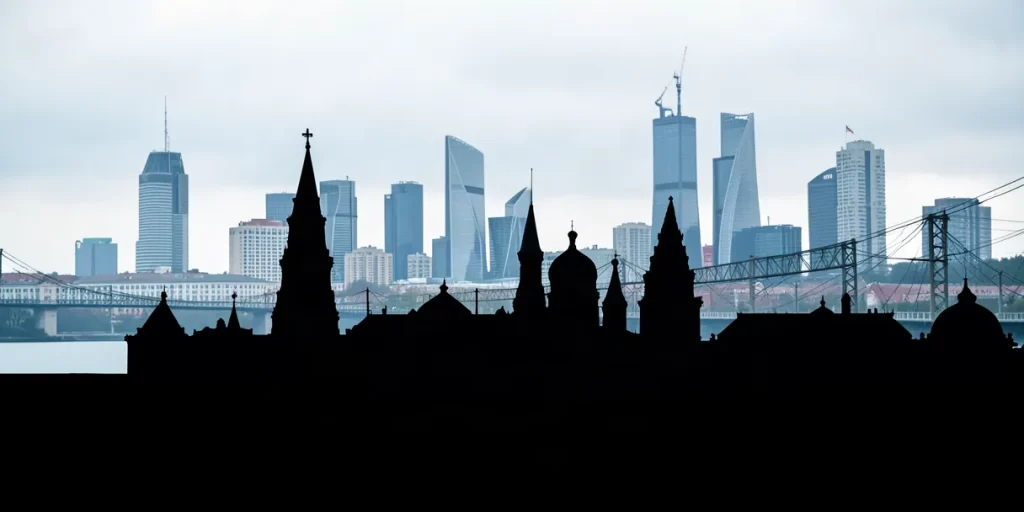
Urban infrastructure in Russia has undergone a complex and centuries-long development — from defensive fortresses and stockades to modern megacities equipped with high-tech engineering systems. This process reflects not only historical changes in politics and economics but also technological progress, adaptation to climatic conditions, and social needs. In this article, we will explore the key stages of urban infrastructure development across Russia, highlighting specific examples, engineering solutions, and standards.
Medieval Fortresses: Foundations of Urban Structure
Historically, Russian cities often began as fortresses — kremlins, stockades, and citadels — which served as defensive and administrative centers. For example, the Moscow Kremlin was built at the end of the 14th century and became the core around which the city formed.
Features of Fortress Construction
- Kremlins: stone fortresses with tall walls and towers (example — Moscow Kremlin, 14th century)
- Stockades: wooden fortifications in Siberia, such as the Tobolsk stockade, founded in 1587
- Citadels: fortified city cores in southern Russia, from the 14th to 16th centuries
Fortresses served not only a defensive role but also regulated trade and territorial control. For instance, the Tobolsk stockade controlled Siberian trade routes.
| Type | Material | Construction Period | Example |
|---|---|---|---|
| Kremlin | Stone | 14th-15th centuries | Moscow Kremlin |
| Stockade | Wood | 16th-17th centuries | Tobolsk Stockade |
| Citadel | Stone, wood | 14th-16th centuries | Azov Fortress |
Transition to Urban Planning in the 18th–19th Centuries
During the era of Peter I and Catherine II, active development of regular city layouts and engineering networks began. Cities ceased to be mere defensive outposts and became administrative centers with developed infrastructure.
Main Innovations
- Introduction of regular layouts with a rectangular street grid (example — Saint Petersburg, founded in 1703)
- Creation of water supply and sewage systems, for instance, Moscow’s first urban water supply dates back to 1779
- Development of transport infrastructure — construction of bridges and access roads
New engineering standards were actively applied at this time, including fire safety and sanitary regulations. For example, in the 1830s, Saint Petersburg established the first rules for zoning residential and industrial buildings.
Industrialization and Urbanization in the 19th–20th Centuries
The country’s industrialization led to rapid urban growth and the need for large-scale engineering solutions. During this period, the first railway hubs, electrical grids, and modern utilities appeared.
Key Infrastructure Projects
- The Trans-Siberian Railway (constructed from 1891 to 1916) connected Siberia and the Far East with European Russia
- The first city electric tram in Saint Petersburg was launched in 1907
- Development of heating systems, including centralized heat supply based on boiler plants
Cities expanded quickly, requiring infrastructure modernization and new technologies. By the 1920s, electricity supply covered about 40% of the urban population in major centers.
| Indicator | Saint Petersburg (1900) | Moscow (1920) | Novosibirsk (1930) |
|---|---|---|---|
| Population (millions) | 1.1 | 1.2 | 0.15 |
| Length of tram lines (km) | 70 | 60 | 20 |
| Electrification percentage | 35% | 40% | 15% |
Modern Infrastructure: Megacities and Smart Technologies
In the 21st century, Russian cities have transformed into large megacities with developed transport, utilities, and digital infrastructure. Moscow and Saint Petersburg lead in terms of technological advancement.
Innovative Projects and Standards
- Moscow Metro system — over 400 km of lines and 300 stations (as of 2026)
- Implementation of smart systems for managing urban transport and lighting based on Internet of Things (IoT) technologies
- Housing and utilities modernization programs using energy-efficient boiler plants and water treatment systems (e.g., the “Moscow Energy” project)
Additionally, major cities are adopting environmental safety and energy-saving standards — Moscow runs a program to reduce CO2 emissions by 30% by 2030.
| Indicator | Value |
|---|---|
| Metro line length (km) | 405 |
| Number of metro stations | 300 |
| CO2 reduction target by 2030 | 30% |
The Impact of Climate and Geography on Infrastructure Development
Russia’s climate and geography have significantly influenced engineering choices in urban construction. Harsh winters, terrain features, and the remoteness of some regions required adapting technologies.
Examples of Adaptive Engineering Solutions
- Use of pile foundations in Saint Petersburg due to marshy soil
- Implementation of heating systems designed for extreme winter temperatures in Yakutsk (average January temperature −40 °C)
- Bridge construction accounting for seasonal ice flows on Siberian rivers
For instance, Yakutsk has special heat networks and insulated utilities that prevent ground freezing and system damage.
Frequently Asked Questions
When and where did the first fortresses appear on Russian territory?
How did industrialization affect urban infrastructure?
What modern technologies are used in Russian megacities?
How does climate influence engineering choices?
Key Takeaways
- Russian urban infrastructure evolved from fortresses to modern megacities with advanced engineering systems.
- The 17th–19th centuries marked the formation of regular city layouts and the first utility networks.
- Industrialization ensured large-scale development of transport and energy systems.
- Modern cities adopt smart technologies and environmental standards.
- Climate and geography strongly influence engineering solutions and materials.
Thus, the history of urban infrastructure in Russia is a multilayered process reflecting changes in politics, economics, and technology. From stone kremlins to modern smart city systems, it is a journey of engineering thought adapting to the challenges of time and natural conditions, allowing Russian megacities to remain vital centers of culture and economy in the 21st century.
Sources
- sibdom.ru — “Paths of Megacity Development”
- elar.urfu.ru — “Federal State Autonomous”
- grandtour-nsk.ru — “Fortresses, Citadels, and Stockades of Russia”
- History and Architecture — “Kharkiv — Харків”
- academia.edu — “(PDF) Cities and Eras”