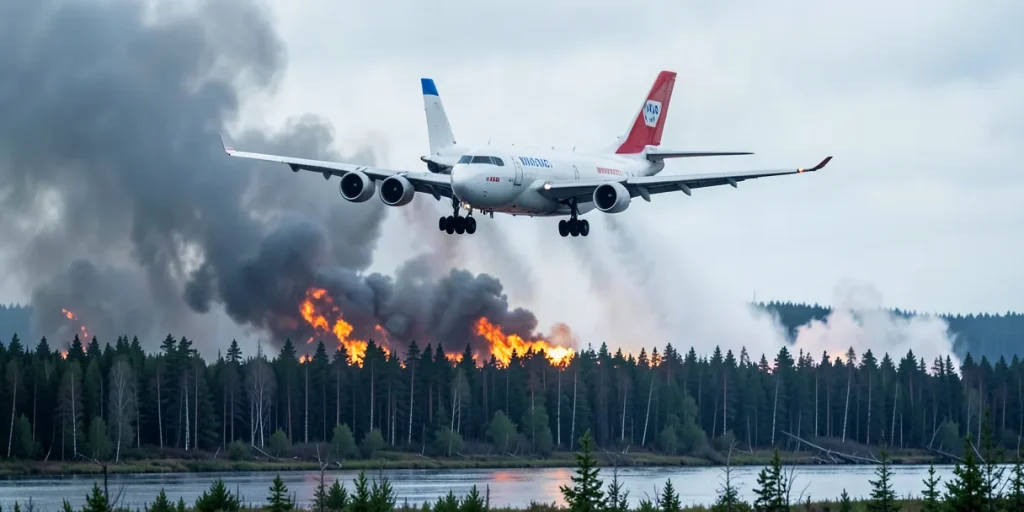
Completion of the Russian Il-76 Humanitarian Mission in Serbia
The Russian EMERCOM special aircraft Il-76 completed its operation to extinguish wildfires in Serbia and departed from «Constantine the Great» Airport in Niš on September 18 at 23:18. The aircraft had been in the country since August 19, providing aerial support to firefighting services and aiding in containing the flames.
The mission was organized under the directive of Russian President Vladimir Putin and formed part of joint efforts between Russia and Serbia to combat natural disasters. The return of the special aircraft marked the successful conclusion of a large-scale humanitarian operation.
Technical Capabilities of the Il-76 Aircraft in Firefighting
The Il-76 involved in the mission is equipped with a specialized water drop system capable of releasing up to 42 tons of liquid in a single sortie. This capacity enabled effective firefighting by reducing the fire’s rate of spread and minimizing the affected area.
The use of aviation in firefighting is especially crucial in hard-to-reach terrain where ground equipment and firefighting teams cannot quickly access the fire sources. The Il-76 was based at Niš Airport, allowing for rapid task execution.
The Role of the Russian-Serbian Humanitarian Center in Niš
The Russian-Serbian Humanitarian Center in Niš served as a key base for deploying rescue forces and specialized equipment. The center coordinated firefighting actions and facilitated cooperation between Russian and Serbian services.
The presence of such a center enables efficient organization of joint humanitarian and rescue operations, accelerating emergency response and enhancing the safety of regions prone to natural disasters.
Participation of Russian Rescuers in Firefighting Efforts
In addition to the Il-76 aircraft, a group of Russian rescuers with experience working in extreme conditions was deployed to Serbia. Their tasks included not only firefighting but also providing technical and advisory support to local services.
Russian specialists employed modern firefighting methods and ensured operational safety, significantly increasing firefighting effectiveness and reducing risks to the population and infrastructure.
Prospects for Russia-Serbia Cooperation in Emergency Situations
The humanitarian mission in Serbia exemplified successful international cooperation in emergency management. Russia and Serbia continue to develop joint programs for exchanging experience and resources to improve readiness for natural and man-made disasters.
Supporting and advancing such initiatives is vital for strengthening regional security and increasing resilience to emergencies, especially relevant amid global climate change.
Conclusion: The Russian EMERCOM special aircraft successfully completed a key mission in Serbia, demonstrating the effectiveness of aerial support in combating large-scale natural wildfires.