Updated: August 28, 2026
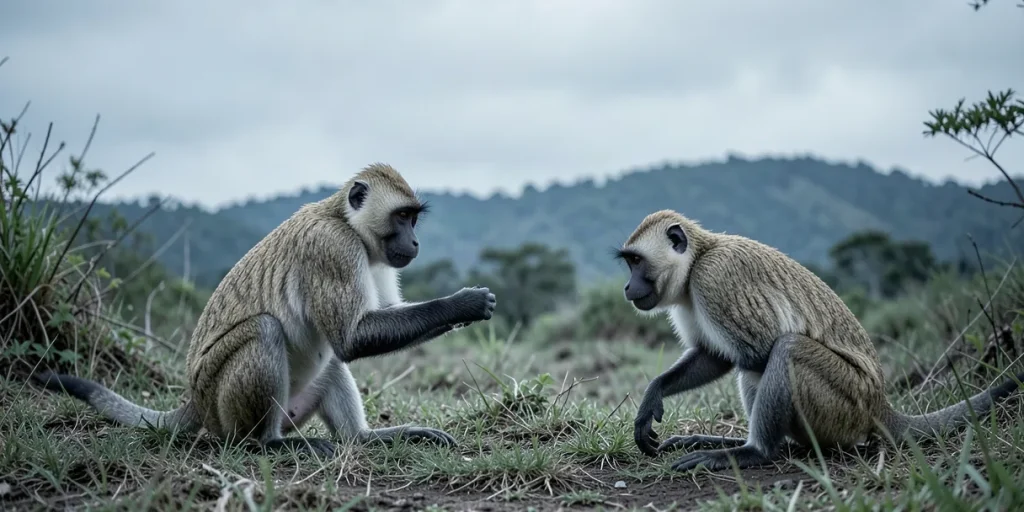
New studies in animal behavior have provided interesting data about female baboons and their attitudes toward male generosity. Contrary to expectations, females do not show particular interest in the generosity of their partners, which calls into question common views on mate selection in the animal kingdom. The research shows that females are more inclined to focus on other factors, such as the health and physical condition of males, rather than assessing their generosity in food acquisition.
These findings could change our understanding of social dynamics among baboons and other primates. Unlike many species where generosity may be a sign of status, baboons demonstrate that stability and reliability are more important to females, highlighting the complexity of their social relationships. Thus, the results of the study open new horizons for the exploration of evolutionary mechanisms of mate selection in the animal world.
Introduction to the Study
The study conducted by German primatologists questions traditional notions of mate selection in the animal kingdom, particularly among Guinea baboons. The researchers analyzed how female baboons respond to displays of generosity and hunting skills by males. The results were not only unexpected but also significant for understanding the mechanisms of mate selection in animals. Unlike traditional models suggesting that females should be interested in the resources that males can provide, the study found that females do not show particular interest in these qualities when choosing a partner.
Mate selection is a key aspect of reproduction in the animal kingdom, and it can significantly influence species evolution. In most cases, males demonstrate their abilities to attract the attention of females, believing it will enhance their chances of success. However, this study emphasizes that not all species operate under the same principles. In the case of Guinea baboons, females, as the researchers found, are not impressed by the hunting skills and generosity of males, which may indicate more complex factors influencing their choices.
Guinea baboons, distinguished by their social structure and behavior, are an interesting subject for research in sociobiology. They live in groups where interaction among herd members plays an important role. Males often compete for the attention of females, but these competitions may not hold the significance traditionally attributed to them by researchers. Understanding why females do not value hunting skills and resources could open new avenues for studying social behavior and reproductive strategies in primates.
Thus, the study’s results underscore the importance of further exploration of mate selection and social interactions in Guinea baboons, which could lead to a deeper understanding of evolutionary processes in the animal kingdom.
Methodology of the Study
The study conducted by German primatologists aimed to investigate the factors influencing partner selection by female Guinea baboons. The methodology included both field observations and experimental approaches. Observations were conducted in the natural habitats of baboons, allowing researchers to obtain more accurate data on animal behavior within their familiar ecosystem.
The field conditions of the study were optimal for observing the behavior of both males and females. Researchers used hidden cameras to record interactions among baboons in various social contexts. This allowed for the documentation of not only the hunting skills of males but also their social behavior, which could influence female choice. The study lasted several months, enabling the collection of a vast amount of data.
Criteria for assessing male generosity and hunting skills were based on several parameters. Generosity was evaluated through the quantity of food that males offered to females or other group members. Hunting skills were determined by the number of successful hunts and the quality of the prey that males brought to the group. Researchers also considered the social behavior of males, such as protecting females from potential threats or participating in interactions with other baboons, to understand how this influences female preferences.
Thus, the combined approach to data collection and analysis revealed that female Guinea baboons are not inclined to choose males based on their generosity or hunting skills, which challenges traditional ideas about the role of resources in the mate selection process among animals. These results may lead to new understandings in the fields of ethology and sociobiology.
Main Findings
The study conducted by German primatologists found that female Guinea baboons do not take into account the hunting skills and generosity of males when selecting a partner. This discovery calls into question existing theories that suggest the display of resources and skills plays a crucial role in the selection process. It was previously believed that males with outstanding hunting skills and the ability to share their catch would be more attractive to females. However, the results of this study show that females do not focus on these factors.
During observations of baboon behavior, researchers established that females select partners based on other criteria unrelated to generosity or hunting abilities. This finding may change our understanding of social behavior in primates and underscores the need to reconsider existing theories regarding mate selection in the animal kingdom. It is important to note that such results are not unique to Guinea baboons and could serve as a basis for further exploration of similar processes in other species.
Comparisons with previous research show that partner selection among different animal species can vary significantly. For example, in some bird species, females prefer males with bright plumage or complex songs, which are directly linked to their reproductive success. In contrast, in baboons, factors associated with hunting and generosity do not play a significant role. This highlights the complexity and diversity of mechanisms governing reproductive behavior in the animal kingdom.
Thus, the study of female baboons opens new horizons for understanding their partner choices and raises important questions about the factors that truly matter in the wild. Such data may lead to a deeper analysis of social structures and interactions in groups of primates and other animals.
Context and Significance of Findings
The results of a recent study conducted by German primatologists shed new light on traditional views regarding how female baboons choose their partners. It was expected that generosity and hunting skills of males would play a key role in this process; however, the research showed that female Guinea baboons do not pay attention to these factors when selecting a partner. This discovery could radically alter our understanding of the mechanisms of mate selection in the animal kingdom and reframe existing theories about social structures in primates.
Understanding mate selection in baboons is crucial for studying their social structures. It has traditionally been believed that the demonstration of resources such as food or hunting skills serves as a primary criterion for selecting males. However, the new study indicates that females may focus more on other qualities of males, possibly related to their social status or behavior within the group. This finding could lead to a reconsideration of existing models of social dynamics and hierarchy in baboon groups.
From an evolutionary perspective, the study’s results open new horizons for understanding the adaptive strategies used by baboons. Females may choose partners based on factors such as stability, health, or personal qualities that are not always explicitly demonstrated through hunting or generosity. This could indicate more complex forms of social interaction, where the quality of relationships and social support are paramount for successful reproduction and species survival.
Thus, the discovery of the insignificance of hunting skills and male generosity in partner selection not only challenges traditional views on baboon behavior but also highlights the necessity for further research in this area to gain a deeper understanding of the factors that truly affect social structures and evolutionary strategies of these animals.
Comparison with Other Primates
Comparison with other primates
Research on mate selection among different primate species shows that female behavior varies significantly depending on the species. For example, unlike Guinea baboons, some species such as chimpanzees and bonobos exhibit more pronounced preferences for males possessing certain resources or skills. In chimpanzees, males who can demonstrate their hunting skills often become more attractive to females. This may be related to the fact that such skills directly impact offspring survival.
On the other hand, in some species such as rhesus macaques, partner selection also depends on social bonds and the male’s status within the group. Females often choose more dominant males, which may be associated with better access to resources and protection. These differences emphasize that the factors influencing partner selection can vary greatly even among closely related species.
As for Guinea baboons, their partner selection behavior indeed differs from that of other primates. Females show no interest in the hunting skills or generosity of males, which challenges traditional notions that the demonstration of resources plays a key role in attracting females. This study may suggest the presence of other factors, such as social interaction, overall compatibility, or even personal preferences, that can influence partner selection.
Thus, several key aspects of partner selection among primates can be highlighted:
- The influence of hunting skills on male selection (observed in chimpanzees).
- The significance of social status and dominance (characteristic of macaques).
- The lack of interest in generosity and hunting skills among Guinea baboons.
- The possible role of social interactions and compatibility.
These observations underscore the importance of a comprehensive approach to studying primate behavior and the need for further research to better understand the mechanisms of partner selection in various social and ecological contexts.
Potential Applications
The study showing that female Guinea baboons are not impressed by male generosity and hunting skills opens new horizons for species conservation and further research in primatology. The results of this study may be applied to develop more effective environmental protection programs and conserve baboon populations. Understanding what factors truly influence mate selection in animals will help ecologists and biologists better assess species behavior and develop strategies aimed at maintaining their numbers.
One key aspect of applying these results is the potential to improve monitoring and management methods for primate populations. If traditional notions of partner selection based on the display of resources and hunting skills are not confirmed, this may imply that other factors such as social connections or health play a more significant role. This understanding could lead to a reassessment of existing behavioral models and assist in creating more accurate tools for assessing population status.
Recommendations for future research in primatology include the need to explore other aspects of female social behavior, such as their preferences regarding social groups and interactions with other females. It is also worth considering the impact of environmental factors and social structure on partner selection. This will allow for a deeper understanding of the mechanisms influencing reproduction and survival of species.
The potential applications of this knowledge in ecology and biology could be extensive. For example, the results might be utilized to develop ecosystem restoration programs where baboons play an important role in maintaining balance. Furthermore, understanding the factors affecting reproductive success can aid in creating more effective conservation initiatives aimed at protecting endangered species. Ultimately, this research could lead to more sustainable and harmonious relationships between humans and nature.
Critique and Discussion
The study conducted by German primatologists has sparked lively discussion in the scientific community. Despite the interesting results showing that female Guinea baboons do not select males based on their hunting skills and generosity, this work has several limitations. Firstly, the sample size was relatively small, which may affect the generalizability of the results. The researchers observed the behavior of only a small group of baboons, and this may not reflect all the nuances of partner selection in larger populations.
Moreover, the emphasis on hunting skills and male generosity may overlook other important factors that influence female preferences. For instance, the social structure of the group, the presence of competitors, and individual preferences can significantly alter the dynamics of selection. Some scientists express alternative views, arguing that studies considering other aspects, such as emotional bonds or co-parenting, could provide a more comprehensive understanding of baboon behavior.
There are also opinions that further research is needed for a deeper understanding of the mechanisms of mate selection by females. This could include longer observations, a variety of living conditions, and even experiments creating different social situations. Thus, in the future, it might be possible to study how factors such as stress or changes in the environment influence female preferences.
In conclusion, the results of this study open new horizons for exploring baboon behavior but also emphasize the need for cautious interpretation of data. To fully understand what truly influences mate selection in female Guinea baboons requires more research that can uncover the true reasons for their preferences and expand our knowledge of complex social interactions in the animal world.
Conclusion
The study conducted by German primatologists opens new horizons in understanding the social behavior of Guinea baboons. The results show that females of these animals do not consider hunting skills and generosity of males when selecting a partner. This contradicts previously held assumptions that the demonstration of resources plays a significant role in the mating process. Such conclusions raise important questions about how males and females of these primates interact with one another and what truly influences their reproductive choices.
The need for further study of baboon behavior becomes particularly relevant in light of the data obtained. Understanding the mechanisms governing social interactions among animals can help uncover deeper aspects of their lives that remain beyond our perception. This research serves as an example of how important a comprehensive approach to studying animal behavior is, taking into account not only external but also internal factors.
In conclusion, it can be said that the results of this study underscore the need for a deeper understanding of social interactions among animals. By studying aspects such as mate selection and social bonds, we can not only expand our knowledge of the biology and ecology of baboons but also contribute to broader discussions about social dynamics in the animal kingdom. This opens opportunities for future research that may help us understand how various factors shape animal behavior and choices.
