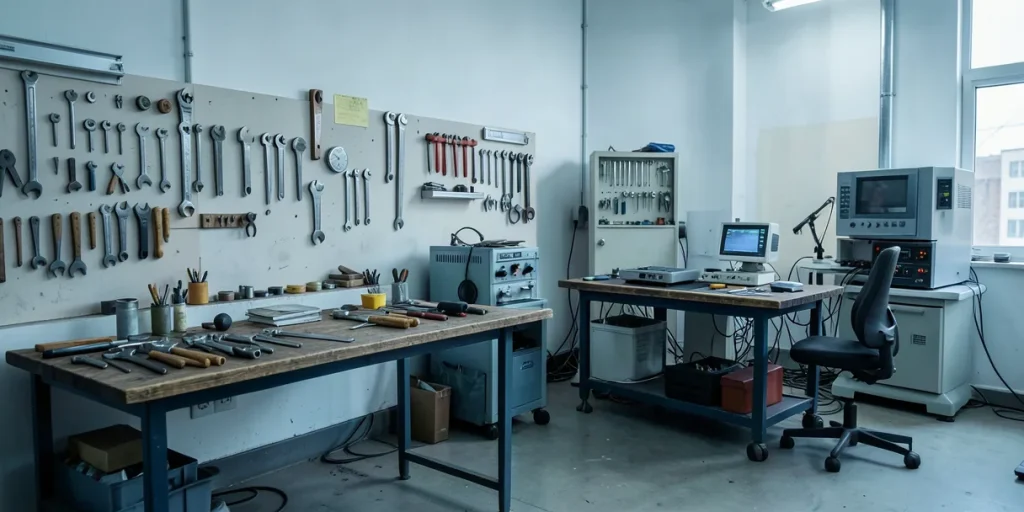
In 2026, traditional crafts are undergoing a true transformation thanks to new approaches that are changing not only production methods but also the perception of cultural heritage. Contemporary artisans and artists are integrating innovative technologies and modern design solutions into their work, which helps preserve the uniqueness of crafts while making them more accessible to a broader audience.
These changes significantly impact cultural heritage, fostering its renewal and adaptation to modern conditions. As a result, traditional techniques and skills are not only preserved but also revitalized, attracting the attention of a younger generation and inspiring them to explore their cultural roots. Thus, new approaches to traditional crafts become an important link in the preservation and development of the cultural identity of society.
Introduction: The Importance of Traditional Crafts
Traditional crafts represent an integral part of the cultural heritage of every nation, serving as a bridge between the past and the present. These crafts, encompassing a variety of skills from blacksmithing to weaving, not only preserve unique techniques and knowledge but also pass them down from generation to generation. In 2026, special attention is paid to how these traditions are preserved and adapted in a rapidly changing world. Modern approaches to crafts facilitate the integration of ancient skills into new business models, ensuring their commercial viability and relevance.
Crafts play an important role in shaping community identity. They foster a sense of belonging, uniting people around shared values and traditions. In the context of globalization, where culture is influenced by external factors, traditional crafts become a symbol of uniqueness and authenticity. Young people and entrepreneurs actively engaged in the revival and development of crafts make significant contributions to the preservation of cultural heritage, ensuring its transmission to future generations. Projects aimed at educating and popularizing traditional skills are becoming increasingly sought after, reflecting a growing interest in cultural roots.
Globalization, despite its negative aspects, also opens new opportunities for traditional crafts. The integration of modern technologies and production methods allows crafts to reach a new level, attracting attention to them on the international stage. Artisans using social networks and online platforms to promote their products can showcase their achievements to a wide audience, contributing not only to preservation but also to the development of crafts. Thus, traditional skills are not lost; rather, they receive new impulses for further existence and adaptation to modern requirements.
As a result, traditional crafts not only preserve cultural heritage but also form the basis for sustainable development of local communities, contributing to economic growth and social cohesion. In 2026, there is active interaction between tradition and modernity, allowing for the preservation of the uniqueness of cultures and their adaptation to present-day realities.
Modern Approaches to Crafts
Modern approaches to crafts in 2026 demonstrate a significant influence of technology on traditional practices. Young people and entrepreneurs actively integrate innovations into the product creation process, which not only improves quality but also reduces production time. For example, the use of 3D printing and other digital technologies provides artisans with new opportunities to implement their ideas. This not only preserves the uniqueness of crafts but also makes them more accessible to a wider audience. As a result, traditional skills become part of the modern cultural context, contributing to their preservation and development.
Social media plays a key role in promoting crafts. Platforms such as Instagram and TikTok allow artisans to showcase their products and the process of their creation, as well as share stories about their traditions. This creates a community of like-minded individuals who support and inspire each other, as well as opens new channels for product sales. Thanks to this approach, artisans can directly interact with consumers, strengthening the connection between producer and consumer.
Moreover, new business models based on traditional skills are becoming increasingly popular. Many artisans are starting to work in small business formats that focus on sustainable development and eco-friendly principles. This may include the use of local materials and recycling waste, which not only supports the economy of local communities but also minimizes harm to the environment. Thus, new approaches to traditional crafts not only ensure their preservation but also contribute to economic and social development.
All these factors create a unique synergy that allows traditional crafts to adapt to modern conditions. As a result, cultural heritage becomes not just an object of preservation but a living process that actively develops and changes, retaining its value and significance for future generations.
Youth as a Driving Force for Change
Today, youth play a key role in the revival and development of traditional crafts, which is evident in various corners of the world. The youth’s interest in these skills is not just a trend but a conscious choice related to the preservation of cultural heritage. Young people find in crafts not only a creative outlet but also an opportunity to integrate ancient techniques into a modern context, creating unique products that can meet the needs of today’s market. This passion can ensure the sustainable development of local communities, as young artisans often strive to use local materials and technologies, thereby supporting the region’s economy.
One successful initiative is the creation of workshops and courses where young people can learn traditional crafts. Such projects not only facilitate knowledge transfer but also foster the formation of a community of like-minded individuals who share an interest in cultural heritage. In some regions, clusters of artisans are formed where young masters can exchange experiences, work on joint projects, and promote their products in local and international markets. This interaction between generations, where the experience of older artisans is passed down to the youth, creates a solid foundation for the preservation of crafts.
Education also plays an important role in this process. Many educational institutions are implementing programs aimed at studying traditional crafts and their integration into contemporary art and design. Students have the opportunity not only to learn theory but also to apply their knowledge in practice by developing their own projects that can be used in real life. This connection between education and craft forms a new wave of artisans ready to continue traditions and adapt them to modern conditions.
As a result, youth are becoming a driving force for change, contributing not only to the preservation of traditional crafts but also to their evolution in the modern world. Supporting and developing these initiatives ensures not only the preservation of cultural heritage but also the sustainable development of local communities, making this process especially important in our time.
Sustainable Development of Local Communities
The sustainable development of local communities is directly related to the revival of traditional crafts, which become an important tool for economic growth and social integration. In 2026, there is active involvement of youth and entrepreneurs in preserving and developing these skills, which not only supports cultural heritage but also contributes to the creation of new jobs. Traditional crafts, such as weaving, pottery, and blacksmithing, are beginning to integrate into modern business models, allowing them to adapt to market demands and attract the attention of consumers seeking unique and eco-friendly products.
The social aspects of sustainable practices are equally important. Through traditional crafts, people in communities begin to unite for the joint production and sale of products, which strengthens local ties and fosters a spirit of cooperation. Such initiatives not only help preserve ancient skills but also pass them on to future generations. This is particularly relevant in the context of globalization, where unique cultural features risk being lost. It is important that many craft revival projects emphasize the participation of local residents and their active involvement in the process, underscoring the significance of culture for community identity.
Examples of successful communities using crafts for development can be found around the world. For instance, in some regions of Central Asia, local entrepreneurs have begun organizing workshops and festivals that not only attract tourists but also create a platform for experience exchange among artisans. In such initiatives, both young and more experienced craftsmen participate, contributing to the transformation of traditional skills into modern creative practices.
In conclusion, the revival of traditional crafts in 2026 is becoming not only a means of preserving cultural heritage but also a powerful tool for sustainable development of local communities. This allows for the creation of new economic opportunities, strengthens social ties, and emphasizes eco-friendly and ethical production methods, which invariably leads to an improved quality of life for people.
Cross-Cultural Exchanges and Cooperation
Cross-cultural exchanges and cooperation in traditional crafts are becoming an important aspect of preserving cultural heritage in 2026. International projects such as exhibitions, festivals, and workshops help unite artisans from various countries, allowing for the exchange of experiences and knowledge. These initiatives not only enhance interest in traditional crafts but also create a platform for their integration into modern business models. For example, young entrepreneurs from different corners of the world are beginning to use traditional techniques in the production of unique goods, helping to preserve cultural features and adapt them to the demands of the modern market.
Comparing approaches to preserving cultural heritage shows that each country has its unique strategies. In some regions, the emphasis is on education and skill transmission to youth, while in other countries, the focus is on legislative protection of traditional crafts. In this context, it becomes clear that successful preservation of cultural heritage requires a comprehensive approach that includes both local initiatives and international cooperation. For instance, Germany actively implements programs to protect intangible cultural heritage, serving as a good example for other countries striving to preserve their traditions.
The role of UNESCO in supporting traditional crafts cannot be underestimated. The organization actively works on creating a representative list of intangible cultural heritage, which currently includes 492 elements. Such initiatives help draw attention to the importance of preserving cultural traditions and promote their popularity on the international stage. UNESCO supports various projects aimed at training and supporting artisans, contributing to the sustainable development of local communities and strengthening cultural ties between nations.
Thus, cross-cultural exchanges and international cooperation play a key role in preserving and developing traditional crafts, ensuring their integration into modern society and contributing to the sustainable development of cultural heritage.
Overcoming Challenges in Craft Preservation
Overcoming challenges in craft preservation
Modern masters of traditional crafts face numerous problems that can threaten their existence. One of the main difficulties is the lack of funding. Without adequate resources, artisans cannot ensure the quality of their products or implement new technologies that would help adapt traditional techniques to modern conditions. Moreover, competition with mass production makes preserving unique crafts even more challenging. Many handmade products cannot compete in price with factory-made counterparts, making their commercial promotion difficult.
The need for government support becomes evident in conditions where, without assistance, it is challenging to preserve unique skills and traditions. Funding and training programs can help artisans not only maintain their skills but also adapt them to the modern market. Government initiatives aimed at supporting local producers can be an important step toward ensuring the sustainable development of cultural heritage. Such measures may include subsidies, grants for business development, and educational programs for youth so they can continue the traditions of their ancestors.
However, an important aspect of craft preservation is finding a balance between traditions and modern requirements. Artisans must be able to adapt their products to market demands without losing the uniqueness and cultural value of their craft. This may involve using modern materials or introducing new technologies into the production process. Young people interested in crafts can bring fresh ideas and innovative solutions that will help preserve traditions while making them more relevant for contemporary consumers.
Ultimately, overcoming challenges in craft preservation requires a comprehensive approach that includes government support, adaptation to modern conditions, and active youth participation. Only in this way can we ensure the continuation of traditions and preserve cultural heritage for future generations.
The Future of Traditional Crafts
Modern approaches to traditional crafts in 2026 open new horizons for their preservation and development. Over the past few years, technologies have significantly changed production methods, and youth are actively participating in these processes. The integration of traditional crafts into modern business models not only ensures their financial sustainability but also contributes to the preservation of cultural heritage. Young entrepreneurs, inspired by the richness of their cultures, are using digital tools and platforms to promote their products in the global market, thereby connecting traditions with modern demands.
Forecasts based on current trends indicate that this approach will only gain popularity. Craftspeople are increasingly using social media and online stores to sell their products, allowing them to enter new markets and find their audience. This not only creates new jobs but also strengthens local communities, contributing to their sustainable development. It is important to note that preserving traditional skills and production methods can become the foundation for creating unique products that will be valued in both domestic and international markets.
Preserving cultural heritage becomes especially relevant in the context of globalization and rapid changes in society. For future generations, it is essential not only to remember their roots but also to actively develop them, adapting to contemporary realities. Traditional crafts, with their unique characteristics, can serve as a link between generations, passing on knowledge and skills from the older to the younger. This not only enriches the cultural landscape but also shapes the identity of local communities.
Thus, the future of traditional crafts in the context of digitalization looks promising. Youth and new entrepreneurs are becoming carriers of cultural heritage, which allows not only to preserve but also to enhance it for future generations. The combination of traditions and innovations can be the key to successful craft development and their integration into world culture.
Conclusion: The Role of Each of Us
Conclusion: The Role of Each of Us
Preserving traditional crafts is not only a task for specialists and cultural organizations. Each of us can contribute to this important cause. Supporting local artisans and craftsmen becomes a key element in preserving cultural heritage. For example, by purchasing handmade products, we not only acquire a unique item but also support the economy of local communities, contributing to their sustainable development. The application of modern business models such as online sales and marketing through social networks can significantly increase the visibility of traditional crafts and attract a new audience.
Moreover, participating in workshops and educational seminars is an excellent way to familiarize ourselves with the traditions and skills that can be passed down from generation to generation. Such events not only develop creative abilities but also create a community of like-minded individuals united by an interest in cultural heritage. Youth involved in such projects become a driving force capable of integrating traditions into modern culture and business.
It is also important to recognize the cultural value of crafts. They are not just beautiful items but a part of our history and identity. Each craft carries unique knowledge and skills that form the foundation for cultural diversity. By supporting these traditions, we not only preserve the past but also create a future for new generations.
Thus, each of us can play a significant role in preserving and developing traditional crafts. Our active support for artisans, interest in their work, and desire to learn are steps toward preserving the richness of cultural heritage for future generations.
Frequently Asked Questions
Why are traditional crafts important for culture?
How do modern technologies help traditional crafts?
What is youth doing to preserve crafts?
What problems do artisans face today?
How can we support traditional crafts?
Key Takeaways
- Modern approaches help preserve traditional crafts.
- Youth plays a key role in the revival of crafts.
- Traditional crafts contribute to the sustainable development of local communities.
- Cross-cultural exchanges enrich craft practices.
- Support for crafts is vital for preserving cultural heritage.
Sources
vietnam.vn, studgen.ru, dw.com, unesco.org, the.akdn
