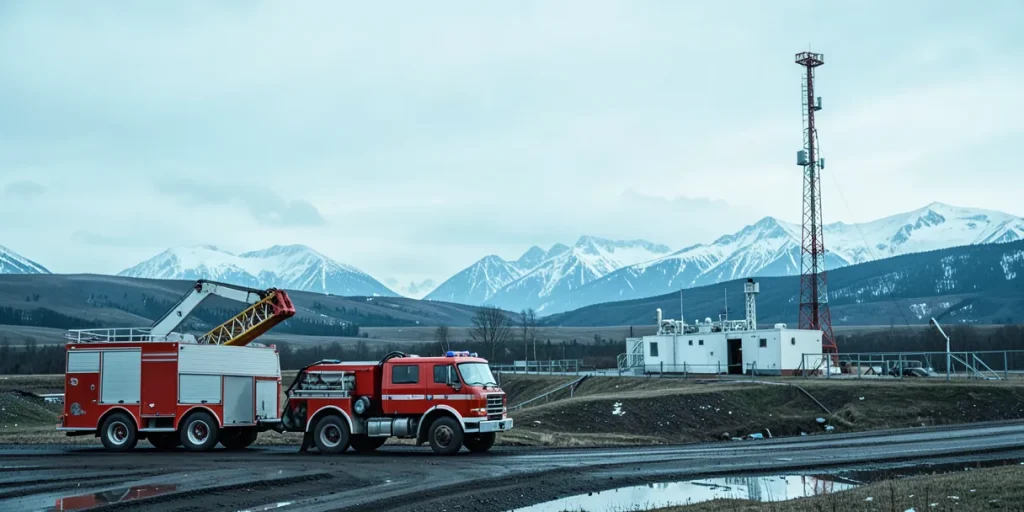
Declaration of High Alert in Neryungri District
On September 22, a state of high alert was declared in Neryungri District, Yakutia, following a fire at the Neryungri State District Power Plant (GRES). This was announced by the district head, Maksim Tereshchenko, who is personally overseeing the situation and coordinating with the head of the republic, Aisen Nikolaev, and government agencies.
The high alert mode was activated to enable rapid management of the incident’s aftermath and to ensure uninterrupted energy supply to the district’s residents and businesses. The fire caused the shutdown of the GRES, necessitating urgent measures to restore heating and electricity delivery.
Situation in the Most Affected Localities
The most critical situation is in the settlement of Serebryany Bor, where the heat carrier temperature dropped by 1 degree overnight. According to the district head, work is underway to restore and start up the fuel oil boilers, which will help stabilize heat supply.
In Neryungri and the settlement of Berkakit, efforts are also being made to start the hot water boilers. Currently, fuel oil is being heated to ignite the equipment. This is an important stage that will ensure the delivery of hot water and heating to residential buildings and social facilities.
Stabilization of the CHP Plant Operation in Chulman
In the settlement of Chulman, the situation has already stabilized: the local combined heat and power plant is operating on schedule and gradually increasing the temperature in the heating networks. Thanks to this, temperature levels within the network remain within the normal range.
The temperature in Berkakit on the morning of September 23 also remains within acceptable limits, indicating the beginning of heat supply restoration and a reduced risk of frostbite and emergency situations.
Management and Communication Organization for Incident Response
Neryungri District Head Maksim Tereshchenko is in round-the-clock contact with the leadership of the Sakha Republic (Yakutia), including head Aisen Nikolaev, to coordinate actions to resolve the emergency. Together with the plant director, he inspected the substation and assessed the extent of the fire damage.
The high alert mode entails enhanced oversight of utility and power supply facilities, as well as prompt information dissemination to residents about the progress of restoration work and safety measures. This mode will minimize negative consequences and speed up the power plant’s restart.
Impact of the Incident on Power Supply and Recovery Prospects
The fire at Neryungri GRES caused a temporary shutdown of the power plant, which is a key source of energy and heat for the entire Neryungri District. The plant’s stoppage posed a threat of temperature drops in homes and social institutions ahead of the cold season.
Restoring the fuel oil boilers and launching the hot water boilers are top priorities. Successfully accomplishing these tasks will return heat supply parameters to regulatory standards, which is especially crucial given the approaching cold and the need to ensure residents’ comfort and safety.
Conclusion: The declaration of high alert in Neryungri District ensures coordinated measures to address the aftermath of the fire at the GRES and to restore heat supply in the region.