Updated: August 27, 2026
Hermit crabs, denizens of the ocean depths, are known for their unusual habit of using empty shells for protection. However, recent studies have unveiled a new aspect of their lives: these small creatures play a crucial role in the dispersal of seeds from Balanophora, a unique marine plant. How exactly do hermit crabs become unexpected distributors of these seeds, and what significance does this hold for the ecosystem in which they reside?
The interaction between hermit crabs and Balanophora demonstrates the astonishing connections in nature, where even the smallest creatures can have a substantial impact on their environment. By delving into this world, we can better understand how ecosystems function and the unexpected roles that deep-sea inhabitants play in maintaining biodiversity.
Introduction to the World of Hermit Crabs
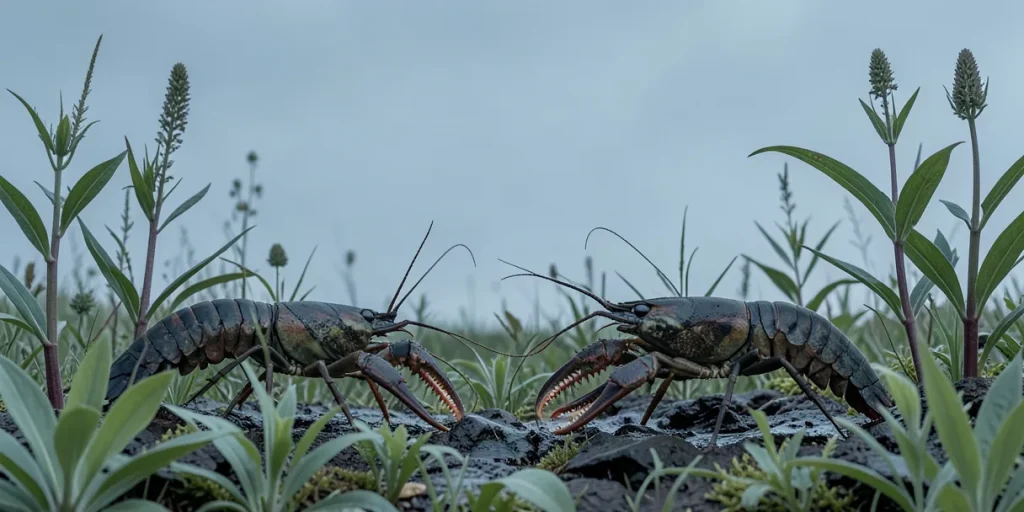
Hermit crabs are remarkable creatures that, despite their small size, play a significant role in island ecosystems. Key species of hermit crabs, such as Coenobita brevimanus, inhabit the shores of tropical and subtropical regions, where they use empty mollusk shells to protect their bodies. These crustaceans have unique habits, including actively foraging for food on land and in shallow waters, making them vital members of the ecosystem.
The ecological role of hermit crabs extends beyond simple food consumption. They influence the seed dispersal of plants, which in turn fosters biodiversity. Recent studies conducted by Japanese botanist Kenji Suetsugu have shown that hermit crabs are unexpected seed distributors of the parasitic plant Balanophora fungosa. These organisms consume the fruits of Balanophora and disperse its seeds both through movement across surfaces and via feces. This discovery underscores the importance of hermit crabs in maintaining the health of island ecosystems, where they assist in the distribution of plants that might otherwise remain localized.
The significance of hermit crabs for the island ecosystem cannot be overstated. They not only aid in seed dispersal but also participate in the processes of decomposing organic matter, enriching the soil with nutrients. This, in turn, supports the growth of other plants and creates favorable conditions for various animal species to thrive. Their activity contributes to the formation of complex food webs on islands, where every element of the ecosystem is interconnected.
Thus, hermit crabs, seemingly inconspicuous at first glance, have a considerable impact on the environment. Their role as seed distributors and participants in ecosystem processes makes them valuable allies in maintaining the ecological balance on islands.
Balanophora: The Mysterious Parasitic Plant
Balanophora, particularly the species Balanophora fungosa, is a mysterious parasitic plant that captures the attention of scientists due to its unique characteristics and life cycle. This plant lacks chlorophyll and obtains its necessary nutrients by attaching to the roots of other plants, making it dependent on its hosts. Typically, Balanophora thrives in tropical and subtropical regions, especially on islands, where its seeds can be dispersed in various ways.
Recent studies conducted by Japanese botanist Kenji Suetsugu revealed an unexpected aspect of Balanophora’s life: hermit crabs like Coenobita brevimanus have become its primary seed distributors. These crustaceans not only feed on the fruits of Balanophora but also carry its seeds on their bodies and in their excrement, facilitating the plant’s colonization of new territories. This discovery highlights the importance of interspecies interactions in ecosystems and provides insight into how parasitic plants can utilize other animals for their reproduction.
The issues associated with Balanophora’s parasitism also deserve attention. Since this plant depends on its hosts, its survival and distribution are threatened in the face of climate change and habitat destruction. A decline in host populations could lead to a decrease in Balanophora’s population, which, in turn, would affect those species that rely on it for their existence. Thus, Balanophora is not only an interesting subject for study but also an important element of the ecosystem that requires protection.
The interaction of Balanophora with other species, including hermit crabs, illustrates the complex webs of dependencies in nature. This interaction emphasizes the importance of preserving biodiversity and ecosystems, where every living creature plays its unique role. Understanding these processes will aid in developing strategies for environmental protection and the conservation of unique plant and animal species.
The Discovery of Japanese Botanist Kenji Suetsugu
Kenji Suetsugu, a Japanese botanist from Kobe University, made a sensational discovery that changed the perception of the roles various organisms play in ecosystems. His research conducted on Ishigaki Island showed that hermit crabs of the species Coenobita brevimanus are important seed distributors of the parasitic plant Balanophora fungosa. This finding marks the first known instance of hermit crabs being identified as seed carriers, highlighting the intricate relationships in nature.
To test his hypothesis, Suetsugu conducted a series of field experiments in which he observed the behavior of hermit crabs in their natural habitat. The scientist studied how these crustaceans interacted with Balanophora plants, paying attention to their feeding habits and modes of movement. During his research, Suetsugu noticed that hermit crabs actively consumed the fruits of Balanophora and then dispersed the seeds both on their bodies and through feces, thus aiding in their distribution across the island.
The main conclusions of the study emphasize the significance of hermit crabs not only as consumers but also as active participants in the ecosystem. Suetsugu found that their activities can significantly affect the abundance and distribution of Balanophora, which in turn indicates the necessity for deeper investigations into the interactions between plants and animals in nature. This discovery may also influence future research in ecology and botany, highlighting the importance of studying the relationships between different species and their roles in maintaining ecosystems.
Thus, Kenji Suetsugu’s work not only expands our understanding of Balanophora and its distribution but also opens new horizons in understanding interactions in nature, inspiring scientists to pursue further research and experiments.
Seed Dispersal Methods
Hermit crabs inhabiting Ishigaki Island have become unexpected seed distributors of the parasitic plant Balanophora (Balanophora fungosa). Research conducted by Japanese botanist Kenji Suetsugu revealed that these crustaceans not only feed on the plant’s fruits but also carry its seeds on their bodies. This discovery alters the understanding of seed dispersal methods in nature and adds a new layer of complexity to the ecosystems of the Ryukyu Islands.
The seed dispersal process occurs as seeds adhere to the shells of hermit crabs while they move across the territory where Balanophora grows. These seeds can remain on the crab’s body for a significant amount of time, increasing their chances of colonization in new areas. Additionally, hermit crab feces play an important role in the seed dispersal process. When hermit crabs excrete feces, it contains seeds that can germinate under suitable conditions. Thus, hermit crabs become not only carriers but also active participants in the life of Balanophora.
Comparing the seed dispersal methods of other organisms highlights the uniqueness of hermit crabs’ role. Many plants rely on wind, water, or animals to disperse their seeds. For example, some birds and mammals consume fruits and then spread seeds through feces, but hermit crabs offer a completely different approach. Their method of dispersal combines the physical movement of seeds using their bodies with biological activity through feces, making them important agents in the ecosystems where Balanophora grows.
Thus, Kenji Suetsugu’s research opens new avenues in understanding the interactions between plants and animals. This case underscores how even the most unexpected organisms can play a key role in ecosystems, facilitating the dispersal and survival of plants that seemingly have no direct connections with them.
Ecological Implications of the Discovery
The study conducted by Japanese botanist Kenji Suetsugu revealed an astonishing fact: hermit crabs, particularly the species Coenobita brevimanus, play a significant role in the dispersal of seeds from the parasitic plant Balanophora Balanophora fungosa. This discovery not only expands our understanding of ecosystem interactions but also raises important questions about the impact of such interactions on the ecology of the Ryukyu Islands.
One of the main ecological implications of the discovery is the shift in perceptions regarding seed dispersal methods. It was previously thought that only certain animal species, such as birds or mammals, performed such functions. However, we now see that even small crustaceans can significantly influence the vegetation of islands by aiding the colonization of parasitic plants, which in turn may impact local ecosystems. This discovery could lead to a reevaluation of existing classifications of ecosystem interactions and their participants.
Potential changes in the ecology of the Ryukyu Islands also warrant attention. Balanophora, as a parasitic plant, can significantly affect the health of the local plants on which it preys. The seed dispersal through hermit crab shells may lead to an increase in Balanophora populations in certain areas, which could disrupt the balance of existing ecosystems. This discovery underscores the importance of studying such interactions to predict changes in ecosystems and their resilience to external factors.
The prospects for future research in this area are promising. Scientists may focus on the following aspects:
- Studying the impact of Balanophora on other species of flora and fauna on the islands.
- Investigating the role of other hermit crab species and their potential contributions to ecosystem processes.
- Monitoring changes in ecosystems associated with increasing populations of Balanophora.
- Developing strategies for biodiversity conservation in changing ecosystems.
Thus, the discovery of the role of hermit crabs in the seed dispersal of Balanophora opens new horizons for understanding the ecology of islands and emphasizes the importance of interspecies interactions in maintaining ecological balance.
Comparison with Other Seed Distributors
Comparison with Other Seed Distributors
Hermit crabs, particularly the species Coenobita brevimanus, play a unique role in the dispersal of seeds from the parasitic plant Balanophora (Balanophora fungosa). However, they are not the only organisms involved in this process. Among the primary seed distributors, birds and insects also contribute significantly to the ecosystem interaction between plants and animals.
Birds, such as sparrows and pigeons, often act as seed distributors due to their ability to carry seeds over long distances. They consume the fruits of plants and excrete the seeds, facilitating their dispersion. The effectiveness of birds as seed distributors lies in their capacity to traverse large spaces, which increases the chances of successful seed germination in new locations.
On the other hand, insects such as ants and certain beetles also participate in seed dispersal, especially for those seeds that have special structures attracting insects. These organisms often transport seeds over short distances, but their role in the dispersal of some plants can be critically important, as they provide protection for the seeds from predators and create favorable germination conditions in their burrows or nests.
Compared to birds and insects, hermit crabs have their unique advantages. They can carry seeds over relatively short distances but do so quite effectively, as the seeds adhere to their bodies and spread across the ground surface where they can take root. Additionally, their habit of feeding on Balanophora fruits not only facilitates seed dispersal but also maintains the health of the ecosystem, making them important participants in this chain.
Thus, each of these seed-distributing organisms performs its indispensable function in the ecosystem, and their interactions create diverse opportunities for the growth and reproduction of plants such as Balanophora. Hermit crabs, although less known, demonstrate how unique adaptations can contribute to the intricate networks of ecosystem relationships.
Conclusion: The Discovery and Its Significance
The discovery made by Japanese botanist Kenji Suetsugu that hermit crabs Coenobita brevimanus disperse the seeds of the parasitic plant Balanophora Balanophora fungosa opens new horizons in understanding the ecosystem of Ishigaki Island and its complex interactions. This marks the first known observation of crustaceans playing an active role in seed dispersal, challenging traditional notions of ecology and the interactions of organisms in nature. It was previously believed that such functions were primarily performed by birds or mammals, but now we see that even seemingly insignificant creatures like hermit crabs can have a substantial impact on the distribution of plants.
This discovery changes our perception of ecology, emphasizing the importance of every species in the ecosystem. Hermit crabs not only feed on Balanophora fruits but also disperse their seeds on their surfaces and through excrement. In this way, they become an integral part of the life cycle of this parasitic plant, reinforcing the idea that in ecosystems everything is interconnected and even minor changes in the behavior of one species can have profound consequences for others. This study also inspires further research that may lead to new discoveries about other species and their roles in ecosystems.
It is crucial to understand that the preservation of ecosystems and their diversity is critical for future generations. Discoveries like this underscore the need to protect natural habitats and support biodiversity. Every plant and animal, including hermit crabs, performs its unique function, and the loss of one can trigger a chain reaction affecting all levels of the ecosystem. Therefore, it is essential to continue exploring and safeguarding such unique ecosystems as Ishigaki Island to ensure their resilience and health in the future.
Frequently Asked Questions
What is Balanophora?
How do hermit crabs help in seed dispersal?
Why is this discovery important?
Where did this research take place?
Who is the author of the study?
Key Takeaways
- Hermit crabs play an important role in ecosystems by helping to disperse seeds.
- Balanophora fungosa is a unique parasitic plant that depends on other organisms.
- The research opens new perspectives for understanding ecosystem interactions.
Sources
progorodnsk.ru, t.me, togliatti24.ru, alev.biz, nplus1.ru
