Ministry of Science and Higher Education Announces Support for Core Departments
The Ministry of Science and Higher Education of Russia has launched an initiative to encourage the establishment of core departments in universities. This measure aims to increase both the volume and quality of scientific research in domestic universities, which is seen as a crucial step for the development of Russian science and innovation.
The program is scheduled to launch by the end of 2026, with plans to allocate targeted funding amounting to several billion rubles over the first three years. This will enable universities to more actively attract leading scientists and equip laboratories with modern equipment.
The Role of Core Departments in Higher Education
Core departments are specialized units within universities, created in partnership with scientific and industrial organizations to conduct applied research. They act as a bridge between theoretical science and industry, facilitating the implementation of new technologies.
Several such departments already operate in Russia, for example, at Moscow State University and Saint Petersburg Polytechnic University. Their effectiveness is measured by the number of patents and publications in international journals, as well as by the volume of grants attracted, which in some cases reaches hundreds of millions of rubles.
Funding and Infrastructure
As part of the new program, the Ministry plans to allocate up to 500 million rubles annually for each core department, including equipment procurement and support for research projects. Additionally, subsidies are planned to enhance the qualifications of scientific personnel.
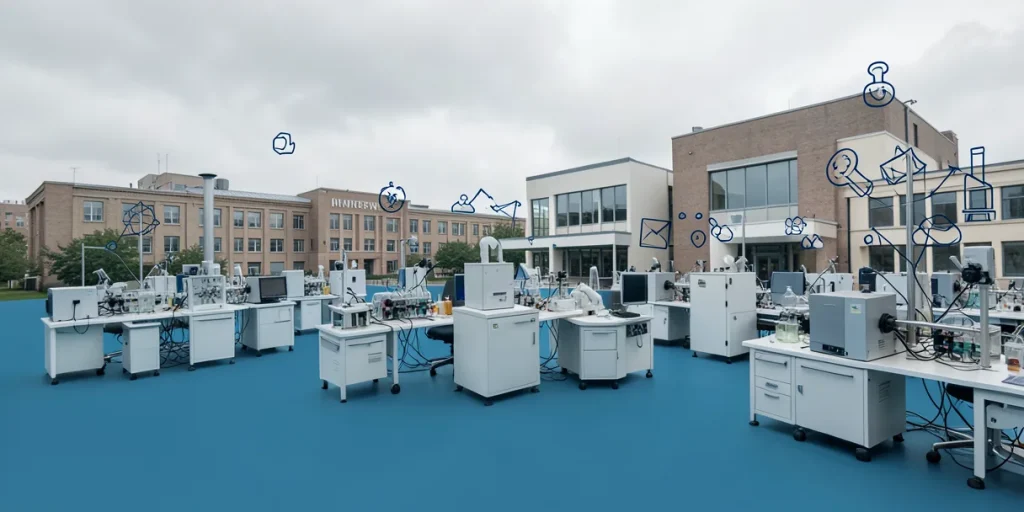
Special attention is also given to creating modern laboratories equipped with high-tech devices, such as next-generation spectrometers and microscopes. This funding will allow universities not only to expand their research areas but also to increase their competitiveness on the international stage.
Impact on the Scientific Community and Economy
The establishment of core departments promotes the development of scientific infrastructure and supports young researchers. It helps universities retain talented scientists and form new innovation clusters around universities.
Economically, the intensification of scientific research at universities leads to the growth of high-tech exports and the creation of jobs in the scientific and technical sector. Forecasts suggest that within five years after the program’s launch, the number of patents registered by core departments could increase by tens of percent.
Prospects and Implementation Challenges
The program’s implementation will require coordinated efforts from universities, industrial partners, and government authorities. A key challenge will be ensuring transparent allocation of funds and supporting long-term scientific projects rather than just short-term results.
The experience of existing core departments shows that successful implementation depends on active collaboration with industrial enterprises and the academic community. In this context, the Ministry plans to create expert councils to assess effectiveness and adjust the program.
Conclusion: Encouraging the creation of core departments in universities will become a key tool for boosting Russia’s scientific potential.
