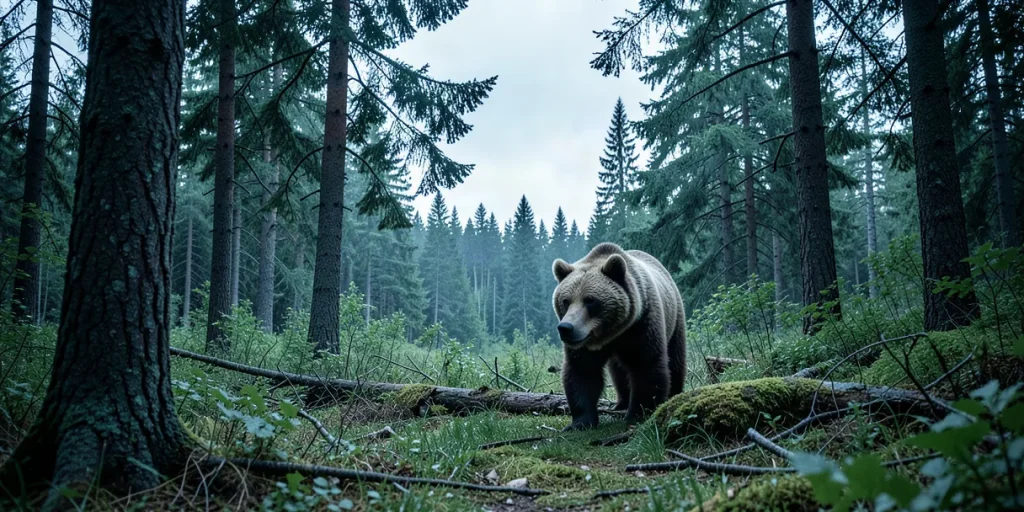
Situation in Kuzbass
Since August 2026, there has been an increase in cases of bears leaving forested areas for populated settlements in Kuzbass. This phenomenon is linked to a lack of food in their natural habitat, which has become a serious threat to local residents. According to local authorities, more than 20 encounters between people and bears have been recorded this month.
The Environmental Protection Agency of the Kemerovo region reports that bears, which traditionally fed on berries and nuts, are now searching for food in gardens and backyards. This year has seen a significant decrease in the food supply: berry yields have dropped by 30% compared to last year, forcing these predators to approach humans.
Impact on Agriculture
As bears leave the taiga, they begin to cause damage to local agriculture. Farmers in Kuzbass report losses of up to 50% of their vegetable and fruit harvests due to wild animal invasions. Gardeners in areas such as Leninsk-Kuznetsky and Prokopyevsk are particularly affected, as bears destroy gardens and consume animal feed supplies.
Analysts estimate that the agricultural sector in the region may incur losses of up to 2 million rubles this season due to damage caused by bears. Local authorities are considering the possibility of introducing compensation payments for affected farmers to support them in this challenging situation.
Measures to Control Bears
In response to the current situation, the authorities in Kuzbass have initiated a program to control the bear population. Beginning in September 2026, special measures will be implemented to monitor and, if necessary, capture bears that venture into populated areas. These measures are expected to help reduce the number of encounters between humans and wild animals.
Additionally, the installation of extra informational signs in areas where bear sightings are frequent is planned to warn residents of potential threats. Local wildlife specialists, along with volunteers, will conduct training workshops on how to behave when encountering a bear.
Public Opinion and Ecology
Local residents are expressing concern for the safety of their families and pets. According to survey results, over 70% of the population in affected areas believe that urgent measures must be taken for protection. At the same time, ecologists warn that excessive bear hunting could lead to an imbalance in the region’s ecosystem.
Experts emphasize the importance of finding a compromise between effective bear population control and the preservation of biodiversity. They predict that, if appropriate measures are not taken, the number of bear encounters with humans could increase by 15-20% next year.
Conclusion
The situation of bears emerging from forests in Kuzbass requires attention from both local authorities and society as a whole. Given the extraordinary circumstances and potential consequences, it is crucial to develop comprehensive strategies for both protecting the population and preserving the region’s wildlife.