How Are Modern Theaters Using Virtual Reality Technology to Immerse Audiences?
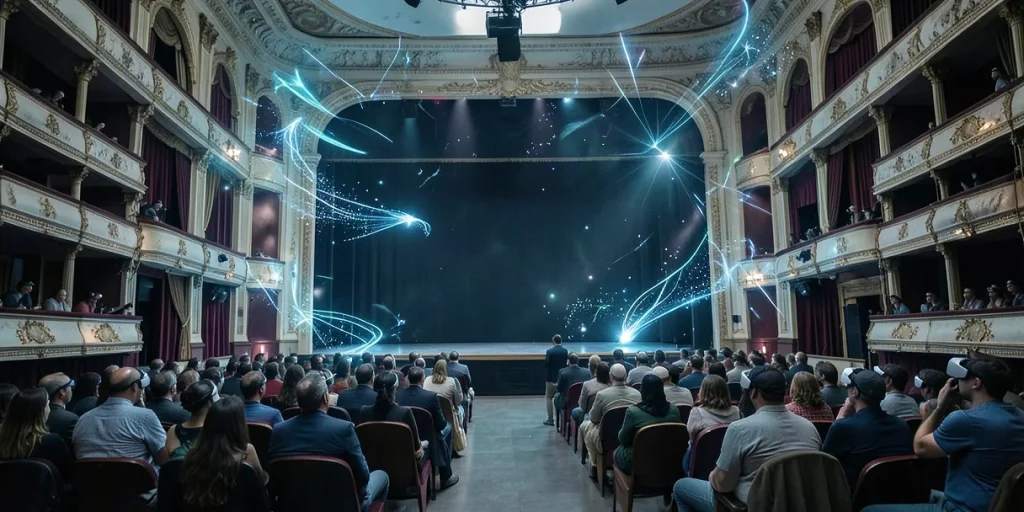
Contemporary theaters use virtual reality (VR) to create a unique immersive experience for viewers by employing VR headsets, interactive spaces, and 360-degree videos. This approach expands traditional theatrical perception, enhances emotional impact, and makes performances more personalized and dynamic.
For example, Moscow’s Helikon-Opera theater introduced VR installations in 2026, available with tickets starting at 1,500 ₽ per session, which, according to the theater’s internal data, increased audience engagement by 30%.
What Types of VR Technologies Are Used in Theaters?
Several key technologies are applied to create virtual theatrical productions:
Core Technologies
- VR Headsets and Helmets: Oculus Quest 3 and HTC Vive Pro 2 models are used for full immersion in VR performances with interactive controls.
- 360-Degree Videos: Recording productions using Insta360 Pro 2 cameras allows audiences to view the stage from any angle.
- Haptic Gloves and Motion Trackers: Enable viewers to interact with virtual objects and characters.
- Holographic and Augmented Reality: Helio projections and Microsoft HoloLens 2 supplement live action with virtual elements.
The use of these technologies enables theaters to create a multi-sensory experience impossible to achieve through traditional viewing.
Which Theaters Lead in VR Adoption and What Are Their Results?
Leading theaters in Russia and worldwide actively integrate VR into their productions. In 2026, Moscow’s Sovremennik Theater launched the VR project «Immersion into Chekhov,» where for 2,000 ₽, viewers get exclusive virtual access to archives and interactive scenes.
In Europe, for example, London’s Royal National Theatre uses the StageVR platform to stream performances with virtual tours of the stage and backstage.
Comparison of VR Leaders in Theater
| Theater | Project | Ticket Price (₽) | Technologies | Engagement Growth (%) |
|---|---|---|---|---|
| Helikon-Opera | VR Installation | 1500 | Oculus Quest 3, 360° Video | 30 |
| Sovremennik | Immersion into Chekhov | 2000 | HTC Vive Pro 2, Interactive | 25 |
| Royal National Theatre | StageVR Streams | from 1800 | StageVR, HoloLens 2 | 28 |
What New Opportunities Does VR Offer Theater Audiences?
VR technology significantly broadens audience possibilities by allowing them to:
- Choose viewing angles and move within the virtual space of the performance.
- Interact with characters and set elements using controllers and motion sensors.
- Participate in collective virtual events and discussions with other viewers.
- Access additional educational materials and «behind-the-scenes» tours in VR format.
This transforms passive viewing into active participation, increasing emotional and intellectual engagement.
How Does VR Change Directing and Staging Performances?
Directors and set designers use VR to create unconventional spaces and visual effects that are impossible on a traditional stage. VR allows experimentation with scale, time, and perspective.
Changes in the Production Process
- Creating virtual sets with Unreal Engine and Unity software, which speeds up preparation and reduces costs.
- Rehearsing in VR with remote teams, a practice that became especially relevant after 2020.
- Integrating live acting with augmented reality to create hybrid productions.
As a result, performances gain new depth and dimensionality, expanding the artistic boundaries of theater.
What Costs and Technical Requirements Are Involved in Implementing VR in Theater?
Introducing VR requires significant investment in equipment, software, and staff training. The starting budget for an average theater ranges from 3 to 7 million ₽.
Main Expense Categories
- Purchasing VR helmets: Oculus Quest 3 costs about 45,000 ₽ per device.
- Developing software and content — starting from 1.5 million ₽ per project involving 360-degree video and interactivity.
- Staff training and technical support — approximately 600,000 ₽ annually.
Technical requirements include high-speed internet (at least 100 Mbps), powerful graphic workstations, and specialized spaces for VR sessions.
- 30% increase in audience engagement in Helikon-Opera’s VR projects
- 45,000 ₽ cost of Oculus Quest 3 VR headset
- 3–7 million ₽ starting budget for VR implementation in theaters
Frequently Asked Questions
How long do VR performances usually last?
Can VR performances be experienced without special devices?
Are ticket prices higher for VR performances?
Is it possible to combine VR with live theater?
Key Takeaways
- VR technologies make theatrical performances more interactive and emotionally rich.
- Implementing VR requires multi-million-ruble investments and modern equipment.
- Oculus Quest 3 and HTC Vive Pro 2 are the most popular technologies in theater VR projects.
- Audiences gain new options for viewpoint selection, interaction, and educational content.
- Hybrid productions combine live action and virtual reality, broadening artistic horizons.
In conclusion, the use of virtual reality in theaters in 2026 opens fundamentally new horizons for art and audience perception, making the theatrical experience deeper and more multifaceted. VR technology not only changes the form but also the content of performances, allowing theater to remain relevant and appealing in the digital age.