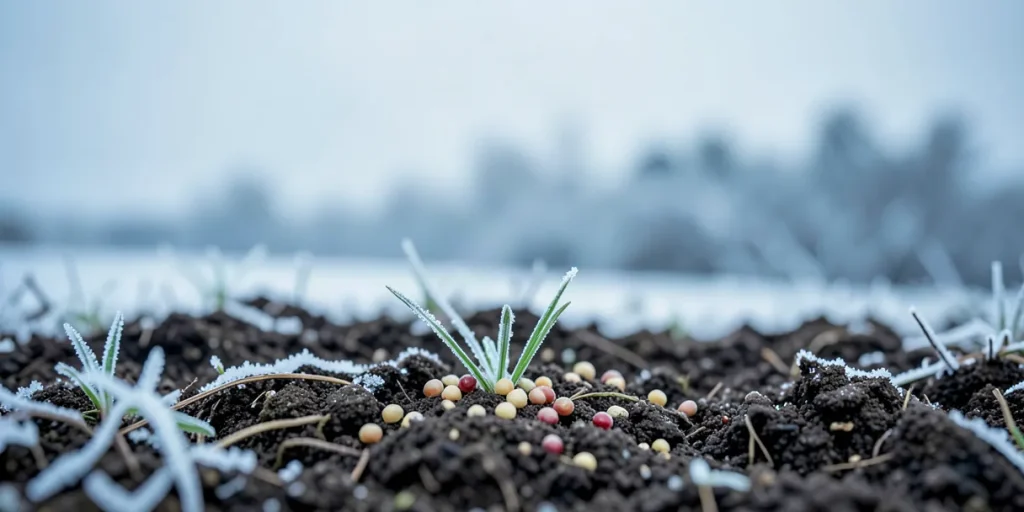
The Proper Temperature Regime for Winter Sowing
It is recommended to sow flower seeds outdoors for winter planting when the temperature remains steady around zero with slight frosts. It is important that the outdoor temperature does not rise above freezing, since thawing can cause seeds to germinate prematurely, and subsequent frosts will kill the seedlings.
Tatyana Oleynik, chair of the regional branch of the «Union of Gardeners of Russia,» explains that precisely this below-zero temperature ensures safe rooting of the seeds in the soil and prevents seedling loss. The sowing dates depend on the stability of the zero-degree mark, which is usually early October in the central regions of Russia.
Sowing Rate and Its Importance
Winter sowing of flowers carries an element of uncertainty due to unpredictable winter conditions and variable germination rates. Therefore, the sowing rate should be roughly doubled compared to summer sowing.
If the seed packet indicates a standard dosage, gardeners are advised to sow twice as much to compensate for potential losses. This approach increases the chances of obtaining dense and even seedlings in spring, which is crucial for establishing a full, vibrant flower bed.
Choosing Suitable Flower Varieties
For winter sowing, it is best to use hardy annuals that tolerate winter conditions well. Among them, Tatyana Oleynik highlights calendula, cosmos, alyssum, and gazania, which retain their decorative appeal even after frosts and are well suited for mixed borders and edging.
Asters can also be sown, but they require more delicate care and proper management. As for bulbous plants, tulips, daffodils, muscari, hyacinths, and crocuses can overwinter directly in the ground, while gladioli, dahlias, cannas, and tuberous begonias need to be dug up before the cold sets in.
Soil Preparation and Seedling Protection
Before winter sowing, the soil should be carefully prepared: weeds removed, loosened, and fertilized if necessary to provide good nutrition and drainage for the seeds. Soil moisture should be moderate, avoiding excess dampness to prevent seed rot.
Additionally, mulching the sowings is recommended to protect against severe frosts and sharp temperature fluctuations. This protection helps keep the seeds in optimal conditions until spring germination, reducing the risk of seedling death.
Practical Significance of Oleynik’s Recommendations
Following Tatyana Oleynik’s advice allows gardeners to enjoy blooming flower beds two weeks earlier than neighbors, which is valuable for commercial nurseries and private gardeners alike. Early flowering extends the decorative period and saves time on spring work.
These agronomic recommendations apply in regions with a temperate climate where winters bring stable frosts and help increase the reliability of winter sowing—especially important for those aiming for high-quality and beautiful garden designs.
Conclusion: sustained below-freezing temperatures and increased sowing rates are key factors for successful winter flower sowing.