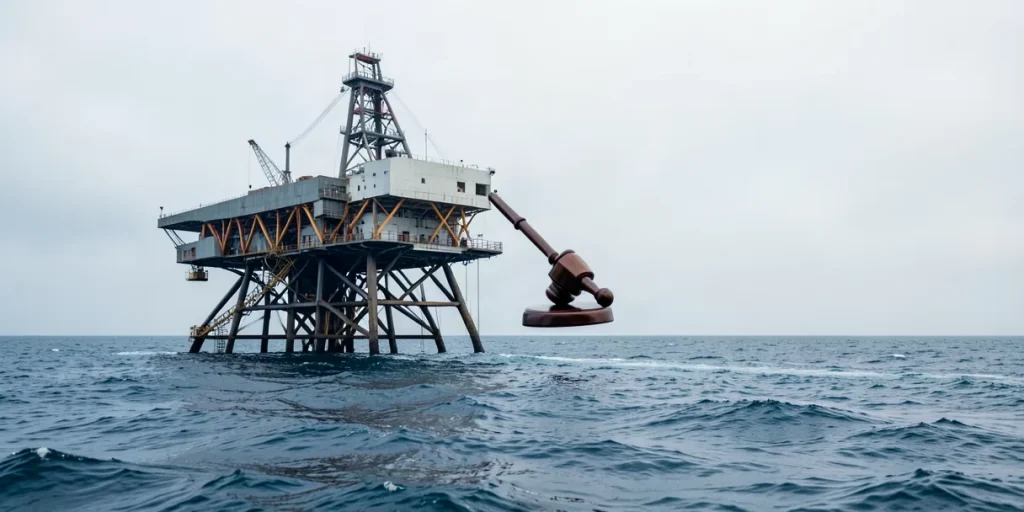
In 2026, Argentine federal judge Mariel Borroto ruled to suspend oil production at the Sea Lion field, located 220 kilometers north of the Falkland Islands. The court banned drilling, installation of offshore facilities, and port construction until a mandatory environmental assessment is carried out by Argentine authorities. This decision affects two companies — the Israeli Navitas Petroleum and the British Rockhopper Exploration — which are developing the field, reflecting new legal challenges in the international economy.
Location and Significance of the Sea Lion Field
The Sea Lion field lies in the South Atlantic, 220 kilometers from the Falkland Islands archipelago, which is under British control. According to plans by Navitas Petroleum and Rockhopper Exploration, commercial oil production was scheduled to begin in 2028. The oil reserves at the field are considered substantial, making the project a key part of expanding the region’s energy resources.
Investments in the project are estimated in the hundreds of millions of dollars, with production launch involving modern equipment as well as the construction of offshore platforms and port facilities. This would create new jobs and increase export revenues for the operating companies.
The Role of the Argentine Court and Legal Grounds
Federal judge Mariel Borroto’s decision is based on the necessity of conducting an environmental assessment to evaluate the impact of oil extraction on the South Atlantic marine ecosystem. The ban on drilling and construction remains in place until the results of this review are obtained, highlighting the importance of environmental regulations in international economic projects.
The judge noted that enforcement of the ruling depends on international cooperation and the actions of Navitas Petroleum and Rockhopper Exploration, which have already expressed their intention to continue development. This underscores the complexity of law enforcement in cross-border economic initiatives.
Reactions and Diplomatic Consequences
The Argentine Ministry of Foreign Affairs summoned the ambassadors of the United Kingdom and Israel to present a formal protest regarding the oil extraction project. This move signals serious political and diplomatic tensions triggered by the Sea Lion project and its geopolitical context.
Argentina’s diplomatic measures aim to protect national interests and ensure environmental safety oversight. For companies and investors, this serves as a warning to consider political risks when implementing international projects in disputed regions.
Environmental Aspects and Requirements
The environmental assessment mandated by the Argentine court is intended to evaluate the potential impact of oil operations on marine flora and fauna around the Falkland Islands. Particular attention is given to pollution risks and threats to biodiversity, in line with international environmental protection standards.
The suspension of production pending the environmental review exemplifies strengthened oversight of ecological consequences from economic activity. This could set a precedent for similar decisions in other disputed zones with valuable natural resources.
Outlook and Impact on the International Economy
This court ruling illustrates new legal challenges in international economic relations, especially concerning natural resource extraction in contested regions. Companies face the need to align projects with environmental and political requirements of multiple states.
The decision’s effect on production timelines and investment plans could be significant. It emphasizes the importance of a comprehensive risk management approach and compliance with international norms for successfully advancing cross-border projects.
Conclusion: The Argentine court’s decision to suspend oil production at the Sea Lion field highlights the growing role of environmental and legal factors in the international economy.