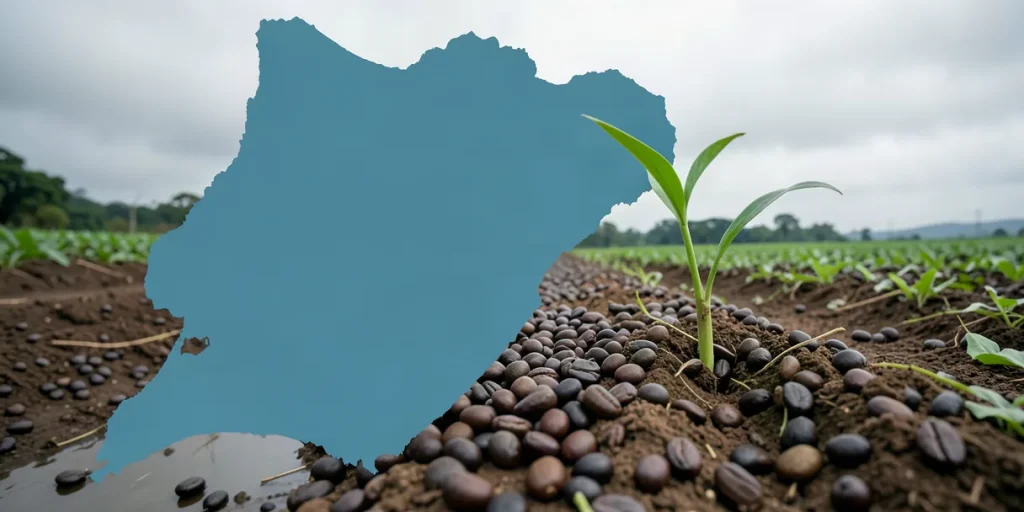
Sierra Leone is ready to lease land to Russian entrepreneurs to grow coffee. The country’s ambassador to Russia, Mohamed Yongawo, said so on October 6 in an interview with TASS at the “North Caucasus: A Space for Dialogue, Traditions and Development” forum. In his view, if businesses take up the project, coffee from Sierra Leone could be shipped directly to Russia in 3–4 years.
What Sierra Leone Is Offering
The proposal involves more than buying ready-to-use raw materials: Russian companies would be able to lease plots and grow coffee in Sierra Leone itself. The report did not specify the areas available, lease terms or potential production volumes. For now, this is an offer from the authorities to businesses, not a set of signed agreements.
Yongawo linked the idea to direct shipments. He said this approach could reduce the impact of tariffs and other restrictions on trade. The ambassador urged Russian entrepreneurs to consider buying directly from the country and described leasing land as one way to establish supplies.
A Three-to-Four-Year Timeline
The estimated time before shipments begin is 3–4 years. This is a target outlined by the ambassador, not a schedule for a project already underway. To move from a proposal to commercial production, Russian businesses would need to assess the land, lease terms and the feasibility of arranging coffee cultivation and delivery.
For buyers in Russia, the idea matters because it offers an additional way to source the product: companies could participate in its production locally. However, no information has been provided about planned volumes, the future price of the coffee or specific shipping routes. It is therefore not yet possible to determine how significantly the project might affect the Russian market or the product’s price.
Quality and Market Position
The ambassador acknowledged that Sierra Leone is not one of Africa’s largest coffee producers, but said the country’s product is of high quality. This signals how the potential offer is positioned: it is not a bid to lead in volume, but an opportunity to establish a direct supply channel for quality coffee.
However, the interview did not specify the product’s characteristics, current production volumes or the terms of any potential exports. For Russian companies, this means that the business prospects cannot be assessed on the basis of a single statement: more information will be needed about available land, growing conditions and commercial arrangements. None of these details has yet been made public.
Trade and Coffee Prices in Russia
Yongawo noted that Russia and Sierra Leone face difficulties in trade, but expressed confidence that the two countries have opportunities to overcome them. In the ambassador’s view, leasing land and making direct purchases could become one area of cooperation. He did not specify which restrictions he was referring to in the report.
The Russian coffee market has already seen changes in 2026: on October 4, Anton Trenin, an expert with ACRA’s corporate ratings group, said that unroasted coffee had fallen in price by about 2% since the start of the year. By August, a kilogram of instant coffee cost 4,148 rubles, while a kilogram of whole-bean and ground coffee cost 2,051 rubles. These figures provide a price backdrop, but do not in themselves indicate what coffee from Sierra Leone might cost in the future.
What Businesses Still Need to Find Out
The main practical question is on what terms Sierra Leone is prepared to provide land to Russian companies. The published information gives no lease duration, land costs, site descriptions or investor selection process. Without these terms, it is difficult for entrepreneurs to estimate expenses and compare local cultivation with direct purchases of ready-to-sell coffee.
Details of how shipments to Russia would be organized have also not been disclosed, including expected volumes and the timeline for entering the market beyond the 3–4-year horizon cited by the ambassador. The next step will depend on whether specific offers for businesses and agreements between the parties emerge. For now, the initiative points to a possible area of cooperation but does not confirm that production is starting.
Key takeaway: Sierra Leone is offering Russian businesses land to lease for coffee production, with direct shipments to Russia envisioned in 3–4 years.
Sources
- life.ru — “Sierra Leone Makes Offer to Russian Businesses”
- vz.ru — “Sierra Leone Makes Offer to Russian Businesses”
- iz.ru — “Coffee Growing: Sierra Leone Makes an Offer”
- documents1.worldbank.org — “World Bank Document”
- vedomosti.ru — “Yandex Creates a New Large Language Model from Scratch — Vedomosti”
