Introduction: What Is Artificial Intelligence and Why Do We Need It
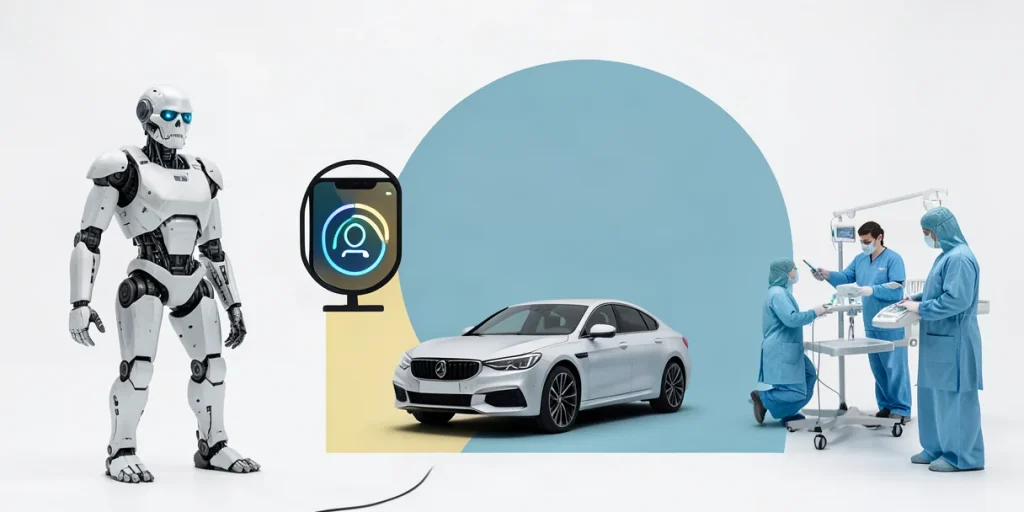
Artificial Intelligence (AI) has long ceased to be science fiction and is actively being integrated into our daily lives. Today, AI encompasses a broad range of technologies that help solve tasks from automating routine processes to intelligent data analysis. This article will help you understand the basic types of AI and how they are applied both at home and at work.
Types of Artificial Intelligence: From Narrow to General
Modern AI is divided into several types, differing in their universality and level of autonomy.
AI Classification
- Narrow AI — specialized in specific tasks such as speech recognition, image recognition, or controlling voice assistants.
- General AI — a hypothetical level where a machine can solve any intellectual task comparable to human intelligence.
- Superintelligence — an even more advanced type capable of surpassing human intelligence in all areas.
Today, everyday life primarily involves the use of narrow AI.
| AI Type | Main Characteristics | Examples of Use |
|---|---|---|
| Narrow AI | Limited to specific tasks | Voice assistants, recommendation systems |
| General AI | Possesses universal intelligence | Not yet realized |
| Superintelligence | Surpasses human intelligence | Hypothetical |
- 90% of all commercially used AI systems are narrow AI
- 0% realized general AI as of 2026
Voice Assistants and Chatbots: AI in Daily Communication
One of the most common types of AI in everyday life are voice assistants and chatbots. They help users control devices, search for information, and organize tasks.
Popular Products and Their Features
- Yandex.Station — a smart speaker with the voice assistant Alisa, supporting taxi ordering, smart home control, and information search.
- Google Assistant — integrated into smartphones and Google devices, operating in over 30 languages.
- Amazon Alexa — popular in the USA, supports home appliance control and shopping.
The average price of a smart speaker with a voice assistant in Russia in 2026 ranges from 5,000 to 15,000 rubles depending on the model and features.
- 75% of Russian smartphone users utilize voice assistants
- 10+ million smart speakers sold in Russia by mid-2026
Recommendation Systems: Personalization in Media and Commerce
Recommendation systems are another important type of AI that help users find the desired content or products faster.
Areas of Application
- Streaming Services: Netflix and Okko use AI to select movies and TV shows.
- Online Stores: Wildberries and Ozon offer products based on purchase and browsing history.
- Social Networks: VKontakte and TikTok tailor news feeds and videos according to user preferences.
| Service | Users, mln | Main Algorithm | Average CTR (%) |
|---|---|---|---|
| Netflix | 230 | Collaborative Filtering | 25 |
| Wildberries | 50 | Behavior-aware Machine Learning | 18 |
| VKontakte | 100 | Hybrid Algorithms | 20 |
Autonomous Technologies: Transport and Household Robots
Autonomous AI is applied in transport and household appliances to increase safety and comfort.
Examples and Prices
- Autonomous Cars: Yandex has been testing driverless taxis in Moscow since 2024. The cost of a ride in a driverless taxi is approximately 10% higher than a regular taxi — about 350 ₽ for 5 km.
- Robot Vacuum Cleaners: Xiaomi and Roborock models use AI for navigation and cleaning. Prices for these devices start at 12,000 ₽ and reach 40,000 ₽ for advanced models with room mapping capabilities.
- 20% growth in robot vacuum sales in Russia in 2025
- 5,000 autonomous taxis launched in Moscow by mid-2026
AI in Medicine and Education: Support for Professionals and Learners
AI is actively applied in medicine for diagnostics and in education for personalized learning.
Specific Solutions
- Diagnostic Systems: SberMed AI analyzes medical images and helps detect diseases with up to 90% accuracy.
- Educational Platforms: Skyeng uses AI for adaptive English language learning, tailoring tasks to the student’s level.
The subscription cost for Skyeng in 2026 starts at 1,500 ₽ per month, making AI-powered education accessible to a wide audience.
| Field | Product | Accuracy/Efficiency | Average Price, ₽ |
|---|---|---|---|
| Medicine | SberMed AI | 90% diagnostic accuracy | on request |
| Education | Skyeng | Personalized learning | 1500/month |
Frequently Asked Questions
What is Narrow Artificial Intelligence?
Can you buy an autonomous taxi today?
How does AI help in medicine?
How expensive are smart speakers with AI?
Key Takeaways
- The majority of AI systems in 2026 are narrow AI, focused on specific tasks.
- Voice assistants and recommendation systems have become an integral part of everyday life.
- Autonomous technologies are beginning to be integrated into transport and household appliances, enhancing convenience and safety.
- AI significantly improves the quality of medical diagnostics and educational programs.
- The cost of AI devices and services is becoming increasingly accessible to a broad user base.
Conclusion
Artificial intelligence is already transforming our lives, making them more convenient and efficient. From voice assistants to autonomous robots and intelligent medical systems, AI opens new opportunities for work and everyday life. Understanding the main types of AI and their applications helps better navigate modern technologies and maximize their benefits.
Sources
- quantum-dev.ru — «Types of Artificial Intelligence — AI»
- career.hh.ru — «Artificial Intelligence in Our Life: How and Where to Use AI Capabilities in Everyday Life»
- где используется ИИ — «Artificial Intelligence in Our Life»
- gptunnel.ru — «Applications of Artificial Intelligence: 20 Examples · GPTunneL»
- mitm.institute — «What Is Artificial Intelligence, or AI in All Areas of Life»