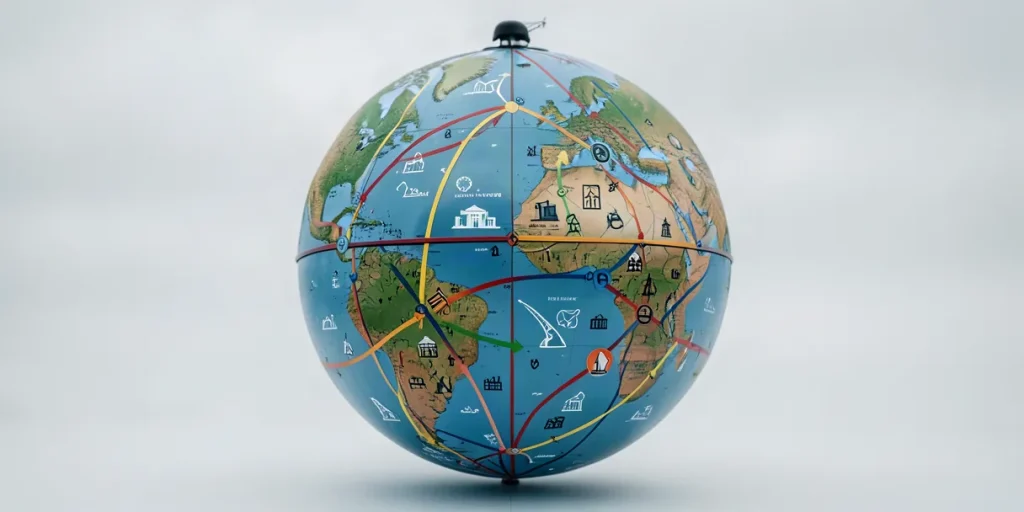
Introduction: Why International Tourism Matters to the Economy
In 2026, international tourism is one of the most vital sectors of the global economy. According to the World Tourism Organization, the sector generates about 10% of global GDP and provides over 300 million jobs. Tourism not only drives economic growth but also fosters infrastructure development, cultural exchanges, and the formation of global markets. This article explores the key stages of international tourism development and its impact on the world economy.
Historical Stages in the Development of International Tourism
The earliest forms of international tourism appeared in antiquity, when Roman citizens traveled across the empire. However, mass tourism began to take shape in the 19th and 20th centuries thanks to industrialization and advances in transportation.
Key Periods
- Late 19th century — the birth of organized tours. Thomas Cook, in 1841, became the first company to offer package tours.
- Post-World War II — a boom in tourist travel driven by the growth of air transport and rising incomes in Western countries.
- 2000s — globalization and digitalization made travel more accessible, with the rise of online booking platforms and marketplaces.
- 2020–2025 — recovery following the COVID-19 pandemic with an emphasis on safety and sustainability.
As a result, by 2026 the annual flow of international tourists exceeds 1.5 billion people, reflecting significant growth compared to 500 million in 2000.
The Economic Impact of International Tourism
Tourism supports job creation and the development of related industries such as transportation, hospitality, restaurants, and retail. In 2025, China’s tourism industry provided over 80 million jobs and contributed about 12% to the country’s GDP.
Main Economic Indicators
| Country | GDP Contribution, % | Jobs, mln | Tourism Revenues, bn $ |
|---|---|---|---|
| China | 12 | 80 | 950 |
| USA | 9 | 60 | 700 |
| Spain | 14 | 25 | 150 |
| France | 13 | 28 | 170 |
- 1.5 billion international tourists in 2026
- 10% share of tourism in global GDP
- 300 million jobs worldwide
China’s Role in the Development of International Tourism
China has become a key player in the global tourism market. The growth of the domestic middle class and investments in infrastructure have made the country both a popular destination and a major source of tourists. Chinese companies such as Alibaba and Ctrip lead in online tourism, while large infrastructure projects like high-speed railways have greatly simplified travel within the country.
Investments and Innovations
- Between 2024 and 2026, China invested over 300 billion yuan in developing tourism infrastructure.
- Development of AI and big data technologies to personalize tourism services.
- Annual growth of international flights from China by 15%.
Current Challenges and Prospects
Despite rapid growth, international tourism faces several challenges: overcrowding of popular destinations, environmental risks, climate change, and new safety requirements.
Key Challenges
- Infrastructure overload in popular cities; for example, Venice and Barcelona have introduced visitor quotas.
- Stricter safety and health regulations following the COVID-19 pandemic.
- The need to develop sustainable tourism to preserve natural resources.
Companies and governments are devising strategies aimed at reducing negative impacts, including digitalizing services and promoting eco-friendly types of tourism.
Technological Innovations in International Tourism
Modern technologies are radically changing travelers’ experiences and the management of the tourism industry. In 2026, digital platforms, artificial intelligence, and automation take center stage.
Main Technologies
- Online booking platforms with AI support (e.g., Expedia, Booking.com incorporating chatbots).
- Virtual reality for previewing tourist sites.
- Contactless payments and mobile passports to streamline border crossing.
| Technology | Impact on Tourist Experience | Applications |
|---|---|---|
| AI and Big Data | Personalization of offers | Online booking platforms |
| VR/AR | Virtual tours | Promotional campaigns, museums |
| Mobile Passports | Faster border control | Border services |
Frequently Asked Questions
How does international tourism affect employment?
Which countries lead in tourism revenues?
What are the main challenges facing international tourism?
How are technologies changing tourism?
Key Takeaways
- International tourism in 2026 accounts for about 10% of global GDP and provides over 300 million jobs.
- Historical growth in tourism is linked to industrialization, globalization, and digitalization.
- China holds a leading position in investments and the development of tourism infrastructure.
- Current challenges include environmental risks and new safety requirements.
- Technological innovations greatly enhance the quality of tourism services and industry management.
Conclusion
The history of international tourism reflects the transformation of the global economy and society. Today, tourism is not only a source of income and employment but also a powerful factor in cultural exchange and global interaction. In 2026, the industry continues to evolve, adapting to the challenges of sustainable development and adopting innovative technologies, ensuring its significance for future generations and the global economy as a whole.
Sources
- my-tourism-24.ru — «Features of the International Tourism Market: Trends and Analysis»
- imes.su — «Development of International Tourism and Its Impact on the Economy — IMES»
- vuzlit.com — «Impact of International Capital Movement on the World Economy»
- studopedia.ru — «Impact of International Capital Movement on the World Economy and Its»
- 1postranam.ru — «China’s Leader: Success Story and Impact on the World Economy (6 videos)»