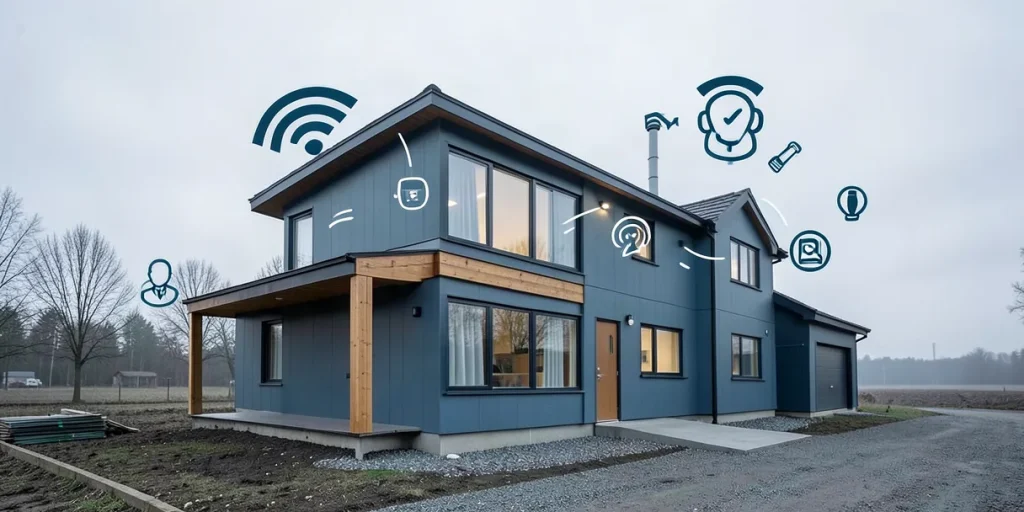
What Are Smart Home Technologies and How Do They Simplify Life?
Smart home technologies consist of digital devices and systems that provide automatic control of lighting, climate, security, and household appliances. They make daily life easier by saving time and resources, while also enhancing comfort and home safety.
For example, systems based on Wi-Fi and Zigbee protocols enable device control via smartphone or voice assistant, and automation scenarios reduce the need for manual intervention. Home users save up to 20% on electricity thanks to intelligent lighting and heating management, as confirmed by 2026 smart device market research.
What Key Technologies Underpin Smart Homes?
The main smart home technologies include wireless communication protocols, voice assistants, sensors, and automation systems.
Primary Wireless Protocols
- Wi-Fi — provides high-speed internet connection and device interaction.
- Zigbee — an energy-efficient protocol for short-range data transmission, frequently used in sensors and lighting.
- Z-Wave — a specialized smart home protocol with low power consumption and high reliability.
Voice Assistants
- Amazon Alexa — one of the most popular platforms offering integration with hundreds of devices.
- Google Assistant — convenient for Android users and supports control of multimedia, lighting, and security.
Sensors and Actuators
- Motion and light sensors for automatic light activation.
- Thermostats with adaptive climate control, such as the Nest Thermostat.
- Smart plugs and switches for managing electrical appliances.
How Do Smart Systems Save Energy and Reduce Home Expenses?
Smart technologies significantly cut electricity and heating consumption through adaptive management and monitoring.
For instance, the 2026 Nest Thermostat can reduce heating and cooling costs by up to 15% by analyzing residents’ habits and weather conditions. Similarly, automatic light shutoff when no one is present reduces electricity use by 10–20%.
Additionally, energy consumption monitoring systems like Sense Energy Monitor provide real-time data that help identify energy-intensive devices and track their usage.
| Technology | Average Energy Savings | Device Price | Connection Type |
|---|---|---|---|
| Nest Thermostat | 15% | from 12 000 ₽ | Wi-Fi |
| Sense Energy Monitor | 10-15% | from 25 000 ₽ | Wi-Fi |
| Zigbee Lighting | up to 20% | from 3 500 ₽ per device | Zigbee |
What Are the Most Popular Practical Applications of Smart Homes?
Practical smart home applications cover security, convenience, and time savings.
Security and Access Control
Smart surveillance cameras like the Arlo Pro 4 with 2K resolution and night vision allow around-the-clock home monitoring. Ring Video Doorbell systems offer remote visitor control and event recording.
Lighting and Climate Automation
With Philips Hue, you can set lighting scenarios with color and brightness changes for different moods, while smart thermostats adjust temperature based on occupant presence.
Appliance Management
TP-Link Kasa smart plugs enable remote switching of devices, and multifunctional home assistants like Google Nest Hub unify device control into one system.
What Criteria Are Important When Choosing Smart Home Equipment?
Equipment selection depends on compatibility, ease of installation, security, and cost.
- Compatibility — it’s important that devices support the same protocols, such as Zigbee or Wi-Fi, and integrate with voice assistants.
- Security — data encryption and regular firmware updates help protect against hacking.
- Ease of Installation and Management — availability of a mobile app with an intuitive interface.
- Price — smart home devices range from 2 000 to over 30 000 ₽, depending on functionality and quality.
What Are the Prospects for Smart Home Technology Development in the Coming Years?
Development of smart homes in 2026 is focused on greater device integration, improved artificial intelligence, and expanded automation capabilities.
According to forecasts by analytics firm IDC, the smart home device market will grow by 18% annually over the next five years, and machine learning technologies will enable more accurate prediction of user needs and optimization of energy consumption.
Moreover, security standards like Matter (approved in 2024) will ensure better compatibility and data protection, making smart homes more accessible and reliable.
- 18% average annual smart home market growth (IDC, 2026)
- 15% heating savings with smart thermostats
- from 3 500 ₽ cost of a basic smart home device
Frequently Asked Questions
Which communication protocols are best for smart homes?
Can I control a smart home without internet?
How secure are smart devices?
How much does a basic smart home kit cost?
Key Takeaways
- Smart homes are built on Wi-Fi, Zigbee, voice assistants, and automation technologies.
- Using smart devices can save up to 20% on electricity and heating.
- Main application scenarios include security, climate control, and appliance management.
- Equipment choice depends on compatibility, security, and ease of use.
- The smart home market continues to grow actively with prospects for AI improvements and integration.
In 2026, smart home technologies are becoming increasingly affordable and functional, making everyday life more comfortable, secure, and economical. Optimal device selection and well-planned automation implementation will help every home truly become «smart» and efficient.