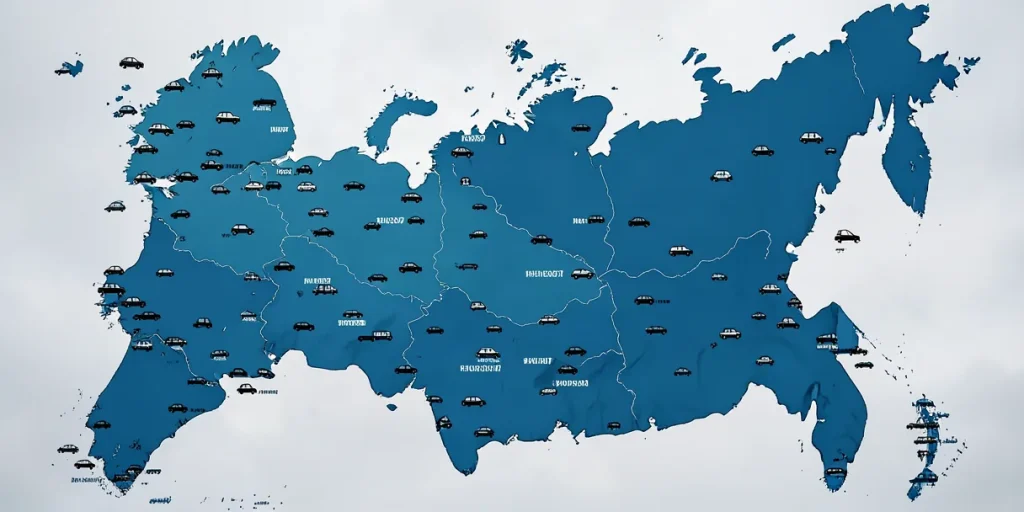
The best region to buy a used car depends on a combination of factors: road conditions, climate, service quality, and affordability in the secondary market. When choosing a car region, consider where vehicles are less prone to corrosion and where maintenance is higher quality and more accessible.
Selecting the right region to purchase a used car is an important step that influences future operation and maintenance costs. Regions with favorable conditions reduce the risk of buying problematic vehicles and help save on repairs. In this article, we’ll explain how to identify the appropriate region and what to watch for to ensure your purchase is as advantageous and trouble-free as possible.
If you are just beginning to explore the world of used cars, we recommend reading our comprehensive guide “Used Cars: A Complete Guide to Choosing, Buying, and Maintenance,” which thoroughly covers all key aspects. Next, we’ll focus specifically on how to choose a region for buying a used car to make the right decision.
| Factor | Example Region | Impact on Car | Price/Condition |
|---|---|---|---|
| Climate | Siberia | High corrosion due to de-icing agents | Lower price, but higher repair costs |
| Economy | Moscow | High demand and service quality | Prices 15–25% higher |
| Road Conditions | Yaroslavl Region | Increased suspension wear | Average prices, but more frequent repairs |
| Theft Risks | Northwestern Russia | Elevated theft risk | Legal checks required |
- 15–25% price difference for used cars between Moscow and Central Russia regions
- +5 °C average annual temperature in Moscow
- 70% share of paved roads in Moscow Region
How Does Regional Climate Affect the Technical Condition of Used Cars?
Impact of Winter Conditions
In regions with harsh winters, such as Siberia and the Urals, the technical condition of used cars often deteriorates due to the extensive use of anti-icing chemicals that accelerate corrosion of the body and suspension. In these areas, the use of de-icing agents significantly shortens the lifespan of metal parts within the first 3–5 years of operation.
For example, cars with St3-grade steel bodies, common in Russia, are vulnerable to corrosion when frequently exposed to salt and chlorides. On average, body repairs on such vehicles can cost from 15,000 to 40,000 rubles, which greatly affects ownership costs.
The Role of Humidity and Temperature
The average annual temperature in Moscow is about +5 °C, which leads to less battery wear compared to southern regions where summer temperatures often exceed +30 °C. High heat reduces the lifespan of AGM and gel batteries by about 20–30%, reflected in their typical service life — around 3–4 years in Moscow versus 2–3 years in southern cities.
In coastal cities with humidity above 70%, such as Sochi and Vladivostok, corrosion of metal car parts accelerates. In these conditions, vehicles require thorough anti-corrosion treatment, for example using coatings from Hammerite or similar products, which start at around 3,000 rubles per treated body part.
Why Does the Economic Situation of a Region Affect Used Car Prices?
Prices and Demand
The economic state of a region directly influences used car prices due to differences in purchasing power and demand. In Moscow and Saint Petersburg, the average price for a C-class car, like a Hyundai Solaris, ranges from 900,000 to 1,200,000 ₽, which is 15–25% higher than similar cars in Central Russia regions. In the North Caucasus republics, where incomes are lower, prices for such cars can be 20–30% lower due to weaker demand.
Infrastructure Impact
The presence of major dealers and service centers in a region significantly affects used car prices. For example, areas with AvtoVAZ and Kia dealer centers offer accessible and quality maintenance, contributing to better vehicle preservation and supporting market prices. Regions with limited service infrastructure face higher repair and maintenance costs, reducing the appeal and value of used cars.
What Road Conditions in Different Regions Affect Used Car Wear?
Road Quality
In regions with poor road conditions, wear on used cars is significantly higher, especially on suspension and chassis components. For instance, in the Yaroslavl Region, suspension wear exceeds the Russian average by 15–20% due to frequent potholes and uneven surfaces. In Moscow and the Moscow Region, approximately 70% of roads are paved, which reduces mechanical wear on tires and suspension parts, allowing cars to last longer without major repairs.
City vs. Rural Environment
Vehicle usage conditions differ greatly between urban and rural areas. In rural parts of Krasnodar Krai, where off-road conditions are common, the risk of body and undercarriage damage increases due to frequent contact with stones and mud, resulting in repair costs averaging 15,000–30,000 rubles. In cities, thanks to smooth asphalt roads, mechanical damage is less frequent, and average suspension repair costs range from 7,000 to 12,000 rubles.
- Suspension wear in Yaroslavl Region is 15–20% higher than in areas with developed road networks;
- About 70% of roads in Moscow and Moscow Region are paved, reducing tire and suspension wear;
- Frequent body and undercarriage damage in rural Krasnodar Krai causes repair costs from 15,000 to 30,000 rubles.
When Can Buying a Car in a Certain Region Pose Risks?
Theft Risks
Purchasing a vehicle in regions with high theft rates, such as Northwestern Russia, can result in unknowingly acquiring a car with a criminal history. In these areas, it is essential to check the car against the GIBDD stolen vehicle database to exclude the possibility that it has been reported stolen, thus reducing the risk of losing your investment.
- The Northwestern Federal District is one of the leaders in vehicle theft in Russia;
- Checking the GIBDD search database is a mandatory step before purchase;
- The average cost of such a check is about 500–700 rubles through specialized services.
Corrosion and Legal Risks
Cars from southern regions like Krasnodar Krai are prone to hidden corrosion damage due to high humidity and maritime climate, potentially leading to costly repairs. Furthermore, regions with less transparent transactions and fewer official dealers have increased risks of legal issues with vehicle paperwork.
- Krasnodar Krai’s high humidity accelerates body corrosion;
- Hidden corrosion damage is often detectable only with specialized inspection equipment;
- Regions with few official dealers have a higher chance of counterfeit or incomplete documents;
- It is recommended to check a vehicle’s history via databases from Rosreestr and GIBDD.
How to Properly Assess a Region When Choosing a Used Car?
Statistics Analysis
Evaluating a region for buying a used car starts with reviewing accident and theft statistics available on the official GIBDD website. For example, Moscow’s accident rate in 2025 was about 12 accidents per 1,000 vehicles, higher than Tatarstan’s approximately 7 per 1,000. Moscow also recorded a theft rate of about 0.8% of all registered cars, whereas Novosibirsk Region’s rate did not exceed 0.3%.
Price and Service Comparison
To compare prices and conditions of popular models, study regional classifieds such as Auto.ru and Avito. For instance, the average price of a Lada Vesta in Saint Petersburg is around 700,000 rubles, while in Krasnodar it may be 10–15% lower. Another important factor is the availability of service centers: the “Avtodok” network operates in all major Russian cities, facilitating maintenance and repairs, especially for domestic car models.
- Accident rate: Moscow — 12 accidents per 1,000 cars; Tatarstan — 7 per 1,000;
- Theft rate: Moscow — 0.8%; Novosibirsk Region — 0.3%;
- Average Lada Vesta price: Saint Petersburg — 700,000 ₽; Krasnodar — 10–15% lower;
- “Avtodok” service centers present in major Russian cities.
Frequently Asked Questions
Does a region’s climate affect the choice of used car body type?
Can you buy a cheaper car in southern regions without losing quality?
How to check a used car’s legal status in different regions?
Which Russian regions are considered best for buying used cars in terms of price and quality?
Key Takeaways
- Climate and humidity directly affect corrosion and body condition.
- The regional economy dictates price levels and service availability.
- Road quality strongly influences wear on suspension and chassis.
- Theft and legal risks vary by region.
- Analyzing statistics and prices is key to choosing the right region.