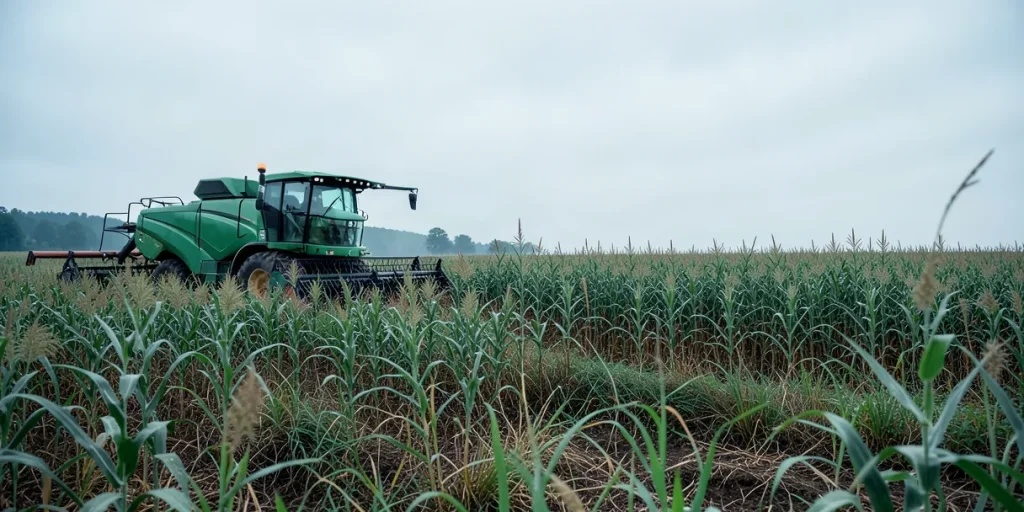
In 2026, new technologies in agriculture continue to transform traditional farming methods, leading to significant increases in yield. Modern solutions such as precision farming, smart irrigation systems, and biotechnological advancements help farmers optimize processes and use resources as efficiently as possible. These innovations not only increase the quantity and quality of agricultural products but also minimize negative impacts on the environment.
Thanks to the integration of artificial intelligence and big data, farmers can predict yields, analyze the condition of soil and crops, and manage agronomic processes in real-time. As a result, new technologies in agriculture are becoming key factors for achieving sustainable development and food security in the face of a changing climate and a growing global population.
Introduction to Agronomic Technologies in 2026
In 2026, agronomic technologies are rapidly evolving, contributing to increased yields and resilience in agriculture. Modern challenges such as climate change and a rising population require innovative approaches to ensure food security. In this context, technologies such as precision farming, genetic engineering, and the use of satellite monitoring data are becoming essential tools for agronomists. They enable the optimization of processes, cost minimization, and overall productivity enhancement in the agricultural sector.
Technologies play a vital role in improving productivity by implementing automation and sustainable practices. For example, the use of artificial intelligence in self-driving combines and other machinery significantly reduces field processing time and increases operational efficiency. This also helps reduce negative environmental impacts, as more precise application of resources like water and fertilizers minimizes waste and pollution. Additionally, the introduction of alternative fuels in agriculture reduces the carbon footprint and improves the sector’s ecological performance.
The purpose of this article is to explore innovations in agronomic technologies in 2026 and their impact on increasing yields. We will examine how modern advancements in microbiology, agroforestry, and precision farming can help farmers adapt to changing conditions while maintaining high production levels. In an unstable climate, new technologies become essential tools for achieving stable results and improving the quality of end products.
Precision Farming Methods
Precision farming methods in 2026 are becoming the foundation for successful agricultural practices, allowing agronomists and farmers to optimize processes and increase yields. The use of data to analyze the condition of fields and crops enables precise identification of areas needing additional resources such as water, fertilizers, or pesticides. Automated data collection and processing systems help reduce decision-making time, ensuring more effective management of agricultural lands.
Satellite technologies play a key role in resource management. With the help of Geographic Information Systems (GIS) and satellite imagery, farmers can monitor changes in soil and vegetation conditions, analyze moisture levels, and identify areas at risk of drought or disease. This allows for proactive measures that minimize losses and enhance yields. Satellite data also aids in crop rotation planning, which in turn improves soil quality and resilience to climate change.
The advantages of precision technologies are becoming increasingly evident. They not only reduce resource costs but also increase overall agricultural productivity. For instance, precise application of fertilizers and water avoids overuse and decreases the environmental impact. Furthermore, modern technologies such as the use of drones for field monitoring and automated machines help minimize labor costs and enhance crop quality.
Thus, precision farming methods in 2026 represent not only a technological advancement but also an important tool for ensuring food security and sustainable agricultural development. The implementation of these methods promotes more rational resource use, lowers costs, and enhances product quality, ultimately leading to improved economics in the agri-sector as a whole.
Genetic Engineering and Its Achievements
Genetic engineering is becoming one of the key tools for increasing agricultural yields in 2026. Using modern genetic modification methods, agronomists can create plants that are resistant to adverse climatic conditions such as droughts or floods. For example, in some regions, wheat varieties have been introduced that can maintain their properties even under moisture scarcity. This not only increases the harvested yield but also reduces risks for farmers in a changing climate.
An important aspect of genetic engineering is its role in combating climate change. The development of plants capable of adapting to higher temperatures and changes in soil composition helps farmers maintain productivity and resilience against extreme weather conditions. Crops such as modified rice and corn show high stress resistance, leading to improved food security in regions vulnerable to climatic threats.
The potential of genetic engineering to enhance product quality and quantity is also undeniable. Through precise modifications in genes, it is possible to create varieties with improved nutritional properties and more efficient nutrient uptake. This not only increases yield but also reduces the need for chemical fertilizers, positively impacting the environment. Furthermore, genetic engineering opens new horizons for creating plants with better taste and shelf life, which is relevant in the context of globalization and market demands.
Thus, genetic engineering is an important tool that contributes not only to increased yields but also to the resilience of agriculture against contemporary challenges. In combination with other modern technologies such as automation and the use of big data, it shapes the future of the agro-industrial complex, where productivity and sustainable development go hand in hand.
Automation and the Use of AI
The implementation of intelligent systems in the agri-sector in 2026 has become a key factor in increasing yields. Modern technologies allow agronomists to manage processes related to crop cultivation more precisely. For example, the use of data collected via drones and satellites enables real-time monitoring of field conditions, significantly simplifying decision-making regarding the need for irrigation, fertilization, or other agronomic activities. These data, processed using artificial intelligence algorithms, help predict how conditions in the fields will change, which in turn allows for the avoidance of yield losses.
Self-driving combines and drones play an important role in automating agricultural production. The latest models of combines, equipped with AI systems, can independently analyze crop conditions and adapt their actions, leading to more efficient field processing. These machines can operate in challenging conditions and minimize human factor influences, which is especially relevant in scenarios of labor shortages. Drones, in turn, are actively used for monitoring crop conditions, as well as for applying fertilizers and pesticides, significantly reducing costs and enhancing safety.
The automation of processes also includes the capability of collecting and analyzing large volumes of data, allowing agronomists to gain a more comprehensive understanding of the state of individual fields and the entire farm. This reduces the likelihood of errors associated with the human factor and enables more effective resource management. For instance, precise application of water and fertilizers reduces environmental impact and promotes sustainable agricultural development.
Thus, automation and the use of AI in the agri-sector not only increase yields but also contribute to the creation of more resilient and efficient agricultural systems. As a result, farmers gain the opportunity to not only increase production volumes but do so with lower costs and reduced impact on nature.
Sustainable Agriculture as the Foundation of the Future
Sustainable agriculture is becoming the foundation for food security and ecosystem protection in 2026. The main principles of this approach include the rational use of natural resources, conservation of biodiversity, and reduction of negative environmental impacts. A crucial aspect is the integration of technologies that help farmers optimize processes and increase yields while preserving ecosystems. For example, the use of precision farming allows for more efficient use of water and fertilizers, minimizing their excessive application, which in turn reduces the risks of soil and water pollution.
Agroforestry, as one of the methods of sustainable agriculture, offers numerous benefits. This practice combines agriculture with forestry, creating microclimates for plants and improving soil quality. Additionally, agroforestry helps retain moisture, reduces erosion, and increases carbon storage in soils. Such systems can also provide additional income sources for farmers, thanks to the diversity of products they can grow.
Organic methods and crop rotation play a key role in enhancing the resilience of agriculture. Organic approaches not only promote soil health and ecosystem improvement but also reduce dependence on chemical fertilizers and pesticides. Crop rotation, in turn, helps prevent soil depletion, improving its structure and nutrient content. Alternating various crops also reduces pest and disease prevalence, allowing farmers to cut down on chemical plant protection measures.
Thus, the integration of new technologies and sustainable practices in agriculture in 2026 ensures not only high yields but also care for the planet’s future. Sustainable agriculture is becoming an important tool for achieving sustainable development goals and protecting natural resources, making it essential for the modern agri-sector.
Environmental Aspects of New Technologies
New technologies in agriculture in 2026 play a key role in reducing negative impacts on ecosystems. Modern methods and tools, such as precision farming and process automation, enable farmers to use resources efficiently and minimize waste. Thanks to satellite data and 5G, agronomists can plan field operations more accurately, monitor crop conditions, and respond promptly to changes. This not only increases yields but also reduces water and fertilizer consumption, which positively affects the environment.
Alternative fuels are becoming increasingly popular in agriculture, further contributing to the sector’s sustainability. The use of biodiesel and other renewable energy sources helps reduce carbon emissions and decrease dependence on fossil resources. This is crucial for combating climate change and protecting ecosystems. Farmers transitioning to alternative energy sources not only lower their costs but also gain additional advantages in terms of ecological sustainability.
The application of sustainable practices in agriculture in 2026 includes agroforestry, rational water use, and crop rotation, which help maintain balance in ecosystems. These methods contribute to improving soil quality, preserving biodiversity, and reducing negative impacts on nature. The introduction of organic methods and precision technologies also plays an important role in shifting towards more sustainable forms of farming.
Thus, new technologies not only increase agricultural productivity but also contribute to creating a more sustainable and environmentally friendly agrosystem. It is essential to continue developing and implementing these innovations to ensure food security without harming the environment.
The Future of Agronomic Technologies
In 2026, agronomic technologies continue to evolve at an incredible pace, opening new horizons for increasing yields and sustainable agriculture. One of the key trends is the integration of advanced digital technologies, such as artificial intelligence and machine learning, into agricultural management processes. These technologies allow farmers to analyze data on soil conditions, microclimate, and plant health more effectively, which in turn facilitates more accurate and timely decision-making. With the help of satellite data and sensors installed in the fields, it is possible to optimize the use of resources such as water and fertilizers, reducing environmental impact and increasing productivity.
In the coming years, we can expect innovations that could revolutionize agriculture. For example, microbiology technologies that help plants better cope with drought and climate changes will play an important role in ensuring stable yields. Automated systems, such as self-driving combines with artificial intelligence, also promise to enhance harvesting and processing efficiency, reducing costs and minimizing the influence of the human factor on outcomes.
Sustainable agricultural technologies will become the foundation for ensuring global food security. A comprehensive approach including agroforestry, rational water use, and organic methods will enable not only yield increases but also ecosystem preservation. It is anticipated that in the coming years, new methods will be implemented, such as:
- Innovative irrigation systems that minimize water loss and enhance efficiency;
- Development of resilient plant varieties capable of adapting to adverse conditions;
- Expansion of alternative energy sources, which will reduce dependence on fossil fuels.
Thus, the future of agronomic technologies looks promising, and their integration into daily practice will be key to addressing pressing issues in food security and sustainable development.
Conclusion
In 2026, new technologies in agriculture have become essential tools for increasing yields and ensuring food security. Innovative methods such as precision farming, genetic engineering, and process automation allow farmers to manage resources more effectively and minimize losses. The use of satellite data and 5G technologies opens new horizons for monitoring field and crop conditions, which in turn facilitates timely decision-making and improves product quality.
For farmers and agribusinesses, it is crucial to adapt to these changes and implement new practices in their operations. It is recommended to actively utilize:
- Modern agronomic methods such as crop rotation and agroforestry;
- Automation technologies to reduce the influence of the human factor;
- Alternative energy sources to lessen environmental impacts;
- Innovative microorganisms to enhance crop resilience to adverse climatic conditions.
The integration of new technologies into the agri-sector is becoming not just a trend but a necessity for enhancing productivity and agricultural sustainability. Sustainable practices that consider interactions with ecosystems contribute not only to yield increases but also to environmental protection. It is important to remember that the implementation of high technologies must occur in harmony with nature, ensuring long-term results and a future for the agricultural sector. Ultimately, successful agriculture in 2026 is the result of a comprehensive approach based on scientific research and innovation.
Frequently Asked Questions
What technologies most influence yields in 2026?
What are the benefits of sustainable agriculture?
What is precision farming?
Key Takeaways
- Technologies play a key role in enhancing agronomic productivity.
- Genetic engineering and automation are the main success factors.
- Sustainable agriculture ensures the protection of ecosystems and food security.
Sources
youtube.com, farmonaut.com, ru.fmworldagri.com, eos.com, ASM-AGRO
