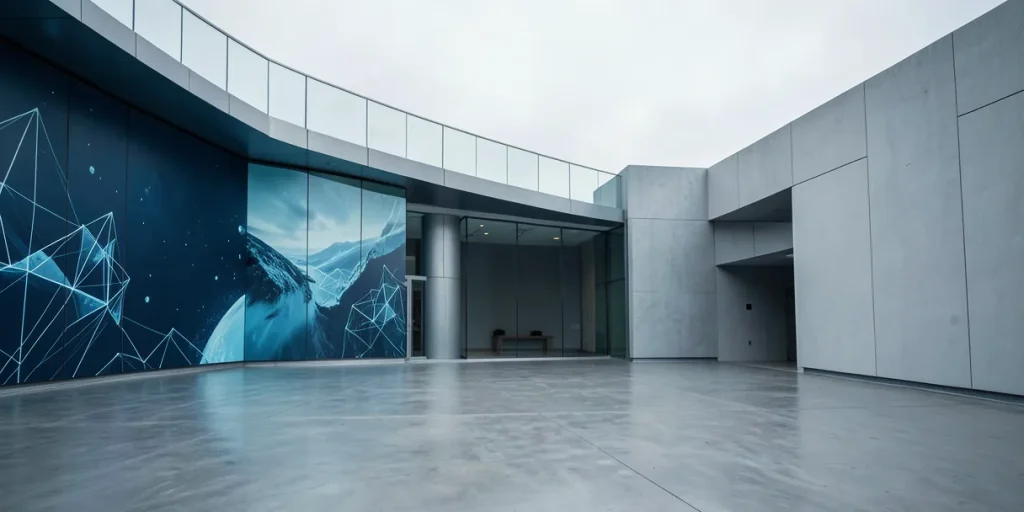
New technologies are changing how we experience art: they help us see details, hear sound and interact with a work in new ways. But they do not replace the work itself — what changes is how viewers encounter it.
Digital tools expand the ways art can be presented: we can do more than look at it; we can explore it through screens, sound or interactive experiences. How new technologies affect the way we experience art depends on what they add: a new perspective, a sense of presence or an opportunity to take part.
| Format | What the viewer does | What it helps them notice | Limitation |
|---|---|---|---|
| Digital copy | Views the image on a screen | Details and enlarged sections | Does not convey the original’s texture |
| Virtual reality | Finds their way around a digital environment | Space and a sense of presence | Does not replace viewing the physical object |
| Interactive visualization | Selects an element or viewing method | Connections between details in the image | The interface may distract from the work |
| Work with artificial intelligence | Experiences an image created or transformed with AI | The connection between the result and the creative process | Raises questions about technology’s role and authorship |
- 221 perspectives a broad range of views on the impact of digital technologies on art
How do new technologies affect the way we experience art in museums?
Digital technologies change how we experience art in museums: they direct viewers’ attention, give them choices and can create a sense of being inside a work. Digital projection takes images beyond the boundaries of a traditional canvas, so visitors experience not only the painting itself but also the space in which it is shown. An interactive screen lets them choose details or the order in which they view them, rather than following only the exhibition route.
Virtual reality replaces the view from the outside with the feeling of being inside a digital scene. These formats change more than the way art is presented: people assess both the work and their own interaction with it — for example, what they chose to examine on screen and how they experience the scene from within. The museum experience thus becomes more than contemplation: it combines looking with personal choice.
Technology as part of the museum experience
The article “The Impact of Digital Technologies on Art” lists the DOI 10.31862/2073-9613-2024-2-222-231. This identifier refers to a publication about the interaction between digital technologies and visual art; in a museum setting, this interest is reflected in new ways of presenting art and engaging visitors.
What happens to the original when a digital copy appears alongside it?
A digital copy makes it possible to enlarge an image and examine details that might be easy to miss from a distance in a museum gallery, but it does not replace the original: a screen reproduction cannot convey the work’s physical texture or how it is displayed.
Object, copy and interpretation
The original, its digital reproduction and an interactive interpretation are different ways of encountering art. To avoid confusing them, viewers need to distinguish what they are seeing: the physical object itself, its image on a screen or a digital version enhanced with interactive elements.
- Original: the work as a physical object, experienced in a particular space.
- Digital copy: an image that can be enlarged to examine details but does not reproduce the original’s texture.
- Interactive interpretation: a digital presentation that offers a particular way to explore the work and is not the same as either the object or its copy.
Artificial intelligence can be involved in creating an image, making authorship part of how we experience the work. Viewers should consider not only what is shown but also the role of technology: are they looking at an original, a digital reproduction or an image created with the help of AI?
How do VR and interactivity change the visitor’s role?
VR and interactivity change the visitor’s role: they do more than look at a work; they explore the digital space created by the artist, choosing where to look and what to focus on. In virtual reality, the image becomes an environment that viewers navigate; interactive visualization, in turn, makes choosing a viewpoint or an element of the image part of the museum experience.
From contemplation to exploration
In VR, visitors experience a work not as a single, static picture but as a space with viewpoints and details to explore. This format gives artists new ways to express themselves and museums an opportunity to explain how a work is constructed — for example, by drawing attention to particular elements and showing how perception changes when the viewpoint shifts.
For immersion to help visitors understand a work, museum interactives should clearly explain what viewers can do: what they can explore, how to change the viewpoint and how to return to ordinary viewing. Without clear navigation, choice becomes an obstacle; with it, visitors can set their own pace as they encounter the work without losing touch with its meaning.
When does a digital format help, and when does it get in the way?
A digital format helps us see a work from a new perspective when the technology complements it, and gets in the way when the effect overshadows the art itself. A striking projection can draw attention to light and movement: viewers remember the spectacle rather than the composition, color or intention. That is why it is important to distinguish the work from the way it is presented.
Discussion of digital technologies and visual art is documented in a publication with the DOI 10.31862/2073-9613-2024-2-222-231. The study’s description presents 221 a broad range of perspectives — from concerns about the integrity of the work to the idea that the digital environment frees art from physical constraints. This range reflects the central question: does technology remain a means of experiencing art, or does it become an independent part of the artistic experience?
Before you view: what exactly is the work of art here?
A VR version can reproduce an image, but it does not replace the physical original when texture, scale and the object’s appearance in real space matter to the experience. Before viewing, it is useful to identify what the digital exhibition offers: access to an image, an interactive interpretation or a sense of presence.
- Projection: consider whether the light helps you see the composition or distracts you from it.
- VR: remember that a virtual viewing does not convey the original’s texture or physical scale.
- Original: choose to view it in person when the material and the object’s placement in space are important.
How can you look at digital art without mistaking the effect for the experience?
To avoid confusing the experience of digital art with the effects of the technology, find out what you are looking at and consider how the format changes your access to the work. A digital work may be a work of art in its own right, a copy of an existing work or a museum visualization: that determines what you should assess — the artistic intention, the reproduction or the way it is presented.
Check whether the image responds to your actions. If it changes when you move, make a selection or touch the screen, interaction is part of the experience; if it stays the same, you are viewing a finished composition. This distinction helps separate the artistic choice from the impression created by the screen, projection or interface.
What to look for in VR and AI-generated works
- VR: compare the sense of presence with what you can see in an ordinary view. Immersion can make a scene more convincing, but it can also make it harder to focus on the object’s physical properties.
- Artificial intelligence: ask what role the technology plays in the artistic intention. It is important to consider not only how striking the result looks but also whether the use of AI affects the work’s form, content or the way we interact with it.
This comparison does not diminish the value of a digital format: it helps you understand what is making an impression — the work itself, its interactivity or the way it is presented.
What do technologies change about art itself?
Computer tools, virtual reality and artificial intelligence are changing how art is made and presented, and with them, questions about the boundaries of a work and authorship. Digital tools expand the range of techniques available to artists: images can be created and transformed on screen, combining approaches that once required different materials and tools.
Virtual reality lets us experience a work not only as a separate image or object but also as an environment in which the viewer is immersed. In this case, the artistic experience depends not only on what is shown but also on how the space around the viewer is constructed.
New tools, new questions
Artificial intelligence adds a question about the creative process to the discussion of aesthetics: how is authorship shared when a tool takes part in creating an image? This does not eliminate the artist’s role, but it encourages us to look more closely at the choices behind the intention, the tools and the result. Technology itself, however, does not give a work artistic value: a digital format or a complex presentation method is only a means, and its value depends on how it serves the work and the way it is experienced.
Frequently asked questions
How does VR affect the way we experience art?
Can a digital copy replace the museum original?
How does artificial intelligence change the way we experience a work?
Why can a digital exhibition sometimes distract from the art?
Key takeaways
- VR turns viewing an image into an experience of being inside a digital environment.
- A digital copy helps viewers examine details but does not reproduce the original’s physical texture.
- AI adds questions about technology’s role and authorship to the experience of a work.
- A digital effect does not guarantee artistic value and can distract from the work itself.
Sources
- 7universum.com — “The Impact of Technology on the Development of Contemporary Art”
- prepodavatel-xxi.ru — “The Impact of Digital Technologies on Art”
- obuchonok.ru — “Project: ‘How New Technologies Affect’”
- msca.ru — “How Artificial Intelligence Is Transforming Contemporary Art”
- teacherjournal.ru — “Modern Technologies in Classical Art: New”