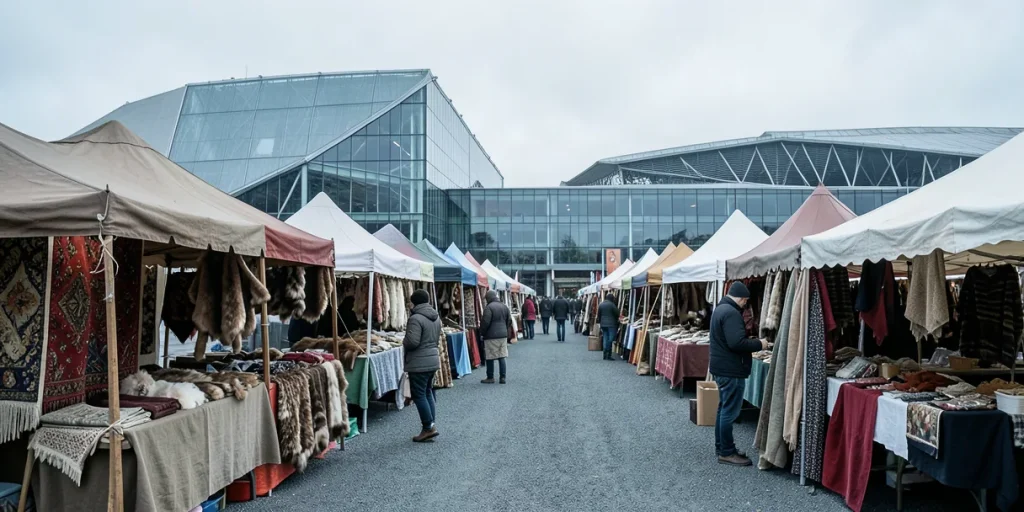
Urban fairs in Russia emerged in the 14th century and have since undergone significant transformations, becoming an important economic and social phenomenon. Their formation and development were influenced by political reforms, the growth of trade and infrastructure, as well as cultural traditions. Let’s examine the key stages and characteristics of this process.
The Emergence of Urban Fairs in the 14th–15th Centuries
The first urban fairs in Russia appeared in the 14th century, coinciding with the growth of cities and the expansion of trade connections. One of the earliest major fairs was the fair in Arkhangelsk, established after the city’s founding in 1584. It ran from May to early October and served as an important trading hub linking domestic and foreign markets.
Product Range and Turnover
- Fabrics: linen and woolen products
- Metals and metal goods: iron, copper, copper items
- Furs: sables, foxes, martens
- Wine and spices from Western Europe
During the 16th century, fairs became key venues for the exchange of goods between northern Russian regions and European countries. This stimulated the development of river and sea routes, increasing trade volumes.
Peter the Great’s Influence on the Development of Fair Trade
Peter the Great actively promoted the growth of urban fairs in the 18th century. His reforms aimed at modernizing the economy and expanding foreign trade contributed to a significant increase in the number and scale of fairs.
Reforms and Their Impact
- Reduction of customs duties on fair goods
- Creation of infrastructure for storage and transportation of goods
- Regulation of fair schedules to align with agricultural cycles
As a result, by the end of the 18th century, fairs became places not only for commerce but also for cultural events, fostering the development of urban society.
The Main Directorate of Trade and Fairs (1864) as an Institutional Milestone
An important stage in the history of fairs was the establishment of the Main Directorate of Trade and Fairs in 1864. This body assumed responsibilities for regulating, overseeing, and developing fair activities across the Russian Empire.
Main Tasks and Functions of the Directorate
- Setting rules for holding fairs and exhibitions
- Monitoring the quality and range of goods
- Supporting national producers
| Indicator | Before 1864 | After 1864 |
|---|---|---|
| Number of fairs | about 30 per year | more than 50 per year |
| Average trade turnover | around 100 thousand rubles | over 250 thousand rubles |
| Product range | limited | broad, including imported goods |
The Socio-Economic Role of Fairs in the 19th–20th Centuries
In the 19th and early 20th centuries, fairs became not only trading venues but also centers of social life, encouraging the development of small businesses and crafts.
Main Functions of Fairs
- Economic: facilitating product exchange and promoting new goods
- Social: places for meetings, news exchange, and cultural traditions
- Educational: dissemination of information about technologies and production methods
During this period, fairs featuring agricultural machinery and industrial products emerged, influencing economic modernization.
Current State and Development Prospects of Urban Fairs
Today, urban fairs in Russia operate as a blend of tradition and modern trade formats. They host exhibitions, themed festivals, and international trade events.
Current Trends
- Growth of fairs focused on ecological and artisanal products
- Use of digital technologies to attract buyers
- Integration with tourist infrastructure
According to chambers of commerce, the trade turnover at major urban fairs in 2026 reaches approximately 500 million rubles, with a significant share occupied by food products and folk crafts.
- 14 months – average duration of major seasonal fairs
- 500 million ₽ – annual trade turnover of the largest urban fairs
- 35% – share of folk craft products in the total assortment
- 120+ fairs are held annually in Russian cities
Frequently Asked Questions
When did urban fairs first appear in Russia?
What goods were most popular at the fairs in Arkhangelsk?
What changed after the creation of the Main Directorate of Trade and Fairs in 1864?
What is the role of fairs in modern Russia?
Key Takeaways
- Urban fairs in Russia originated in the 14th century and evolved under the influence of political and economic reforms.
- Peter the Great significantly promoted the expansion of fair trade in the 18th century.
- The creation of the Main Directorate of Trade and Fairs in 1864 marked an important institutional milestone.
- Fairs in the 19th–20th centuries became centers of social and cultural life.
- Modern fairs combine traditions and digital technologies, supporting the economy and culture.
The history of urban fairs in Russia reflects the country’s economic and social transformations. From the first trading venues in the 14th century to today’s exhibitions and festivals, they remain a vital element of urban life and the economy, bridging tradition and innovation.
Sources
- statehistory.ru — “Ya. E. Vodarsky. Urban and Rural Fairs at the End of the 18th Century. Studies in the History of the Russian City. Facts, Generalizations, Aspects. Russian History. Library”
- avtomash.ru — “History of Exhibitions and Fairs in Russia — Avtomash.ru”
- znanierussia.ru — “Russian Fair: History, Traditions, and Modernity”
- cyberleninka.ru — “Evolution of Fairs in Russia: Socio-Economic Aspect”