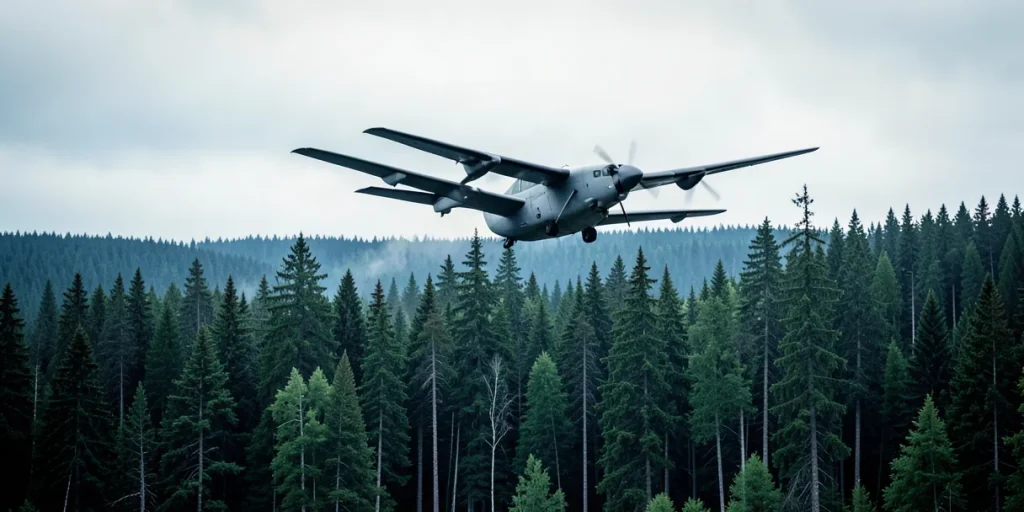
In the context of global warming and the increasing number of natural disasters, combating forest fires has become one of the priority tasks of modern technology. A Greek startup has presented the concept of an unmanned amphibious aircraft that promises to revolutionize the approach to extinguishing fires. This innovative project utilizes a combination of aerial and aquatic resources, making it particularly effective in situations where access to water sources is limited.
The drone aims not only to improve response times to fires but also to minimize risks for people working in hazardous conditions. The concept of the amphibious aircraft combines advanced technology with environmentally friendly methods, offering hope for an effective solution to one of the most pressing problems of our time — environmental protection and the preservation of biological resources.
Introduction to the Problem of Forest Fires
Forest fires represent one of the most serious ecological problems of our time. Every year, millions of hectares of forest burn worldwide, causing significant harm to ecosystems, economies, and public health. According to various studies, the number of forest fires is increasing, which is linked to climate change, improper land management, and human activity. It is important to note that not only high temperatures and dry conditions contribute to the outbreak of fires, but also human carelessness, such as unattended campfires and discarded unextinguished cigarettes.
The reasons for the increase in forest fires are diverse and often interconnected. Climate change, which causes more frequent and intense droughts, makes forests more susceptible to ignitions. Furthermore, growing populations and the expansion of agricultural land lead to an increase in fires caused by human activities. The consequences of such fires can be catastrophic: destruction of biodiversity, deterioration of air quality, and significant economic losses. As a result, fires negatively impact remaining ecosystems, as well as the health of people living near affected areas.
Given such realities, the need for innovative solutions in the fight against forest fires becomes evident. Technologies that can respond quickly to ignitions and extinguish them effectively are becoming vital. One such solution is the concept of an unmanned amphibious aircraft presented by a Greek startup. This aircraft is capable of rapidly delivering water and other extinguishing agents to hard-to-reach areas, which can significantly reduce response times and enhance firefighting effectiveness. The implementation of new technologies will not only improve fire-fighting methods but also help preserve forest ecosystems that play a key role in maintaining ecological balance on the planet.
Presentation of the Amphibious Drone Concept
Greek startup unveils concept of unmanned amphibious aircraft for fighting fires
Recently, a Greek startup presented an innovative concept of an unmanned amphibious drone designed to be an effective tool in the fight against forest fires. This drone combines the functions of a plane and a boat, making it a unique solution for extinguishing fires in hard-to-reach locations, such as forests and water bodies. The design of the drone allows it to land on water and take off from it, significantly expanding its capabilities for gathering water for firefighting.
The technical specifications of the new drone include a powerful engine that provides high speed and maneuverability, as well as an automatic control system that allows it to accurately target fire hotspots. The drone is equipped with modern sensors and cameras that provide real-time situation monitoring, helping operators make more informed decisions. The drone can collect significant volumes of water in a short time, which is particularly important during large-scale forest fires, where every second counts.
The advantages of the amphibious design lie in its ability to operate both on land and in water. This allows the drone to quickly move to a water source, ensuring a rapid response to ignitions. Unlike traditional firefighting aircraft, which require runways, the amphibious drone can operate in confined spaces, greatly enhancing its versatility. Additionally, its use reduces risks to firefighters’ lives, as it can operate in the most dangerous zones, minimizing the need for close human presence.
Thus, the new amphibious drone represents a significant step forward in the fight against forest fires, combining advanced technologies and innovative solutions that make it not only effective but also a safe tool for extinguishing fires.
Technological Features and Innovations
Greek startup unveils concept of unmanned amphibious aircraft for fighting fires
Modern technologies used in unmanned aerial vehicles play a key role in enhancing their effectiveness and safety. The new concept of the amphibious drone presented by the Greek startup demonstrates advanced achievements in navigation and control. The device is equipped with high-precision GPS systems and inertial navigation systems, allowing it to accurately determine its location and plan routes even in challenging terrain. Innovative control algorithms ensure a rapid response to changes in the environment, which is especially important in combating forest fires.
Fire detection and monitoring systems are another important component of this drone. It is equipped with thermal imaging cameras and sensors that enable the detection of fire sources at great distances. These technologies provide the capability for rapid response to ignitions, which can significantly reduce localization time. In addition to this, the drone can transmit data in real time to the control center, allowing for prompt assessment of the situation and decision-making on further actions.
The materials and structural features of the amphibious drone also contribute to its effectiveness. The use of lightweight and durable composite materials reduces the weight of the device, which in turn increases its maneuverability and flight time. Furthermore, the specially designed hull provides reliable watertightness, allowing the drone to successfully perform both aerial and aquatic operations. This makes it a versatile tool in the fight against fires, as it can draw water from nearby water bodies for extinguishing flames.
Thus, the integration of modern technologies in the development of the amphibious drone opens new horizons in the field of combating forest fires, improving not only the efficiency of operations but also the safety of people and the environment.
Potential Areas of Application
The potential areas of application of the new unmanned amphibious aircraft presented by the Greek startup extend far beyond fire fighting. This innovation can significantly improve the efficiency and safety of rescue operations. For example, in natural disaster situations such as floods or earthquakes, the drone can be used to deliver medical supplies and assistance to hard-to-reach areas where traditional rescue methods may be ineffective. Thanks to its amphibious design, it can operate both on water and on land, opening new horizons for rescue services.
Additionally, the drone is well-suited for environmental monitoring. It can be used to survey contaminated areas, track the conditions of water bodies and forests, as well as record changes in ecosystems. This will help not only in rapid response to environmental threats but also in long-term planning for environmental protection. The use of such drones could become an important tool for ecologists and researchers looking to assess the impact of human activity on nature more accurately.
Cross-sector applications of this aerial device could also involve agriculture. For instance, the drone can be used for field irrigation, monitoring crop conditions, and detecting plant diseases at an early stage. This will lead to increased yields and reduced land treatment costs. Thus, the amphibious drone can have a significant impact on various sectors, contributing to improvements in quality of life and environmental protection.
In conclusion, the implementation of such technologies opens new opportunities for effectively addressing pressing issues across various industries, making the Greek startup not just a market participant but a pioneer in innovative solutions to combat modern challenges.
Comparison with Traditional Firefighting Methods
Comparison with Traditional Firefighting Methods
The use of unmanned amphibious aircraft in firefighting opens new horizons and offers significant advantages compared to traditional methods, such as maneuverable planes and helicopters. One of the main advantages of drones is their ability to operate effectively in hard-to-reach places where conventional aircraft may struggle due to limited space or challenging natural conditions. Drones can easily maneuver between trees and other obstacles, allowing them to quickly reach fire hotspots and conduct direct extinguishing.
Moreover, unmanned aircraft often have lower operating costs. They require less fuel and can be less expensive to maintain compared to traditional planes. This is particularly relevant in a context where combating forest fires is becoming increasingly costly and requires significant resources. Savings on costs could allow for an increase in the number of flights and, consequently, improve firefighting effectiveness.
However, the use of drones also has its drawbacks. For example, they may be limited in the volume of water or extinguishing agents they can carry, which in some cases reduces their overall effectiveness compared to larger aircraft capable of loading a greater amount of material at once. Additionally, drones may be susceptible to weather conditions such as strong winds or rain, which can limit their use in certain situations.
In conclusion, unmanned amphibious aircraft represent a promising alternative to traditional firefighting methods, offering unique solutions for challenging conditions. However, to fully assess their effectiveness, it is necessary to consider both the advantages and disadvantages, as well as to continue research and development in this field.
Community and Expert Reactions
The introduction of the unmanned amphibious aircraft presented by the Greek startup has sparked active discussions in scientific and professional circles. Experts have highly praised the innovative approach to combating forest fires. Discussing the advantages of the new technology, scientists note that the use of drones can significantly enhance the efficiency of fire extinguishing, especially in hard-to-reach areas. They emphasize the importance of automating processes and the ability to respond quickly to the emergence of fires.
Expert opinions on the prospects of using drones in firefighting vary. Some specialists believe that the introduction of such technologies could be a true revolution in the field of emergency services. In their view, the amphibious aircraft is capable not only of dropping water but also of conducting reconnaissance to identify areas of highest danger. Others point out the need for further testing and modifications to ensure reliability and safety in real fire conditions.
Feedback from ecologists and firefighting services also plays an important role in the development of this technology. Ecologists stress that the use of drones should be aimed not only at extinguishing fires but also at preventing their occurrence. They express hope that new technologies will help reduce damage to ecosystems and ensure safer interactions with nature. Firefighting services, in turn, note that new drone systems could become a valuable addition to traditional methods, allowing for more effective allocation of resources and efforts in combating fires.
Thus, the presented concept of the amphibious aircraft generates significant interest both in the scientific community and among practitioners in the field of firefighting, opening new horizons for the application of technologies in emergency situations.
The Future of Amphibious Drones
The future of amphibious drones looks promising, especially in the context of combating natural disasters such as forest fires. The Greek startup that presented the concept of the unmanned amphibious aircraft is already planning further stages of development and testing of its technology. In the coming months, the team will focus on conducting field tests to refine the drone’s technical specifications and adapt it to various climatic conditions. It is expected that further testing will reveal any potential shortcomings and improve the device’s effectiveness in real-world conditions.
The commercialization of amphibious drones appears highly promising. Given the increasing number of forest fires and the rising costs of environmental protection, such technologies may occupy an important place in the market. The startup is already in negotiations with potential partners in fire safety and government bodies to integrate its solutions into existing emergency response systems. This could lead to significant reductions in time and financial costs in combating fires, as well as enhance the safety of citizens and the protection of ecosystems.
The impact of amphibious drones on the fight against global environmental challenges cannot be underestimated. These technologies can not only assist in extinguishing fires but also be used for monitoring ecosystems, collecting data on environmental conditions, and identifying risk areas. The integration of drones into ecological programs could contribute to more effective management of natural resources and improve the overall ecological situation. It is crucial for startups and companies working in this field to continue developing their ideas and finding ways to implement innovative technologies to protect our planet.
Conclusion
Conclusion
The innovations presented by the Greek startup in the form of the concept of an unmanned amphibious aircraft for combating forest fires highlight the importance of new technologies in addressing pressing ecological problems. Fires are becoming an increasingly frequent occurrence in different parts of the world, and traditional methods of combating them often prove insufficiently effective. The development of such a drone opens new horizons in ensuring the safety of ecosystems and protecting nature from the destructive consequences of fire. This step could be a significant contribution to the preservation of biodiversity and the maintenance of forest health, which is especially important in the context of global climate change.
Hope for effective solutions in combating forest fires is strengthened when such innovations emerge. Unmanned technologies allow for rapid responses to threats, quickly assess the scale of disasters, and conduct targeted fire extinguishing. Such devices can operate in hard-to-reach places and in limited visibility conditions, significantly increasing the chances of successful fire suppression. Thus, the integration of modern technologies into the fight against forest fires can reduce risks to human life and health, as well as minimize damage to nature.
Furthermore, it is important to note that success in combating forest fires requires international cooperation. Fires do not recognize borders, and their consequences are felt on a global level. The exchange of experiences, joint research, and the development of universal standards for the use of new technologies can significantly enhance the effectiveness of responses to natural disasters. Supporting and developing international initiatives in this area will help ensure a harmonious coexistence of technology and nature, creating a safe future for all together.
Frequently Asked Questions
What is an amphibious drone?
How will the drone be used in combating fires?
What are the advantages of using drones in fire extinguishing?
Key Takeaways
- The new amphibious drone can significantly improve the fight against forest fires.
- Innovative technologies open new horizons in emergency situations.
- Collaboration between different sectors can accelerate the implementation of such solutions.
Sources
Telegram, prospect.com.ru, morintex.ru, samlib.ru, gov.spb.ru
