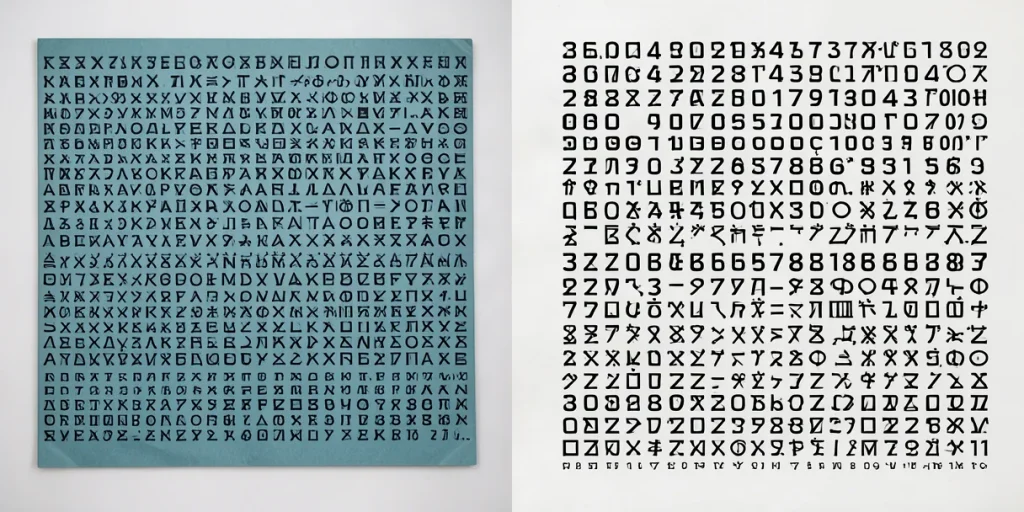
AI deciphered an encrypted message from Napoleon I Bonaparte to General Auguste Frédéric Louis Marmont, sent in 1809, in six hours. However, the published account does not reveal what the letter said. It had remained a mystery for 217 years because the cipher key was lost and the text consisted of 1.3 thousand assorted symbols.
What has been established—and what has not yet been revealed
According to The Daily Telegraph, AI engineer Carter Church used OpenAI’s GPT-6 Astra system to reconstruct the document’s contents. The message was addressed to Marmont, a general under Napoleon whose surviving writings later helped researchers check possible decipherments.
The available account of the results includes neither the letter’s text nor a summary of its specific contents. So there is no basis for claiming that Napoleon discussed, for example, military plans, orders or personal matters in it: only the fact of the decipherment and the method used are confirmed.
Why the letter could not be read before
The note is dated 1809 and contains about 1.3 thousand encrypted symbols. These included numbers, ordinary and Greek letters, as well as special symbols. This mix made it harder to identify patterns: the symbols could not simply be read as a sequence of letters from a familiar alphabet.
A cipher accompanied the document, but it was lost. Without the key, researchers had to determine the correspondences between symbols and words from the text itself. As a result, the message, intended for a specific recipient—General Marmont—remained undeciphered for more than two centuries.
How AI searched for the key
Church used GPT-6 Astra to match the symbols against the findings of earlier cryptographers. Before the new analysis, specialists had already identified the meanings of 33 symbols. This gave the system a starting point, but not a ready-made key to the entire document: most of the sequence still needed to be explained.
The program then applied a method called “simulated annealing.” It proposed possible words and tested them by comparing the hypothesized text with Marmont’s surviving writings. This approach allowed it to process the symbols in six hours and eliminate options that fit the recipient’s writings less well.
Why Marmont’s writings were needed
The general’s surviving works provided an additional reference for checking the results. Deciphering an old cipher is not simply a matter of mechanically replacing one symbol with another letter: researchers must check whether the identified correspondences form meaningful words and whether the proposed readings are consistent with known texts.
In this case, the 33 symbols whose meanings had already been established helped launch the search, while Marmont’s body of writings provided a basis for comparing words. But the published account gives no details about the specific passages used for verification. Nor does it provide the note’s full deciphered text.
What this decipherment means
The story of the letter shows how AI can combine partial results from cryptographic analysis with word prediction and text comparison. What matters is not only the speed—six hours—but also the sequence of steps: earlier findings about 33 symbols, work with assorted characters, and checking possible readings against the recipient’s writings.
For now, however, the historical significance of the message itself cannot be assessed: its contents have not been disclosed in the available information. The sender, recipient, date, number of symbols and decipherment method are known, but without the published text it is impossible to tell whether the letter changes our understanding of events in 1809 or clarifies known details of Napoleon’s correspondence.
The main takeaway: AI helped read Napoleon’s 1809 letter, but its contents have not yet been made public.
Sources
- tengrinews.kz — “Neural network helps decipher a secret message”
- worldinform.ru — “GPT-6 Astra neural network deciphers a message”
- weekend.rambler.ru — “AI helps decipher an encoded message”
- iphras.ru — “Philosophy of Science”
- mk-kaliningrad.ru — “Kaliningrad and Kaliningrad Region News — MK in Kaliningrad”
